A calm place to begin

New to Crochet or Knitting? Start Here.

Never held a crochet hook or a pair of knitting needles? This page helps you choose a craft, gather simple tools, and complete a first project without feeling overwhelmed.

  • No experience needed
  • Simple first materials
  • Two clear learning paths
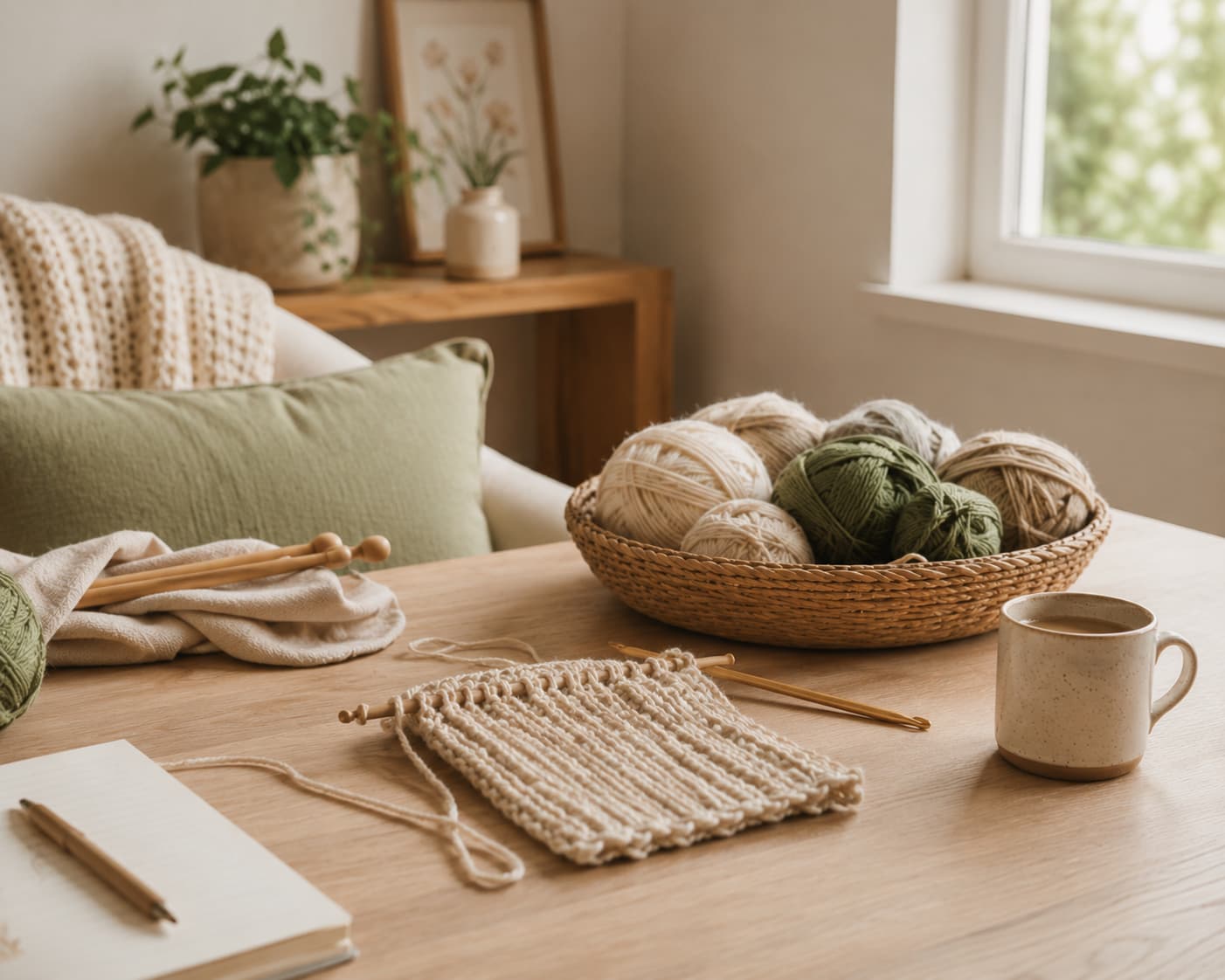
Cozy beginner knitting and crochet workspace with neutral yarn, wooden tools, and soft natural light.

Getting started

Crochet or knitting — which should you try first?

Both are beginner-friendly. Choose the craft whose projects and rhythm feel most appealing, then finish one small project before adding the second.

Crochet

One hook, visible progress

Crochet keeps one active loop at a time. Mistakes are usually straightforward to undo, and small projects can begin to take shape quickly.

  • Useful for coasters, granny squares, bags, and small decor
  • One hook and one active loop
  • A practical choice for a compact first project
Knitting

Two needles, a calm rhythm

Knitting creates soft, flexible fabric suited to scarves, sweaters, and blankets. The first few rows take coordination, but the repeated movement often becomes rhythmic.

  • Useful for scarves, sweaters, hats, and blankets
  • Two needles holding a row of active stitches
  • A good choice when fabric and rhythm matter most
Can you learn both?
Yes. Begin with one craft, complete a small project, and then explore the other. That sequence reduces confusion and gives you an early success to build on.

First materials

Choose the right yarn, hook, and needles

A mismatched yarn and tool size is a common beginner frustration. These three guides help you make a simple, practical first choice.

01

Yarn Weights Explained

Understand lace, DK, worsted, and bulky yarn, and learn which weight is easiest to see and control at the beginning.

Read the yarn guide →
02

Crochet Hook Sizes

Compare metric and US sizes, then match a beginner-friendly hook to the yarn selected for your first project.

Read the hook guide →
03

Knitting Needle Types

Learn the difference between straight and circular needles, plus which material offers useful grip while you practice.

Read the needle guide →

Crochet roadmap

Crochet Beginner Learning Path

Follow the steps in order. Repeat a stage until the movement feels comfortable before adding the next skill.

1 Tools & Setup

Choose a suitable hook and yarn, then find a relaxed hold.

2 Start a Chain

Practice a slip knot, chain stitch, and even spacing.

3 Core Stitches

Learn single crochet and double crochet foundations.

4 Straight Edges

Count stitches and identify the first and last stitch.

5 Read a Pattern

Use basic abbreviations, repeats, and stitch counts.

6 First Project

Use the skills in a simple cotton crochet coaster.

Knitting roadmap

Knitting Beginner Learning Path

Take your time with the first three steps. Relaxed hands and consistent movement matter more than perfect stitches.

1 Tools & Setup

Choose medium yarn and beginner-friendly needles.

2 Cast On

Create a stable first row without pulling too tightly.

3 Knit Stitch

Repeat the movement until a garter swatch begins to form.

4 Purl & Bind Off

Add the partner stitch and learn to finish the edge.

5 Read a Pattern

Count rows and understand short written instructions.

6 First Project

Make a straightforward garter stitch scarf.

Beginner questions

Common questions before the first project

Which is easier, crochet or knitting?
Many beginners find crochet easier to correct because it uses one active loop. Others prefer the steady rhythm and fabric of knitting. The better first choice is the one you are excited to practice.
What should I buy first?
For crochet, begin with one 5 mm hook and smooth worsted yarn. For knitting, begin with 5 mm wooden or bamboo needles and smooth worsted yarn. Add scissors and a tapestry needle.
How long does it take to learn?
The basic movement can be understood in a focused session. Comfortable tension and a finished project usually improve through several short practice sessions.
Can I learn both at the same time?
You can, but completing one small project first reduces confusion and gives you an early success to build on.

Your next step

Choose one path and begin gently

There is no perfect first stitch. Pick one craft, use simple materials, and give your hands time to learn the movement.