Best Yarn for Beginners: A Clear Crochet & Knitting Guide
Learn how to choose a smooth, visible, comfortable first yarn by comparing
weight, fiber, color, texture, care, and the information printed on the label.
Written by Sophie Lane•Published •About 15 minutes to read
The best yarn for beginners makes every stitch easy to see
The best yarn for beginners is usually smooth, light-colored,
medium in thickness, and clearly labeled. Those qualities make it
easier to identify loops, correct mistakes, and keep an even rhythm while
learning crochet or knitting.
However, a beautiful yarn is not always an easy learning yarn. Very dark colors,
fuzzy surfaces, loose plies, and dramatic texture can hide the exact place
where the hook or needle needs to go. That can make a normal beginner
problem feel like a lack of ability.
For that reason, this guide explains what yarn weight means, how cotton, acrylic, wool, and
blends behave, which colors reveal stitch structure, how to read a yarn
label, and how to compare practical first-yarn options without relying on
price or marketing language alone.
Easy starting weight#4 Medium
Thick enough to see clearly without feeling oversized.
Easy surfaceSmooth and firmly plied
Clear strands reduce splitting and reveal stitch anatomy.
Easy colorsLight solid shades
Cream, oatmeal, pale sage, and soft gray show shadows inside stitches.
Cotton is useful forStructured home projects
Coasters, dishcloths, placemats, and bags.
Acrylic is useful forPractice and easy care
Swatches, scarves, blankets, and everyday learning.
Budget levelBudget to mid-range
You need one suitable skein, not a large collection.
On this page
The foundation
Why yarn choice affects your first learning experience
New crocheters and knitters are learning two things at once: how to move
the tools and how to read the fabric being created. For example, a smooth yarn makes the
top loops, V shapes, stitch posts, and gaps easier to identify. A fuzzy yarn
can cover those landmarks.
The strand should also move through your fingers without repeatedly
separating into smaller strands. Although some splitting is caused by hook angle or
technique, a stable, clearly plied yarn removes one unnecessary source
of frustration.
In addition, comfort matters. Cotton has less stretch and may feel firm when held
too tightly. Acrylic and wool blends often provide more give. No single fiber
is best for every hand, which is why the project and the label should guide
the final decision.
Step 1
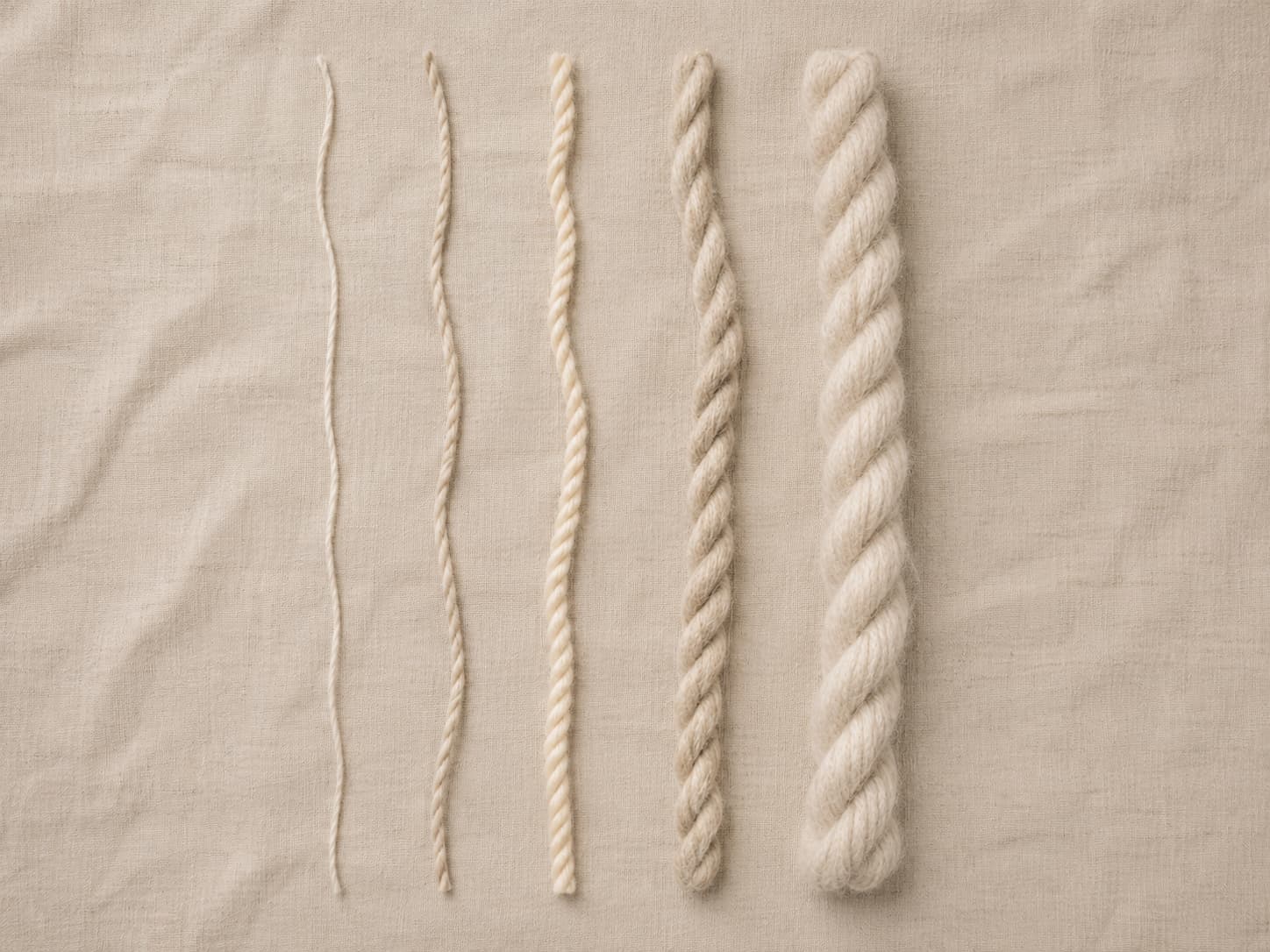
Choose a yarn weight that is easy to hold and inspect
First, remember that yarn weight describes the strand's thickness, not the total weight of the
ball. The Craft Yarn Council's current system groups yarn from size 0 through
size 8. Within that system, #4 is the medium category commonly associated
with worsted, afghan, and aran yarns.
Category
Typical description
Beginner use
Recommendation
#0–#1
Lace and very fine yarns
Small tools and delicate stitches
Save for later
#2–#3
Fine, sport, and DK yarns
Light garments and smaller stitches
Good after basic practice
#4
Medium, worsted, or aran
Visible stitches and widely available patterns
Strong first choice
#5–#6
Bulky and super bulky
Fast projects with larger tools
Useful, but may feel cumbersome
#7–#8
Jumbo and very large roving-style yarns
Specialized oversized projects
Not necessary for first practice
Yarn weight describes strand thickness, and the label confirms the category.
Step 2
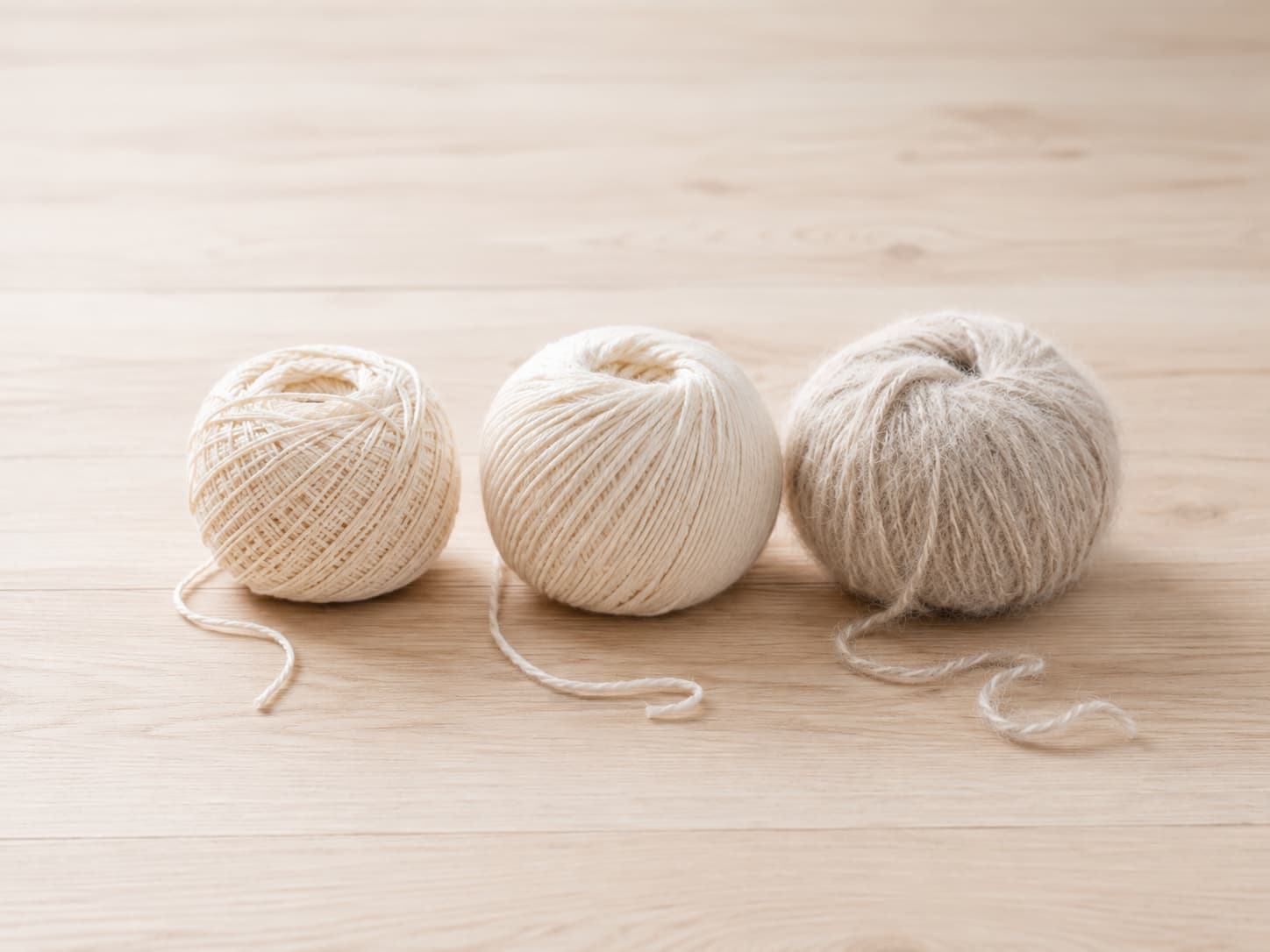
Compare cotton, acrylic, wool, and practical blends
Fiber affects stretch, warmth, care, surface feel, and the way a finished
object behaves. Therefore, choose for the project rather than assuming one material is
universally better.
Cotton
Cotton is smooth, absorbent, and relatively inelastic. It provides clear
stitch definition and suits coasters, dishcloths, placemats, and bags.
Because it has less give, overly tight tension may feel tiring.
Acrylic
Acrylic is widely available, often economical, and commonly easy to
wash. For example, a smooth #4 acrylic can be useful for practice, scarves, blankets,
and projects where simple care matters. Avoid novelty versions at first.
Wool
Wool is warm and naturally elastic. A firmly spun wool can show stitches
well and make tension easier to manage. However, check care instructions and
consider skin sensitivity before choosing it for a wearable item.
Blends
Blends combine properties. For example, cotton-acrylic may add some flexibility to
cotton, while wool-acrylic can balance warmth, elasticity, durability,
and care. Read the exact percentages rather than relying on the product name.
Fiber changes elasticity, care, warmth, and the structure of the finished fabric.
Step 3
Use color and texture to make stitches easier to read
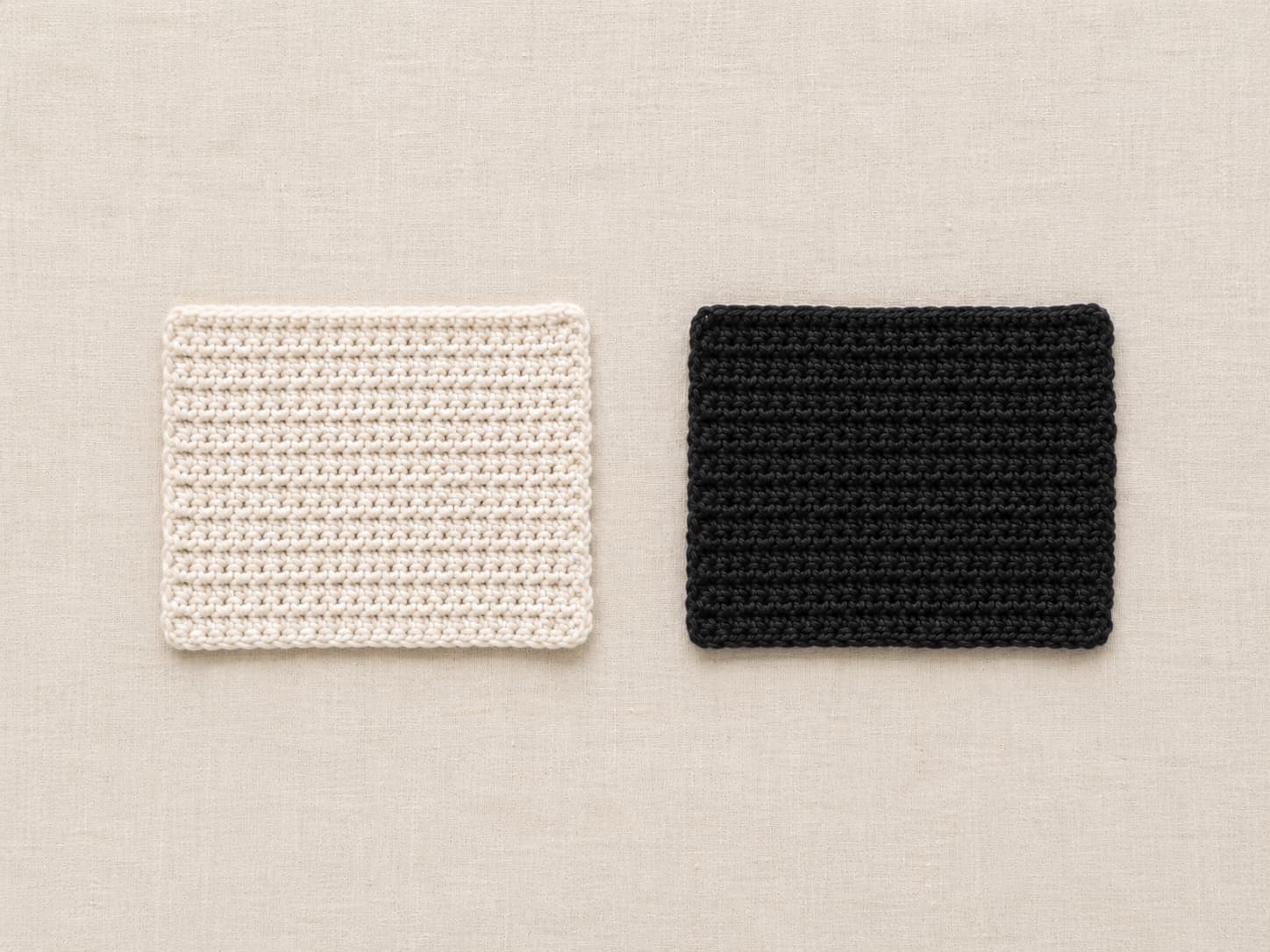
Light does not create equal contrast on every yarn. As a result, cream, oatmeal, pale
sage, dusty pink, light gray, and similar solid colors usually reveal the
shadows inside each stitch. Black, navy, and other very dark shades absorb
more visible detail, especially in weak indoor light.
Choose now
Smooth solid yarn, moderate twist, light or medium-light color, limited
halo, and enough firmness that the strand does not separate constantly.
Save for later
Eyelash, bouclé, chenille, very loose single-ply yarn, sharp high-contrast
variegation, and colors that make the stitch openings difficult to see.
A light solid shade usually reveals loops and stitch openings more clearly.
Step 4
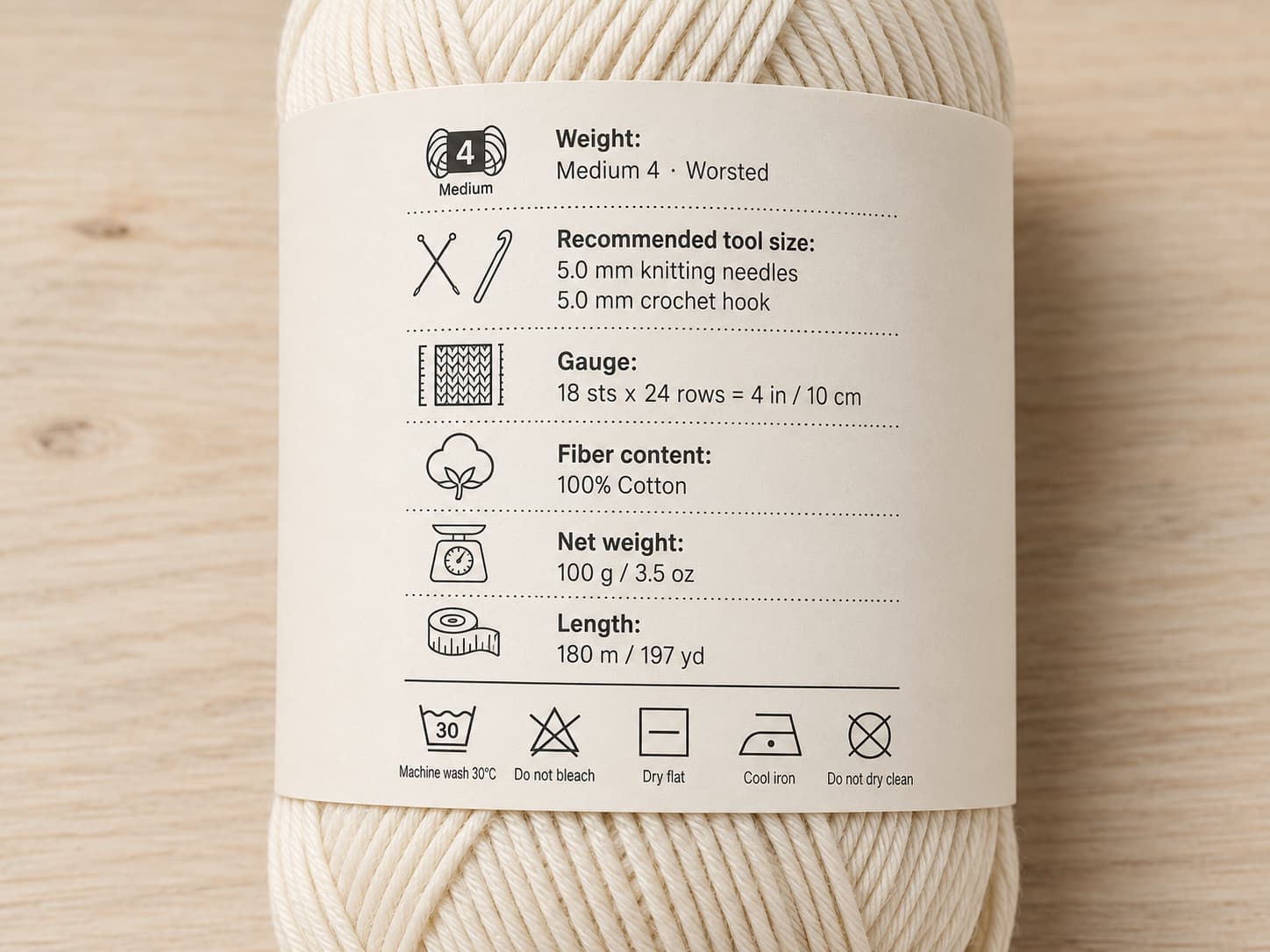
How to read a yarn label before you buy
A label helps you compare yarns without guessing. Although symbols and layouts differ
by brand, the same core information appears repeatedly.
Find the weight category
First, look for the yarn-weight symbol or the written category. For this guide,
#4 medium is the easiest general starting point.
Check the recommended tools
Next, use the listed crochet-hook or knitting-needle size as a starting point,
not an unbreakable rule. The final gauge determines whether adjustment is needed.
Read the gauge box
Then, read how many stitches and rows fit within the stated gauge area using
the suggested tool. A fitted garment requires a separate swatch.
Confirm fiber percentages
In addition, the percentage breakdown predicts stretch, warmth, absorbency, and care
more accurately than broad words such as soft, premium, or natural.
Check length and ball weight
Also, check the total length required in yards or meters. Two balls with the
same physical weight may contain different lengths.
Review care and dye lot
Finally, confirm washing instructions before choosing yarn for a gift or wearable.
When buying multiple balls of a dyed shade, matching dye lots can reduce
visible color variation.
The label connects yarn thickness, tools, gauge, fiber, length, and care.
Step 5
Match the yarn to your first project
First project
Practical yarn choice
Why it works
Crochet coaster
Smooth #4 cotton
Clear stitches, firm structure, and useful absorbency
Dishcloth
#4 cotton
Handles moisture and keeps a simple square shape
Practice swatch
Light solid #4 acrylic or cotton
Affordable, visible, and easy to undo
Simple scarf
Smooth acrylic or wool-acrylic blend
More flexibility and softness than firm kitchen cotton
Beginner hat
Firmly plied wool blend or acrylic
Elasticity helps the fabric recover and fit
Examples to compare
Beginner-suitable yarns worth checking
These products illustrate the qualities discussed above. Availability,
shades, ball size, and recommended tool sizes can vary by country or product
version. Therefore, verify the current label before buying.
Structured cotton
Lion Brand 24/7 Cotton
A #4 medium yarn made from 100% mercerized cotton. It is a practical
comparison for coasters, bags, and home projects where visible stitches
and firm structure are useful.
A worsted-weight 100% cotton yarn commonly used for kitchen and home
projects. Compare its hand feel with mercerized cotton before deciding
which is more comfortable for your tension.
A #4 worsted 100% acrylic yarn with many shades and easy-care labeling.
Choose a light solid color and confirm the current ball size and tool
recommendation on the version available in your region.
A 100% premium acrylic aran yarn offered in a broad color range. It is an
example to compare when looking for a smooth, washable acrylic in the UK
or Europe.
A worsted 100% Peruvian Highland wool with a structured, all-purpose
character. Check skin comfort and hand-wash care before selecting it for
a first wearable project.
A local or store-brand yarn can be equally suitable when it has a smooth
surface, light solid shade, readable label, and care instructions that
match the project. Brand recognition is not required for learning.
Compare texture, ply, color visibility, label information, and project suitability.
Troubleshooting
Six common yarn-buying mistakes and how to avoid them
Buying before choosing a project
First, select the project so the required fiber, weight, gauge, and total
yardage guide the purchase.
Choosing only by softness
However, very soft yarn may also be fuzzy, loosely spun, or difficult to inspect.
Balance softness with stitch visibility and stability.
Ignoring total length
Next, compare yards or meters, not only ball weight. Different fibers and
constructions produce different lengths at the same gram weight.
Mixing dye lots without checking
Because dyed shades can vary, matching dye lots can reduce visible color
changes when you buy several balls for one project.
Assuming every #4 yarn is interchangeable
In addition, weight category is only one characteristic. Fiber, twist, gauge, drape,
and care may differ substantially.
Buying a large stash immediately
Finally, start with enough yarn for one small project. Finishing it will teach you
more about your preferences than buying many untested skeins.
Continue learning
What to do after you choose your first skein
Buy enough for one small project, photograph the label, and keep the label
until the project is finished. Then make a short practice chain or knitted
swatch before committing to the full piece.
What yarn weight is easiest for a complete beginner?
#4 medium yarn is a strong general starting point because the strand and
stitches are easy to handle and inspect. Still, follow the chosen pattern
and the specific yarn label rather than treating the category as a guarantee.
Is cotton or acrylic better for learning crochet?
Cotton gives clear stitch definition and firm structure, which is useful
for coasters and dishcloths. In contrast, acrylic usually has more give and is often
economical and easy-care. The easier option depends on the project and
whether your hands prefer firm or flexible yarn.
Can beginners use wool yarn?
Yes. A smooth, firmly plied wool or wool blend can provide useful elasticity
and visible stitches. Check skin comfort, washing instructions, and project
suitability before buying.
Why are dark yarns harder to use?
Dark yarns create less visible contrast between loops and openings,
especially under weak indoor light. They are usable; however, a light solid
color makes early stitch counting and correction easier.
Using yarn and solving common problems
Can the same yarn be used for crochet and knitting?
Yes. Many yarns work for both crafts. However, the required amount and fabric can
differ according to stitch pattern, gauge, tool size, and construction,
so follow the yardage and gauge in the specific pattern.
Why does my yarn split?
Splitting can come from a loosely plied yarn, the tool shape, or the angle
of insertion. Try slowing down, rotating the hook or needle slightly, and
comparing the yarn with a more firmly twisted alternative.
Do I need to buy an expensive yarn?
No. A suitable first yarn needs visible stitches, a stable surface, clear
label information, and care that matches the project. One appropriate
budget or store-brand skein can teach the same foundational motions.
You are ready
Choose one visible yarn and begin with a small project
Your first yarn does not need to be luxurious or permanent. It needs to help
you see the fabric, understand the motion, and correct mistakes without a fight.
Therefore, a smooth light-colored #4 yarn is a reliable place to begin.
Match the fiber to the project, read the complete label, buy the required
length, and keep the label until the work is finished. Once your hands can
recognize stitches automatically, dark colors, fine yarns, and unusual
textures become much easier to enjoy.