Start here
Crochet patterns are not written in a secret language
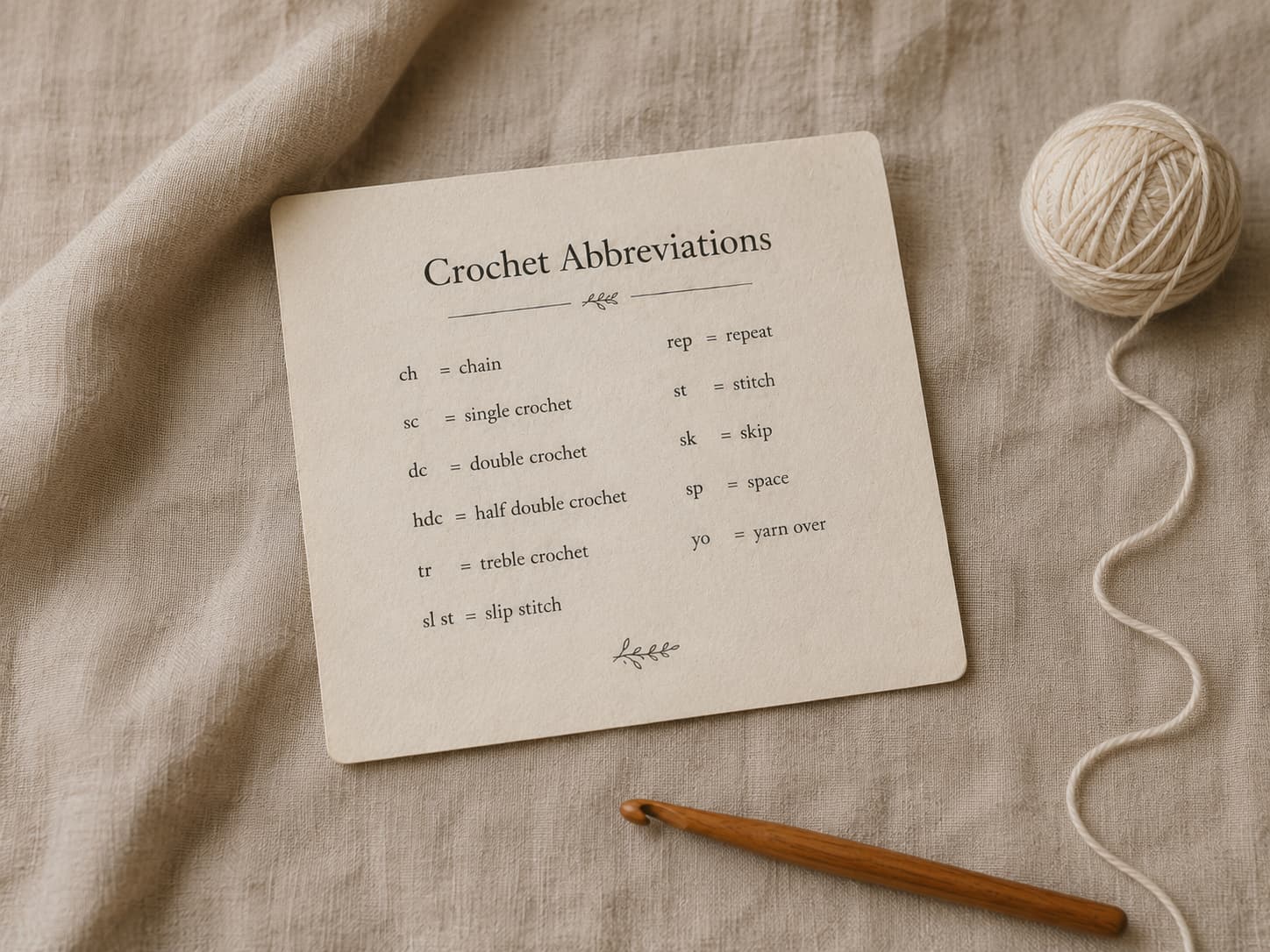
Learning how to read crochet patterns means translating standardized abbreviations,
repeat markers, stitch counts, and construction notes into a sequence of crochet
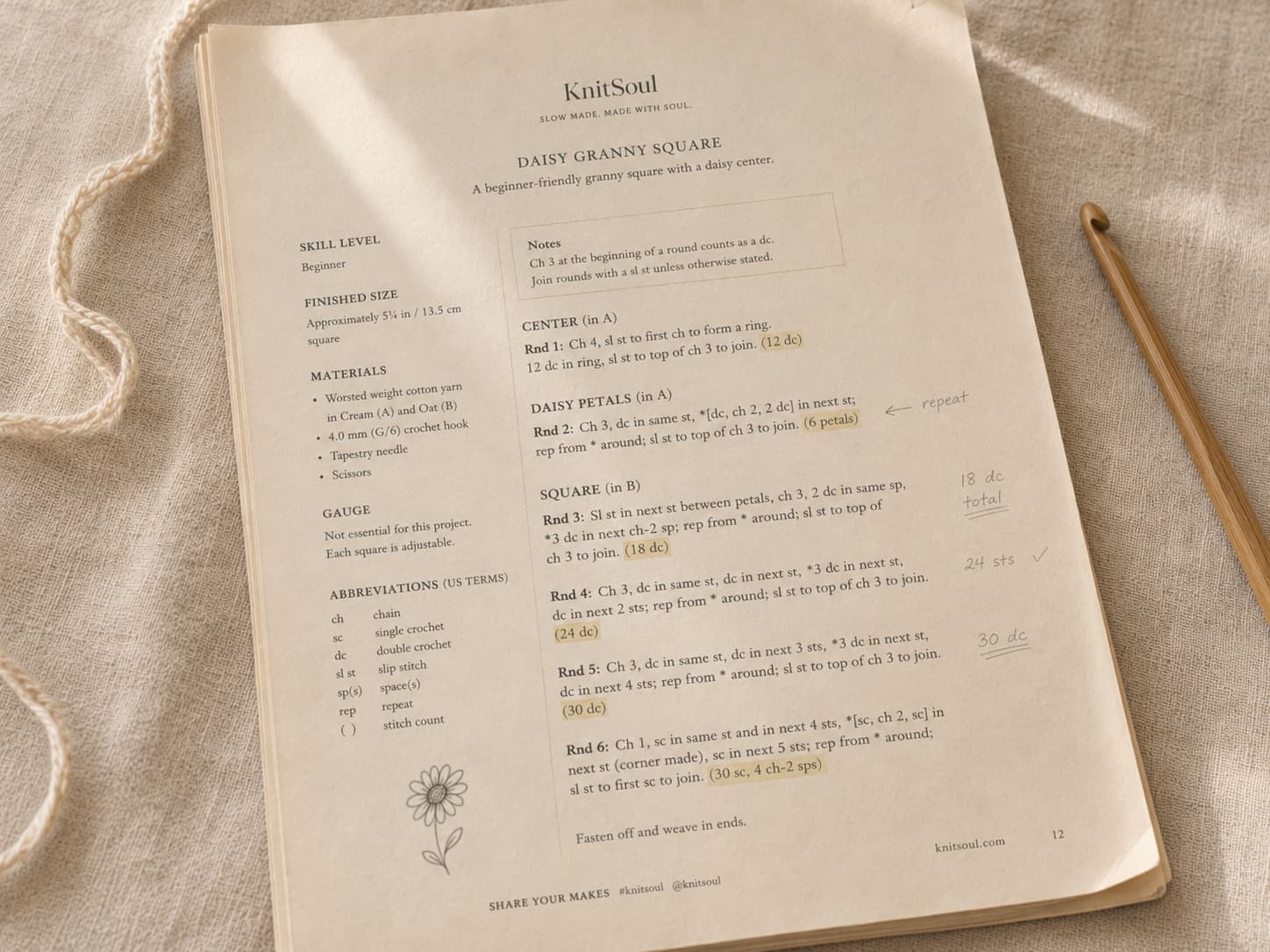
actions. A line such as ch 3, *dc in next st, ch 1, skip 1 st;
repeat from * across (24 dc) may look compact, but each part has one
specific job: begin the row, identify the repeated sequence, show where each
stitch goes, and confirm the final count.
In other words, crochet patterns are compact rather than cryptic. Abbreviations keep a pattern readable, while repeat markers prevent the same sequence from being written dozens of times. In addition, the number at the end of a row gives you a built-in accuracy check. Once the common conventions become familiar, a written pattern works much like a carefully structured recipe.
From there, this article becomes your translator. Specifically, I will walk you through every piece of a crochet pattern — abbreviations, repeats, stitch counts, gauge, skill levels, and even those little symbol charts — using the real pattern from Knitsoul's easy crochet dishcloth as our example. By the end, you will be able to pick up any beginner pattern and know exactly what it is asking you to do.
Confirm the terminology before you begin
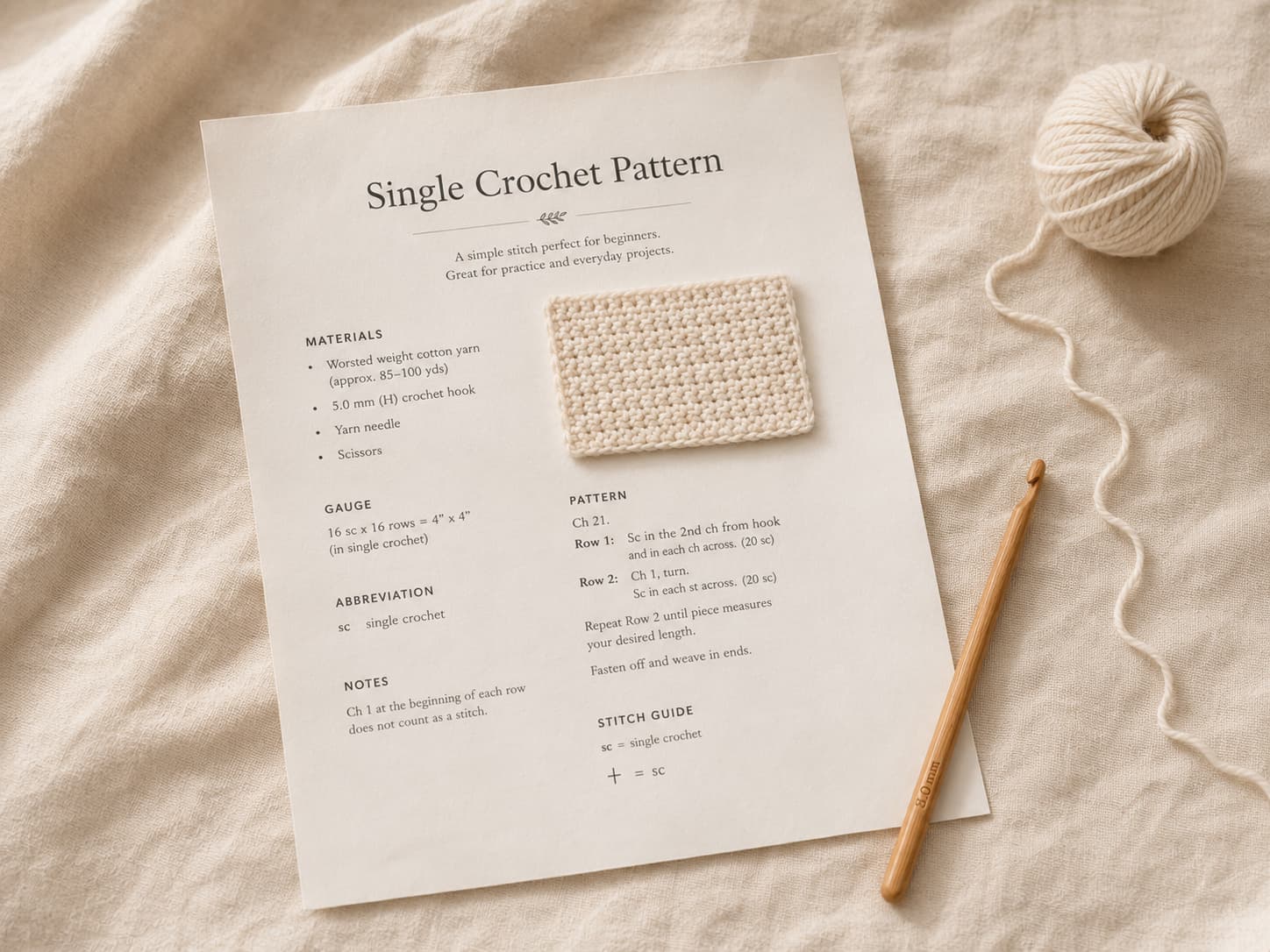
Start with four quick checks
What this guide will help you recognize
The most common abbreviations you will meet in every beginner pattern.
Basic, Easy, Intermediate, and Complex, with a note on publisher variations.
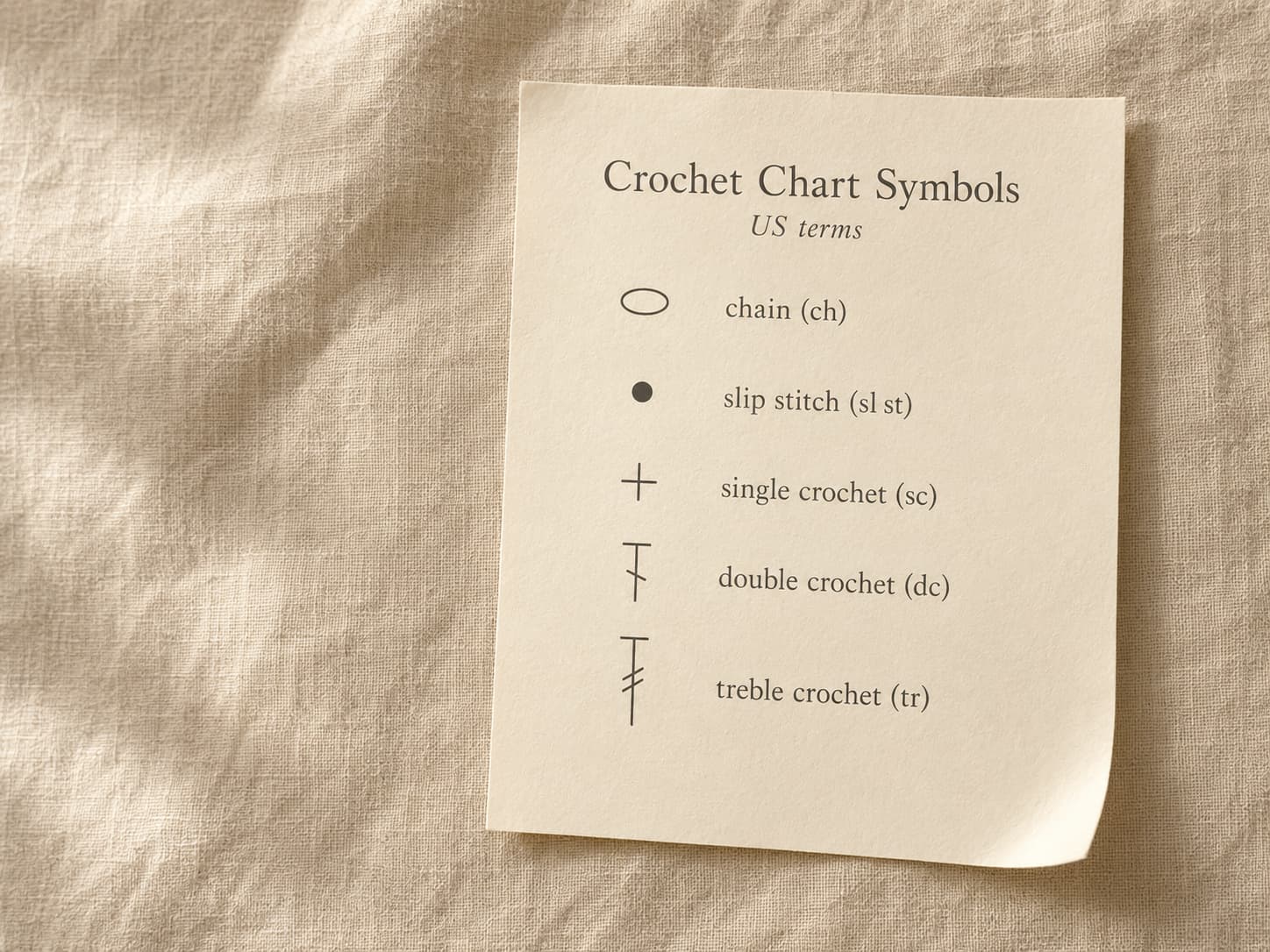
Chain, sc, dc, tr, and slip stitch — the building blocks of crochet charts.
Every example in this article uses a real row from a published Knitsoul pattern.
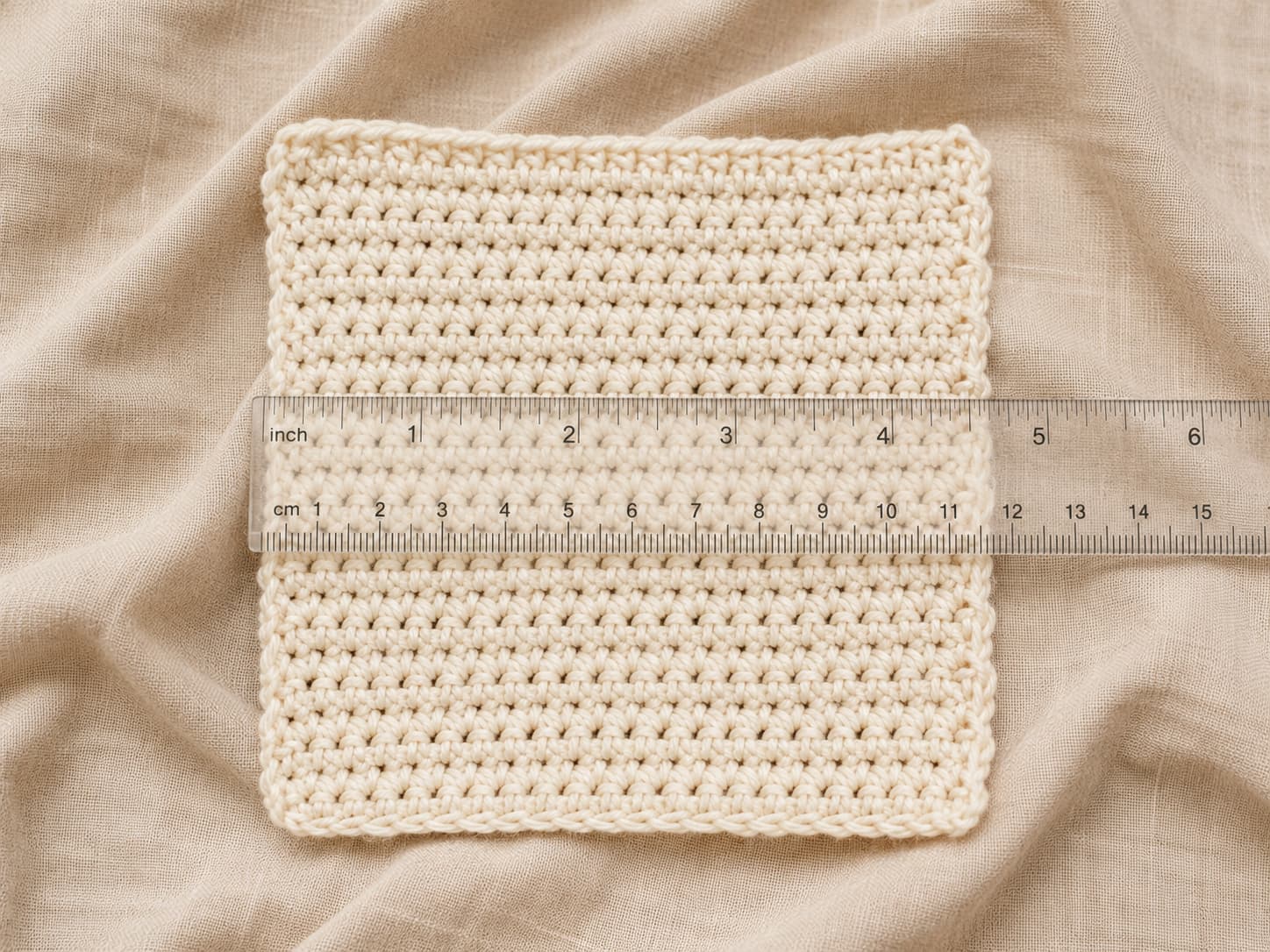
Learn to read gauge with the actual numbers from the dishcloth pattern.
A companion to keep open while you work through any Knitsoul pattern.