Crochet Hooks & Knitting Needles: A Complete Beginner's Guide
Understand sizes, metric conversions, hook profiles, needle types, materials, cable lengths, yarn-label recommendations, gauge, and the small set of tools needed for a first crochet or knitting project.
Written by Sophie Lane•Published •About 15 minutes to read
Choose the tool for the yarn, pattern, and fabric you need
A crochet hook forms one active loop at a time, while knitting needles hold a complete row or round of live stitches. Both tool families are available in many sizes, materials, profiles, and lengths, but beginners do not need a complete collection.
The most reliable workflow is simple: choose a pattern, identify the yarn and metric tool size it requests, make a swatch, and adjust only when the gauge or fabric does not match. Metric millimeters are especially useful because U.S. hook labels can vary between manufacturers.
This guide separates three decisions that are often mixed together: size controls loop scale, material controls surface grip, and tool type or length controls how the project is held. Changing one can improve the experience without changing the other two.
Image 01Suggested file: knitsoul-crochet-hooks-knitting-needles-guide-hero.jpgReplace PASTE_IMAGE_URL_01_HERE in the img src above
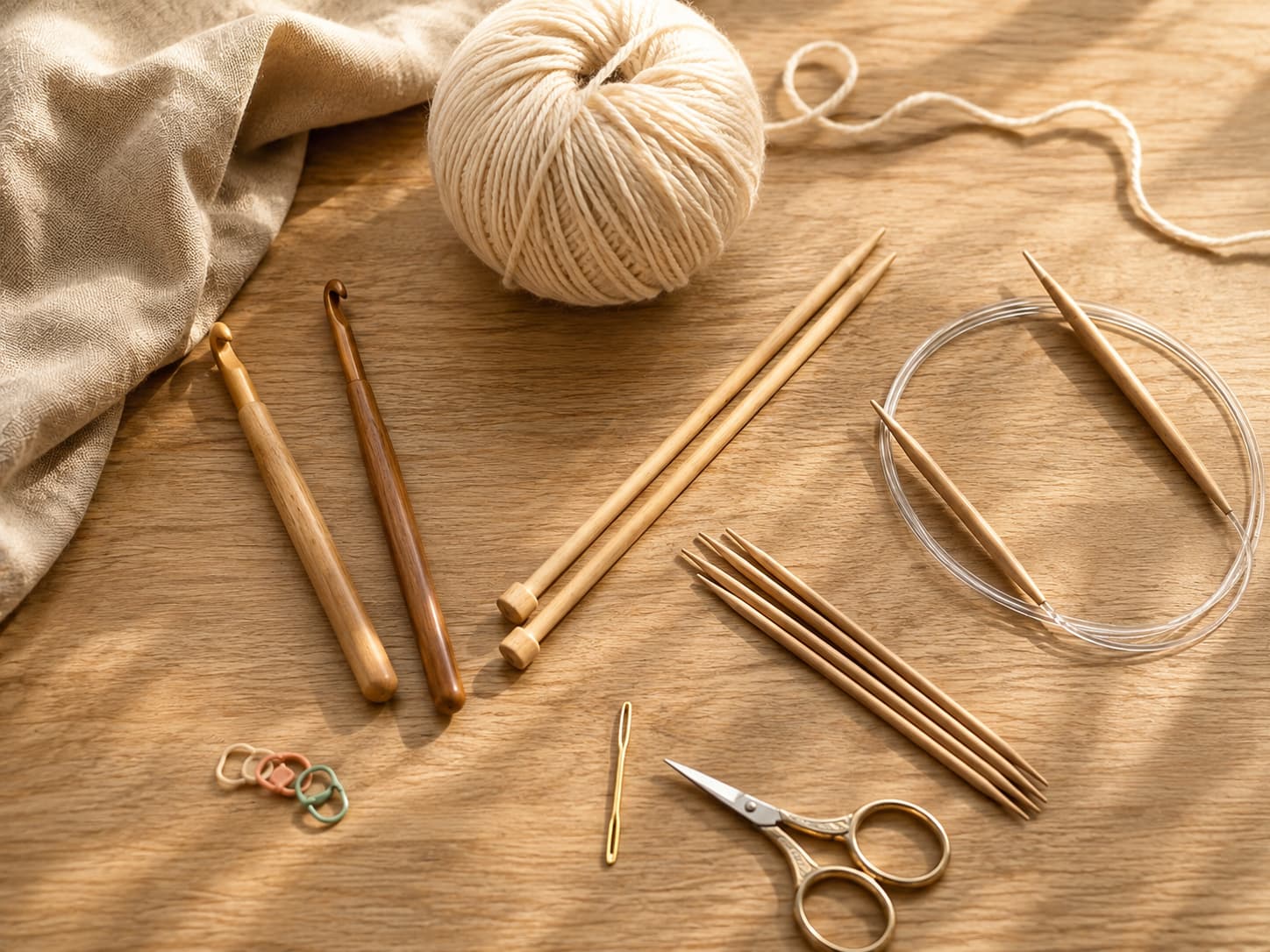
Crochet hooks and knitting needles differ in shape, material, size, and how they hold stitches.
Sizing ruleTrust millimeters
Metric diameter is clearer when U.S. labels vary by maker.
First crochet toolOne pattern-sized hook
A 5 mm hook is common for smooth #4 beginner yarn.
First knitting toolStraight or circular
Both can work flat; choose the format that feels controlled.
Material choiceMatch yarn friction
More grip for slippery yarn; smoother tools for sticky yarn.
Final decisionPattern gauge
Labels and weight charts provide starting ranges, not guarantees.
Buy firstTool + four notions
Scissors, tapestry needle, markers, and tape measure.
On this page
Crochet tools
Crochet hook anatomy and working profiles
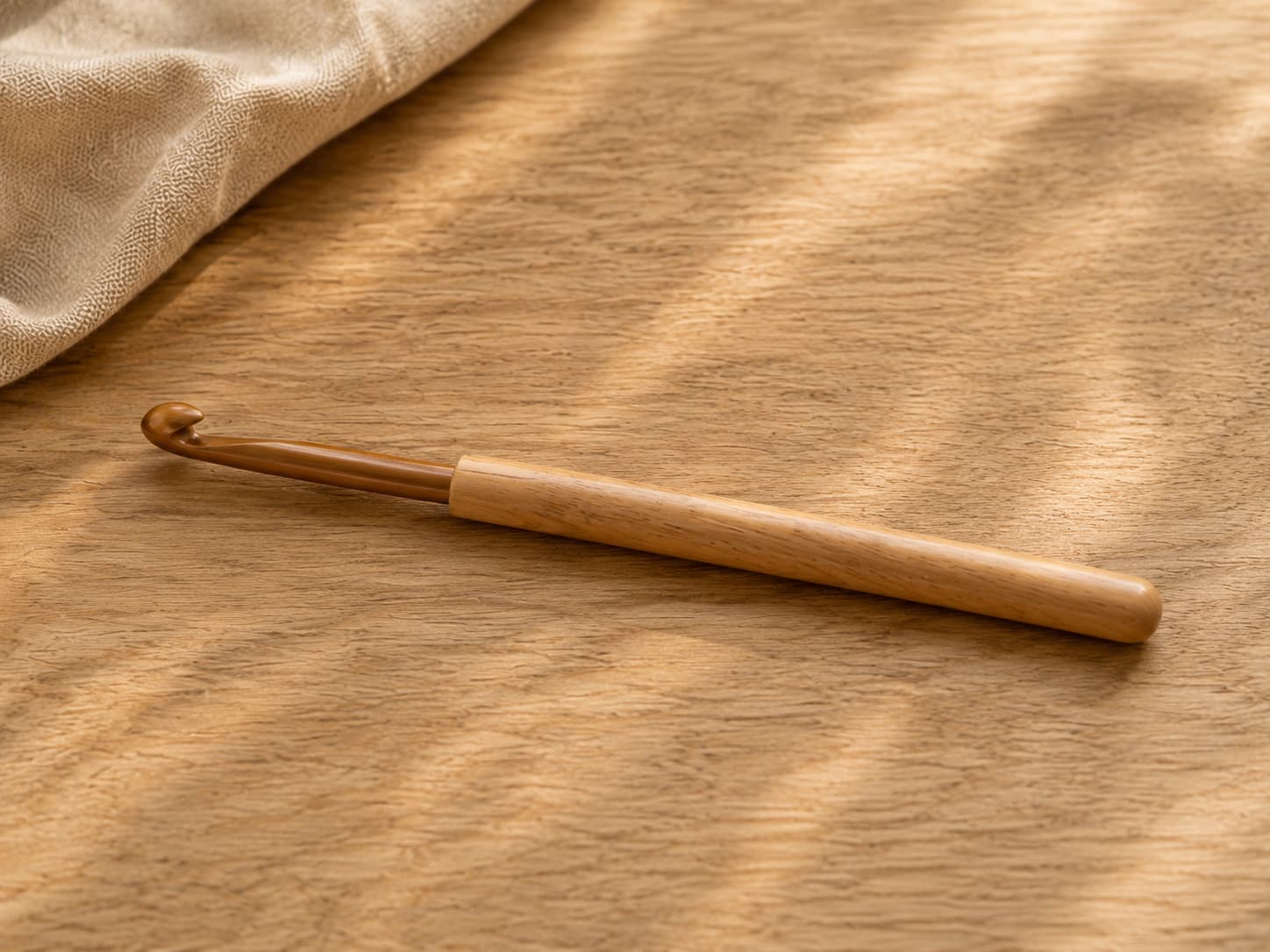
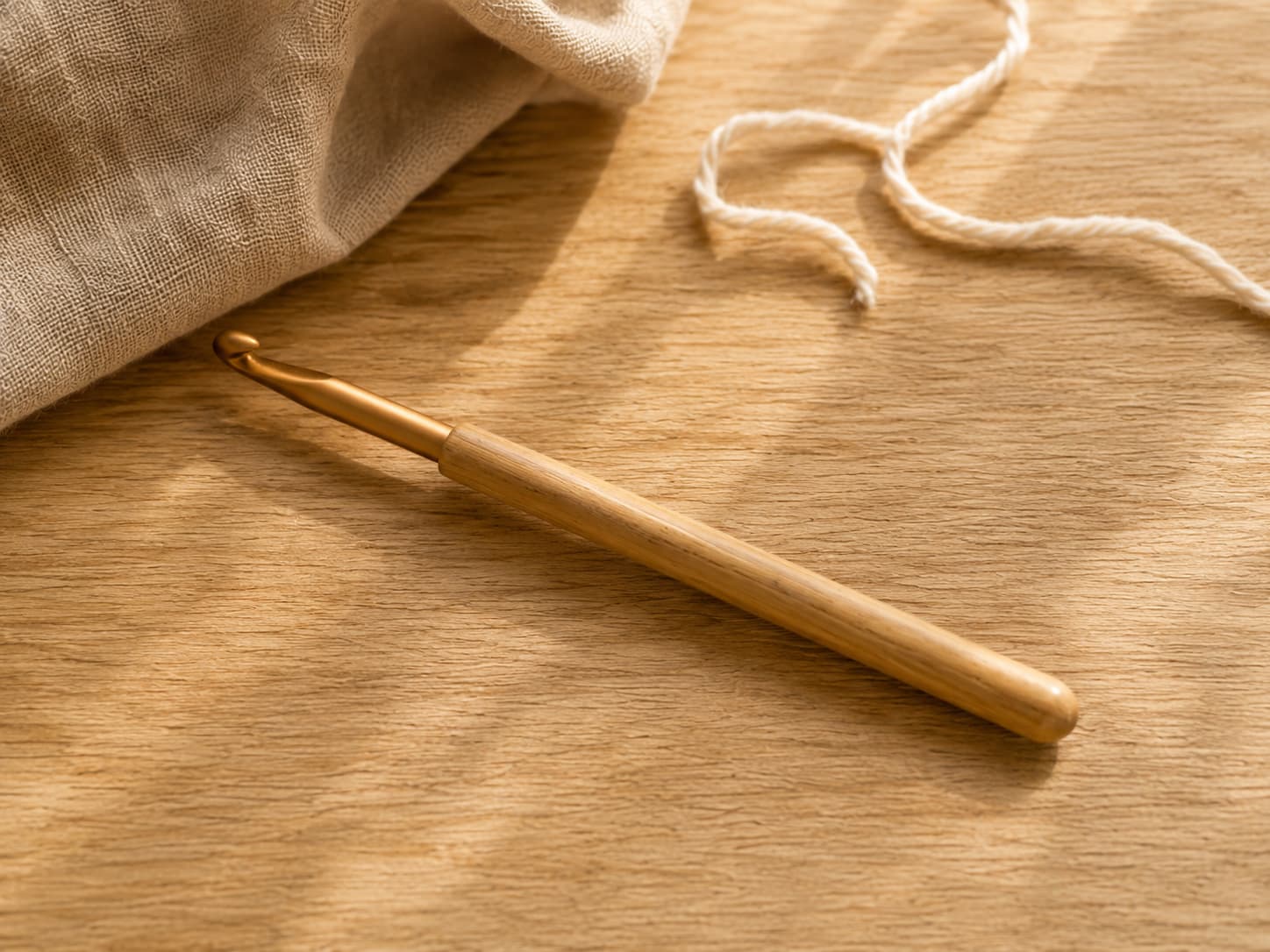
The hook's millimeter size is measured across the shaft. The shaft forms the working loop, while the head and throat affect how the hook catches yarn and moves through stitches. Handle shape affects comfort but does not change stitch size when the shaft diameter is the same.
Image 02Suggested file: knitsoul-crochet-hook-anatomy-close-up.jpgReplace PASTE_IMAGE_URL_02_HERE in the img src above
The shaft diameter determines hook size; the head, throat, and handle affect how the tool moves and feels.
Head or tip
Enters a stitch or space and catches the working yarn. A sharper point can enter tight stitches; a rounder point may split loosely plied yarn less often.
Throat
The shaped area behind the head. It may be more inline or more tapered, changing how deeply yarn sits in the hook.
Shaft
The cylindrical working area that determines the loop diameter and therefore the stated metric hook size.
Grip
The thumb rest or wider hand-contact area. Some hooks have a flat grip; others use a rounded ergonomic handle.
Handle
The section held by the hand. Length, thickness, texture, and balance affect fatigue and control.
Inline and tapered profiles
Inline profile
The head and shaft align more closely, and the throat is often deeper. Some crocheters find it easier to keep loops uniform; others find the head catches on tight stitches.
Tapered profile
The throat narrows gradually toward the head. It can pass smoothly through stitches, though the changing throat width may feel less consistent to some hands.
Hook surface
Match hook material to yarn movement and hand comfort
Image 03Suggested file: knitsoul-crochet-hook-profiles-and-materials.jpgReplace PASTE_IMAGE_URL_03_HERE in the img src above
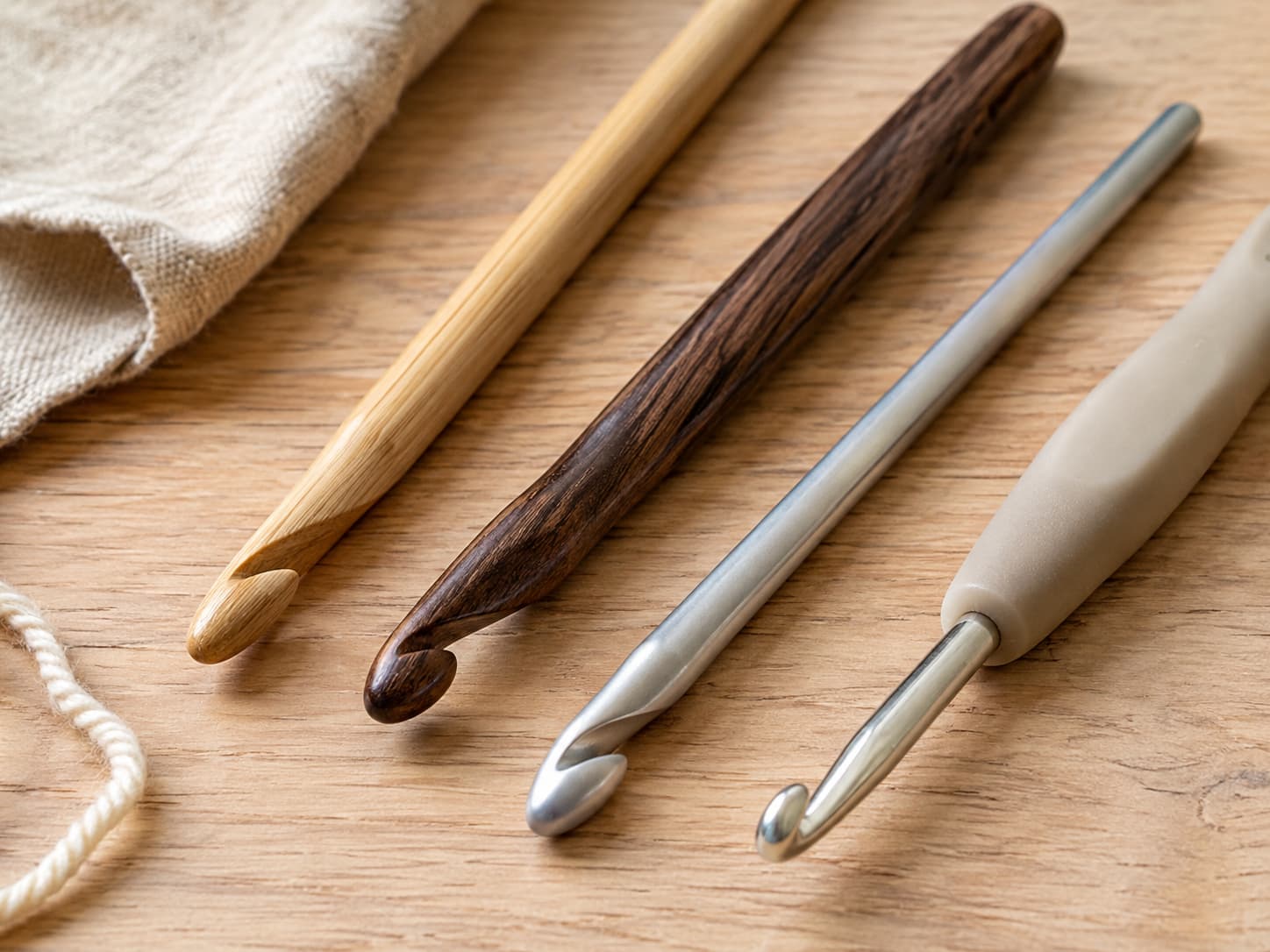
Profile and surface grip can change how easily the hook catches yarn and passes through loops.
Aluminum
Light, smooth, durable, and widely available. It is a practical first choice for many yarns, especially when loops need to move without much resistance.
Steel
Common in very small sizes for crochet thread and fine work. Steel hook numbering follows a separate system, so use the metric measurement rather than assuming a larger number means a larger hook.
Bamboo or wood
Warm and usually more grippy than polished metal. Extra surface resistance can help with slippery yarn but may slow a fuzzy or high-friction yarn.
Soft-grip ergonomic
A metal or plastic working tip with a wider handle. The thicker grip may reduce pinching, but handle shape is personal and does not replace relaxed technique or regular breaks.
Hook sizing
Use metric diameter as the clearest common language
U.S. hook letters and numbers are useful shorthand, but equivalent labels can vary. The millimeter measurement describes the actual shaft diameter and is the safest value to compare across brands and countries.
Metric
Common U.S. label
Typical beginner use
3.5 mm
E-4
Light yarn, small motifs, dense amigurumi fabric with suitable yarn
4.0 mm
G-6
DK or light worsted projects
4.5 mm
7
Light to medium yarn, tighter fabric
5.0 mm
H-8
Common first-project size with smooth #4 yarn
5.5 mm
I-9
Medium yarn with a softer or more open fabric
6.0 mm
J-10
Medium to bulky yarn, looser fabric
6.5 mm
K-10½
Medium or bulky yarn, depending on pattern gauge
8.0 mm
L-11
Bulky yarn and larger stitches
Knitting tools
Choose needle type by project shape and stitch capacity
Needle diameter controls stitch size, while needle format controls how the stitches are held. Straight and circular needles can both work flat. Circular needles also work in the round, and their cable supports project weight away from the wrists.
Image 04Suggested file: knitsoul-knitting-needle-types-straight-circular-dpn.jpgReplace PASTE_IMAGE_URL_04_HERE in the img src above
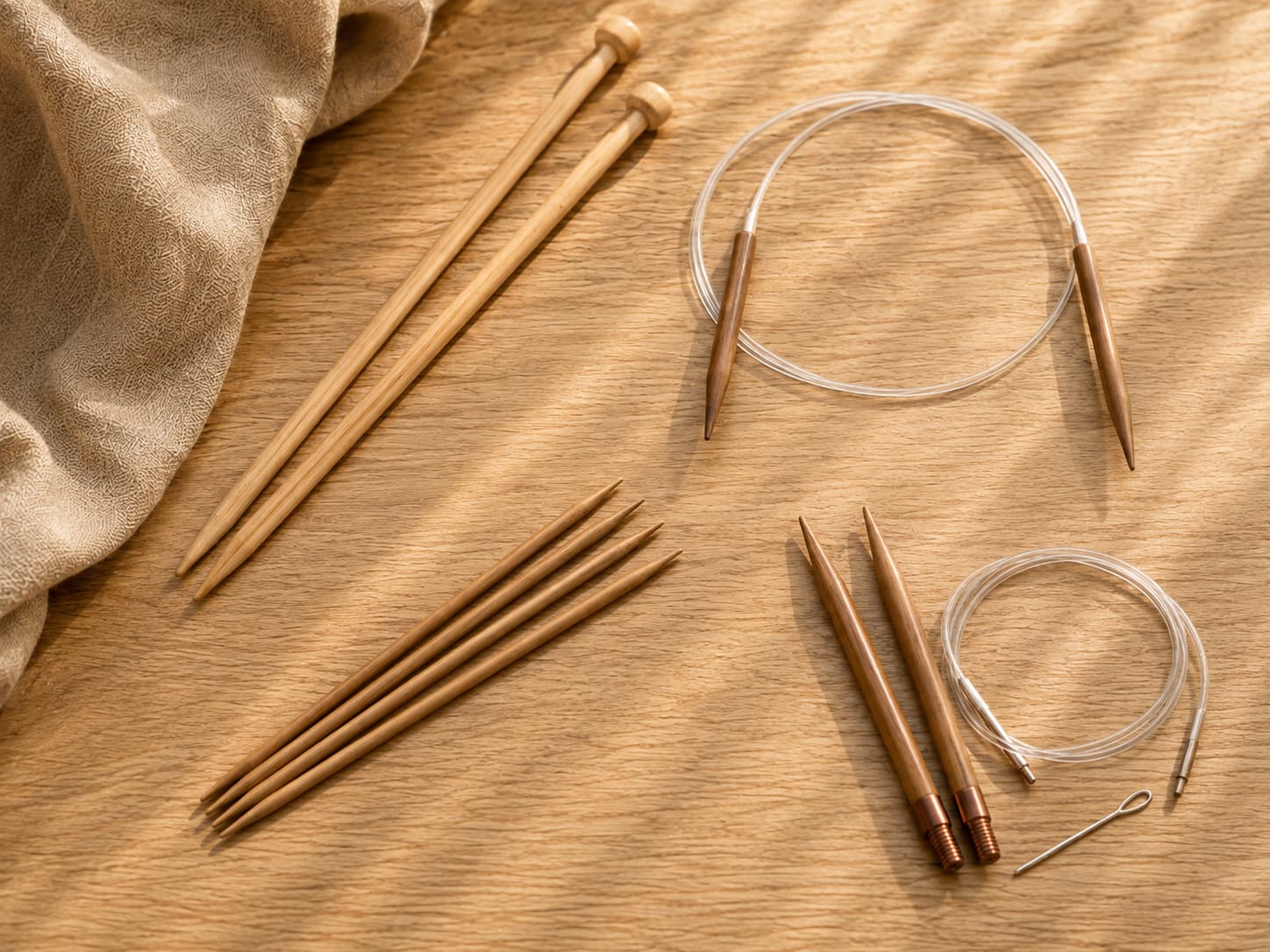
Straight, circular, double-pointed, and interchangeable needles support different project shapes and stitch counts.
Straight needles
Two separate pointed shafts with stoppers. They are straightforward for small flat projects, but long or heavy work can become crowded and place more weight at the ends.
Fixed circular needles
Two short tips connected by one permanent cable. Use them flat by turning after each row, or in the round when the circumference and technique suit the cable length.
Double-pointed needles
Short needles pointed at both ends, commonly sold in sets. They divide a small circumference across several needles for socks, sleeves, mittens, and crown shaping.
Interchangeable circulars
Separate tips and cables connect to create several sizes and lengths. They are efficient for frequent knitters but unnecessary before you know your preferred material, tip shape, and cable behavior.
How to choose needle or cable length
Flat knitting: use a straight needle or circular cable long enough to hold all stitches without crowding.
Conventional circular knitting: the needle circumference generally needs to be shorter than the project circumference so stitches are not stretched.
Small circumferences: use DPNs, two circulars, or a long circular for magic loop when the pattern supports that method.
Garments and blankets: a longer cable keeps more fabric weight in the lap.
Needle surface
Balance grip, speed, tip shape, and cable quality
Image 05Suggested file: knitsoul-knitting-needle-materials-and-cable-joins.jpgReplace PASTE_IMAGE_URL_05_HERE in the img src above
Needle material changes surface grip, while a smooth circular join helps stitches move between cable and tip.
Bamboo
Light, warm, and relatively grippy. It can help keep slippery stitches controlled, though the extra friction may feel slow with fuzzy yarn.
Polished wood
Usually smoother than unfinished bamboo but warmer and more grippy than metal. Surface finish varies, so inspect for rough joins or splinters.
Metal
Smooth and durable, allowing stitches to move quickly. It often pairs well with grippy wool but can feel too slippery with smooth cotton or loose beginner tension.
Plastic or composite
Lightweight and available in large sizes. Quality varies; check that tips are smooth, shafts are straight, and circular joins do not catch the yarn.
Needle sizing
Read the metric size, then confirm the gauge in the pattern
Metric
Common U.S. size
Typical beginner use
3.25 mm
US 3
Fine yarn, sock yarn, compact stitches
3.5 mm
US 4
Sport or light DK projects
4.0 mm
US 6
DK and some light worsted patterns
4.5 mm
US 7
Medium yarn at a firmer gauge
5.0 mm
US 8
Common first-project size with smooth #4 yarn
5.5 mm
US 9
Medium yarn with a more open gauge
6.0 mm
US 10
Bulky yarn or loose medium-weight fabric
6.5 mm
US 10½
Bulky yarn and larger stitches
8.0 mm
US 11
Bulky or super-bulky projects
Shared notions
Buy a small set of reusable tools for measuring and finishing
Image 06Suggested file: knitsoul-essential-crochet-knitting-notions.jpgReplace PASTE_IMAGE_URL_06_HERE in the img src above
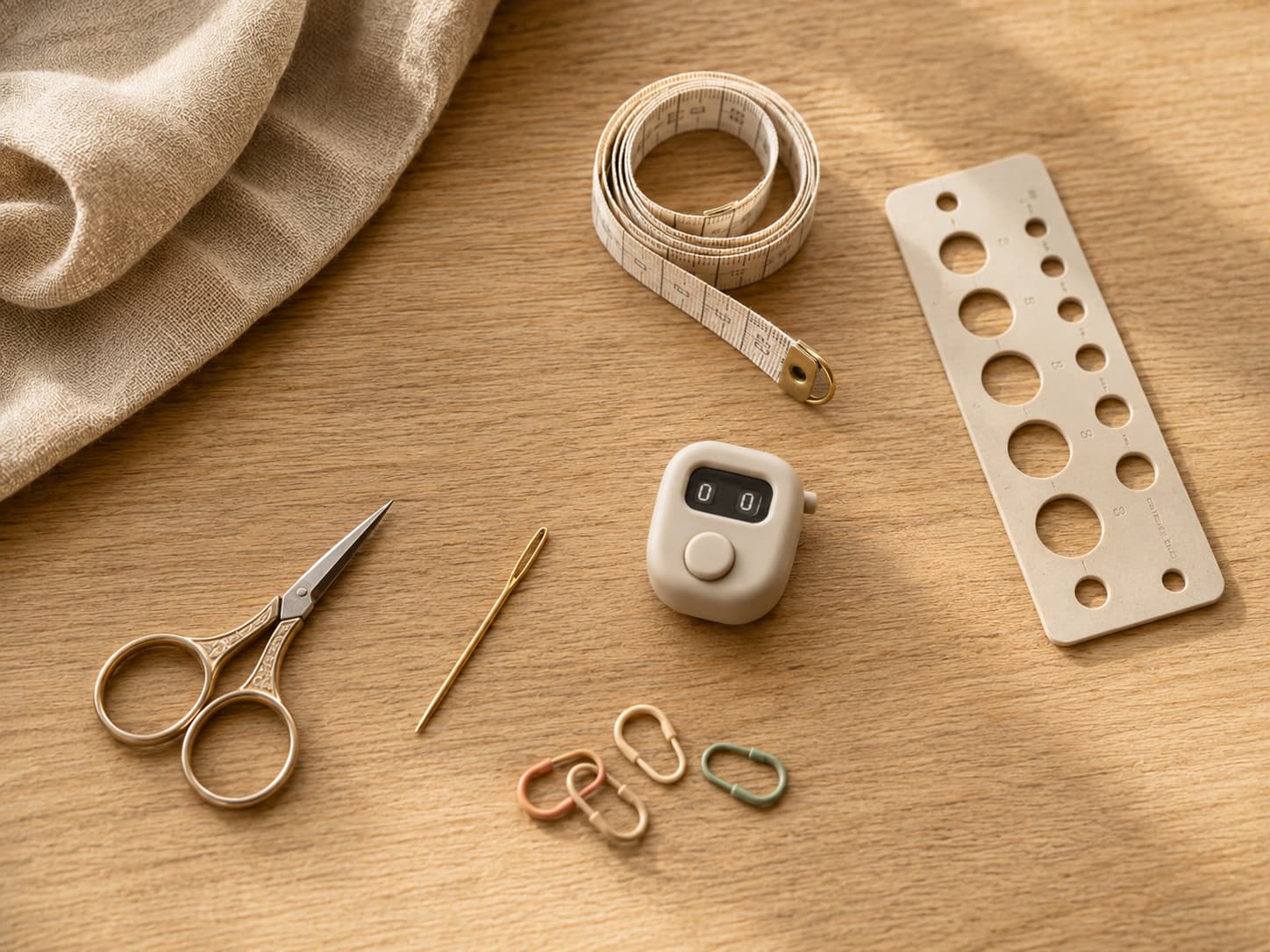
A small group of reusable notions supports measuring, counting, finishing, and tool identification.
Small sharp scissors
Use dedicated craft scissors that cut yarn cleanly. Protective tips or a sheath help in a project bag.
Blunt tapestry needles
Choose eyes large enough for the yarn. A small set of metal needles covers weaving, seaming, and drawstring finishes.
Locking stitch markers
They work in both crafts and can mark rounds, repeats, edges, increases, or temporary repairs.
Flexible tape measure
Use it for swatches, project dimensions, body measurements, cable length, and finished-blocking checks.
Row counter or written tally
Optional but useful for long repeats. A paper tally, phone note, or mechanical counter can all work.
Needle and hook gauge
Optional for tools with worn or missing markings. Insert the shaft into the smallest hole it passes through without force.
Yarn and tool matching
Use yarn-weight charts as starting ranges, not substitution rules
Image 07Suggested file: knitsoul-yarn-label-hook-needle-size-close-up.jpgReplace PASTE_IMAGE_URL_07_HERE in the img src above
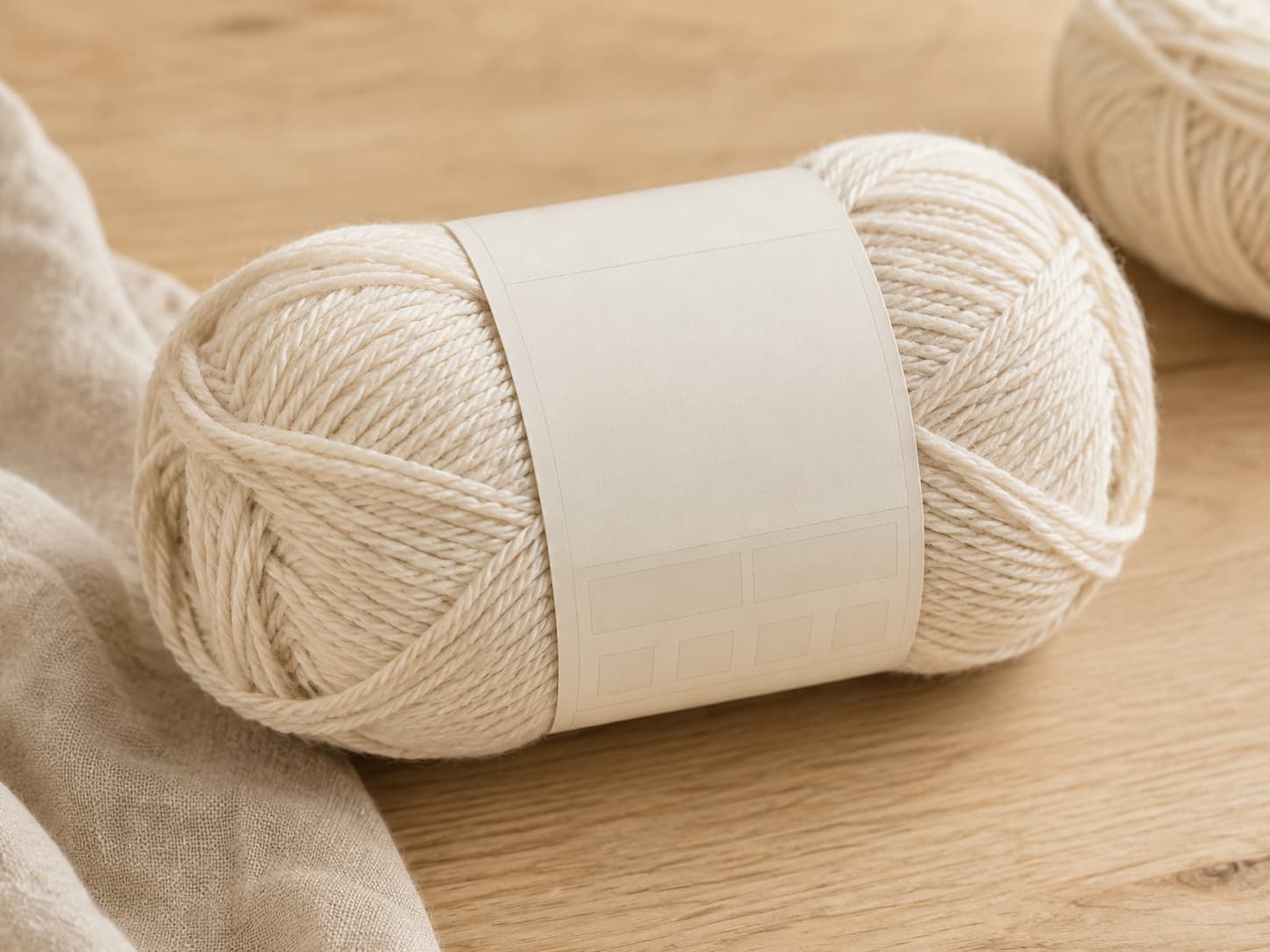
The yarn label offers a starting range, but the pattern gauge and finished fabric decide the final tool size.
The following ranges summarize the Craft Yarn Council's general guidance. They describe common gauges for yarn categories, not a promise that every yarn in a category is interchangeable. Pattern gauge, fiber, construction, desired drape, and the individual yarn label can all change the final choice.
Yarn category
Weight
General knitting range
General crochet range
Lace
0
1.5–2.25 mm
Steel 1.4–1.6 mm or regular 2.25 mm
Super fine
1
2.25–3.25 mm
2.25–3.5 mm
Fine
2
3.25–3.75 mm
3.5–4.5 mm
Light
3
3.75–4.5 mm
4.5–5.5 mm
Medium
4
4.5–5.5 mm
5.5–6.5 mm
Bulky
5
5.5–8 mm
6.5–9 mm
Super bulky
6
8–12.75 mm
9–15 mm
Jumbo
7
12.75 mm and larger
15 mm and larger
Make the final decision
Adjust tool size only after checking gauge and fabric
Too many stitches per measurement
Your stitches are smaller than the pattern gauge. Test a larger hook or needle, then wash and remeasure a new swatch.
Too few stitches per measurement
Your stitches are larger than the pattern gauge. Test a smaller hook or needle and make another swatch.
Gauge matches but fabric feels wrong
Consider yarn fiber, ply, twist, stitch pattern, and tool material. Matching numbers do not guarantee the same drape or hand.
Stitches are hard to form
Do not force the tool. Test a smoother material, a different tip or hook profile, or a slightly larger size when the pattern allows.
Buying plan
Start with one project-sized tool, then expand from real use
Minimal crochet setup
One hook in the pattern's metric size
One smooth light-colored yarn
Small scissors
Blunt tapestry needle
Locking stitch markers
Flexible tape measure
Minimal knitting setup
One pair of needles in the pattern's metric size
One smooth light-colored yarn
Small scissors
Blunt tapestry needle
Locking stitch markers
Flexible tape measure
After two or three projects
Add only sizes required by the next patterns. Notice whether you prefer more grip, more speed, sharper tips, a wider handle, or circular needles for flat work.
Before buying a full set
Test one tool from that system through a complete project. For interchangeable needles, examine cable memory, joins, tip length, tightening method, and replacement availability.
Troubleshooting
Six tool mistakes that create avoidable frustration
Buying a full set before one project
A complete set can lock you into a handle, profile, material, or cable system you have not tested. Start with one size.
Following a U.S. label without checking millimeters
Hook labels can vary. Compare the metric diameter requested by the pattern and printed on the tool.
Using yarn weight as the only rule
Weight categories are broad. Pattern gauge, fiber, stitch pattern, and desired fabric decide the final size.
Assuming bamboo is always easier
Extra grip helps slippery yarn but can make fuzzy yarn drag. Match the surface to the yarn and your tension.
Ignoring needle or cable length
Correct diameter does not guarantee enough stitch capacity or a suitable circumference. Check both size and length.
Forcing tight stitches through discomfort
Relax the grip, take breaks, and test another size or handle. Persistent pain or numbness is a reason to stop.
Continue learning
Choose a first project that uses one yarn and one tool size
1.What is the main difference between a crochet hook and a knitting needle?
A crochet hook usually controls one active loop and uses a hooked head to draw yarn through loops. Knitting needles hold many live stitches across a row or round and transfer them between needle tips. The tools are not interchangeable because the stitch structures and working motions are different.
2.Can I use the same millimeter size for crochet and knitting with one yarn?
Sometimes, but not automatically. Yarn labels often give separate crochet and knitting recommendations, and a pattern may choose a different size to create a specific gauge or fabric. Use the size stated in the pattern, make a swatch, and adjust from the measured result.
3.What size hook or needle should a beginner buy first?
Buy the exact metric size required by the first pattern. For many smooth #4 beginner projects, 5 mm is a common starting point for either craft, but it is not a universal rule. Pair it with light-colored yarn so the stitches are easy to see.
4.Should a beginner use straight or circular knitting needles?
Either can work. Straight needles are simple for a small flat project. Circular needles can also work flat and move project weight onto the cable and lap. Choose a tip and cable length that hold the required stitches comfortably.
5.How do I know when a hook or needle is too large or too small?
A tool may be too small when the fabric is stiff, the stitch count per measurement is too high, or the tool must be forced through loops. It may be too large when the fabric is looser than intended or the stitch count is too low. Confirm with a washed gauge swatch rather than appearance alone.
6.Are expensive hooks and needles necessary?
No. A smooth, correctly sized tool can make an excellent first project. Higher-priced tools may offer a preferred handle, tip finish, cable, join, or material, but they do not replace correct sizing and practice. Test one tool before buying a set.
7.Which is better: a grippy or slippery tool surface?
It depends on the yarn and your tension. A grippy bamboo or wood surface can control slippery yarn. Smooth metal can help wool or fuzzy yarn move more freely. The best surface lets stitches move deliberately without dropping or dragging.
You are ready
Buy one correct tool and let the first project teach the rest
You do not need every size or material. Choose a pattern, read its metric tool size, match the yarn, and make a swatch. That first project will show whether you need more grip, more glide, a wider handle, sharper tips, or a different cable length.
Build the collection from projects you actually complete. A small, tested group of useful tools is more valuable than a large set that does not suit your hands or yarn.
Happy making, — Sophie
Editorial references
Standards checked for this guide
Metric conversions, general yarn-weight ranges, and the warning that yarn categories are not an interchangeability chart were checked against Craft Yarn Council references. A specific pattern, yarn label, and tested gauge swatch take priority.