Crochet vs Knitting: Which Should You Learn First?
Compare tools, live stitches, fabric, mistake recovery, project types, yarn use, and learning style without relying on unsupported speed, cost, or “easier craft” claims.
Written by Sophie Lane•Published •About 11 minutes to read
Choose the fabric and project—not a permanent craft identity
Crochet uses a hook to form stitches from one active loop, while knitting uses two needles to hold many live stitches as the fabric grows. That construction difference influences texture, stretch, drape, shaping, mistake recovery, and which projects are most commonly made with each craft.
Neither craft is automatically easier, faster, cheaper, or better. A tall crochet stitch may cover area quickly, but a dense crochet stitch can be slow. A simple knit row can become fast with practice, while cables or colorwork add time. Yarn consumption also depends on the exact stitch and gauge rather than one universal percentage.
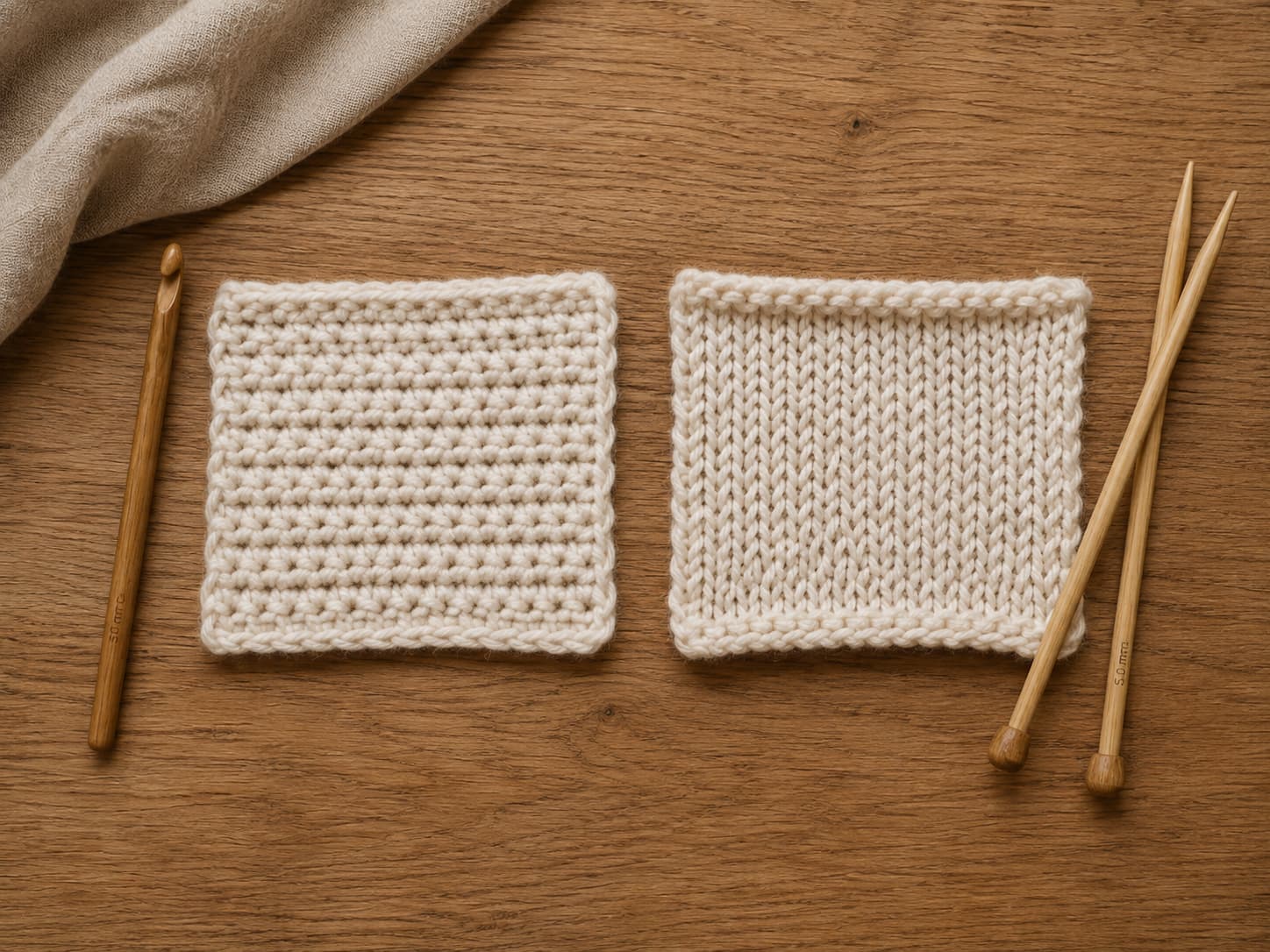
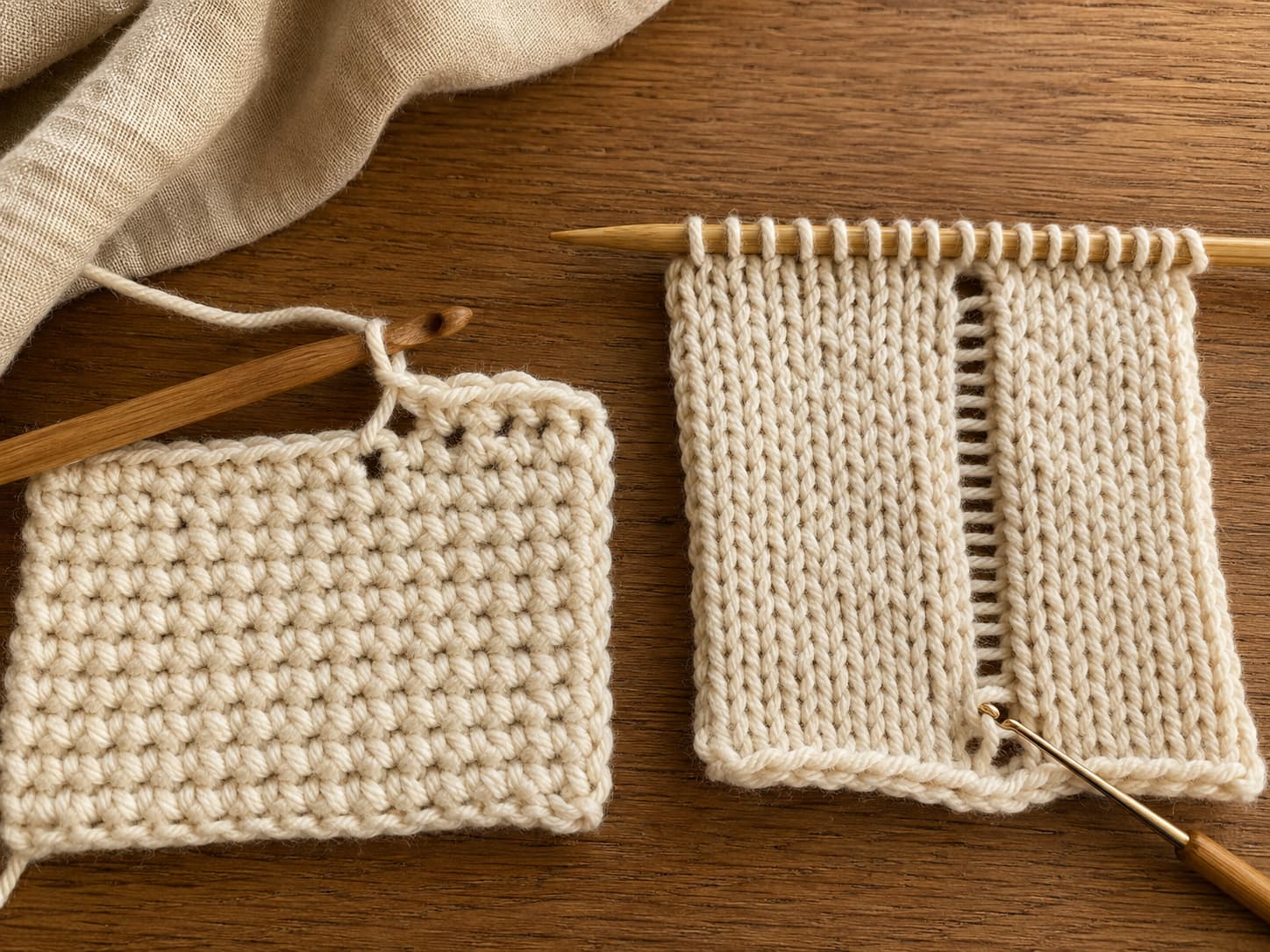
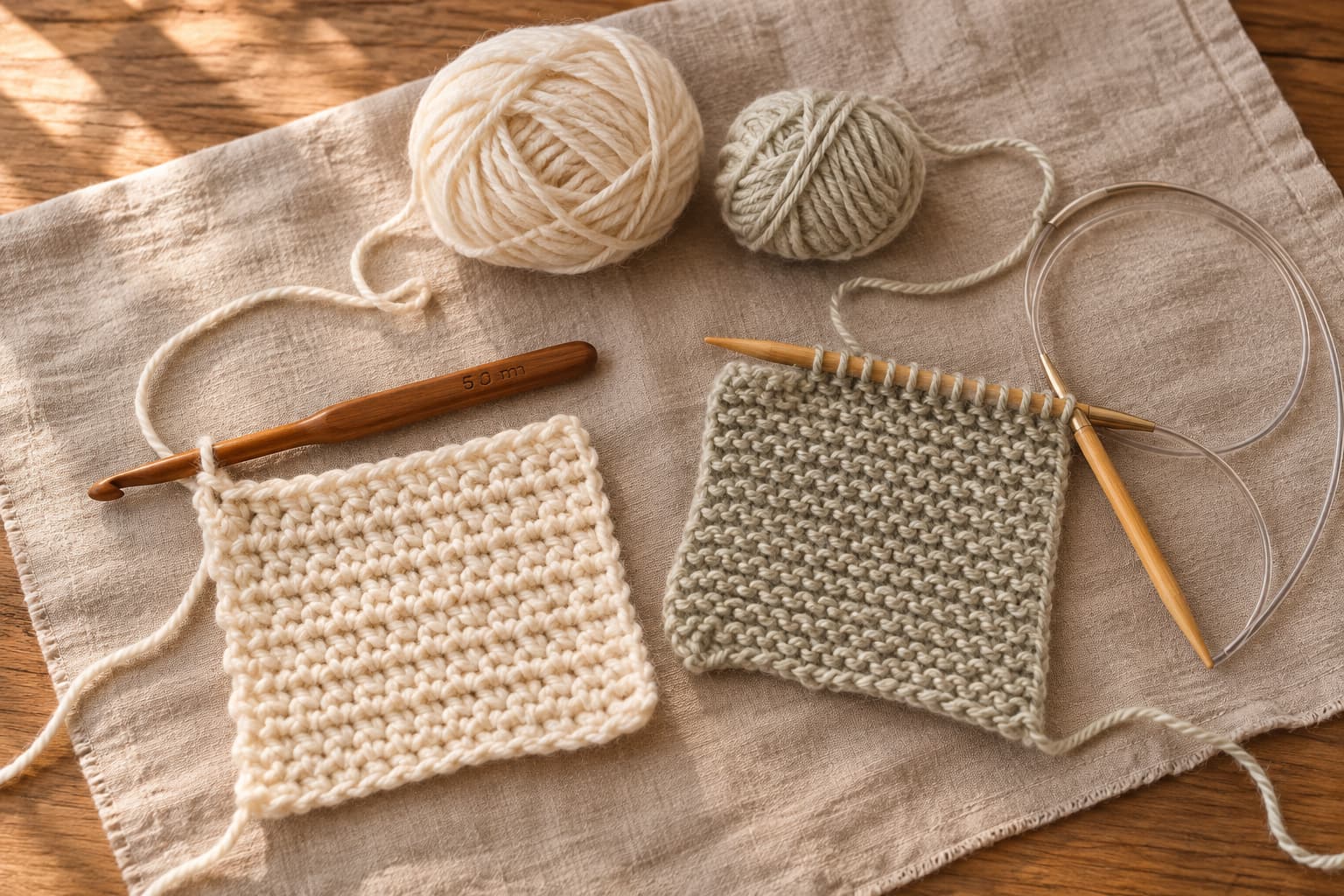
Image 01 · Crochet and knitting side by sideSuggested file: knitsoul-crochet-vs-knitting-tools-and-swatches.jpgReplace only the img src value above with the full HTTPS WordPress Media URL.
The most useful comparison is the fabric each tool creates for the project you want to make.
Crochet toolOne hook
Usually one active loop and individually completed stitches.
Knitting toolsTwo needle tips
A row or round of live stitches stays on the needle.
Fabric choicePattern-specific
Stitch, yarn, gauge, and finishing matter more than labels alone.
Mistake recoveryDifferent, not impossible
Crochet unravels from one loop; knitting may require catching live stitches.
Best first testTwo small swatches
Use similar smooth yarn and comparable tools.
Long-term answerYou can learn both
Shared yarn, gauge, and pattern knowledge transfers.
On this page
Crochet overview
Crochet completes stitches from one active loop
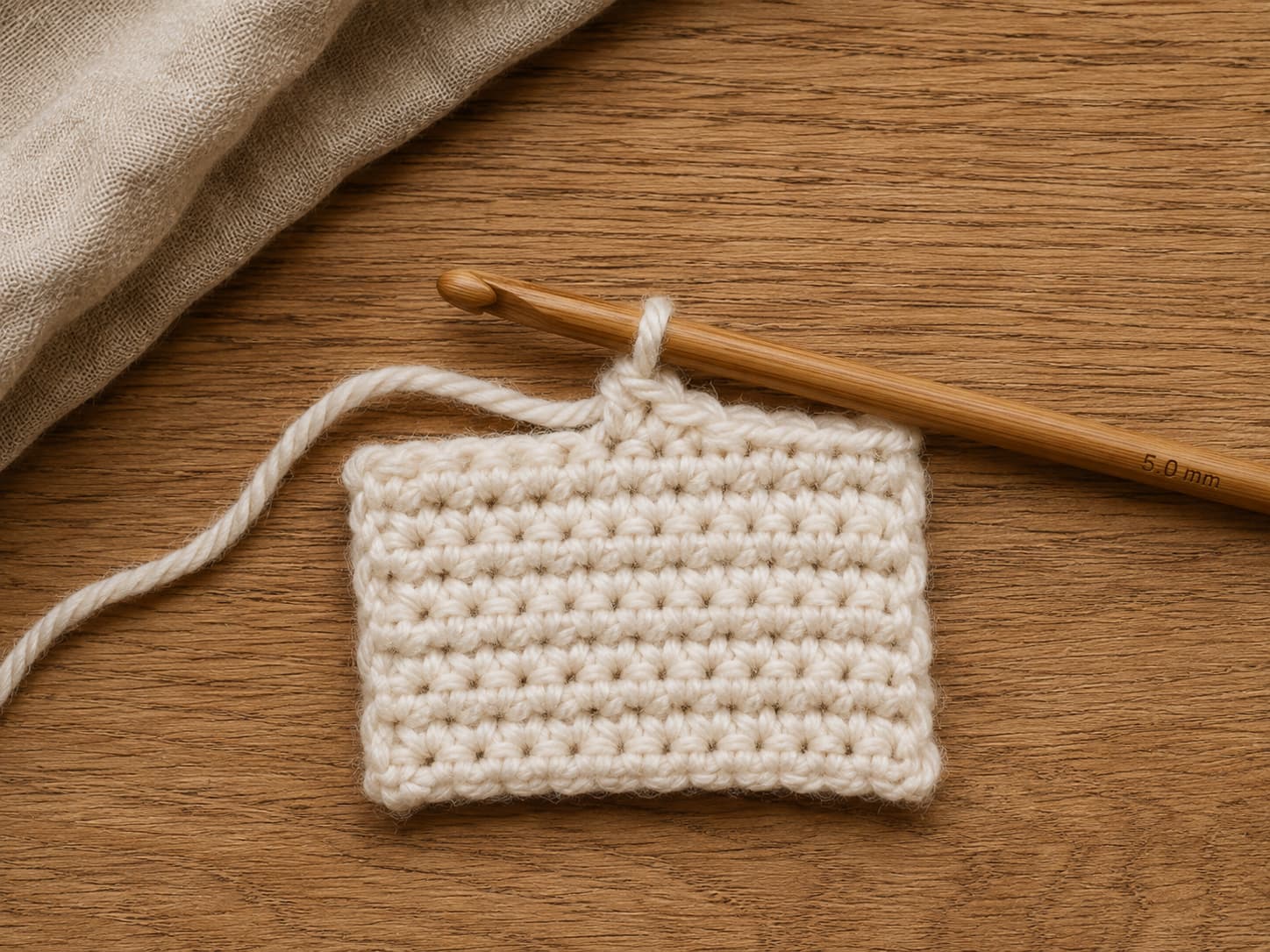
Image 02 · Crochet close-upSuggested file: knitsoul-crochet-single-active-loop-close-up.jpgReplace only the img src value above with the full HTTPS WordPress Media URL.
Crochet normally keeps one active loop on the hook while completed stitches remain secured.
The hook pulls loops through loops. In standard crochet, one loop remains active while the completed fabric below it is stable. The hook can enter stitches, chain spaces, posts, loops, rings, or other locations defined by the pattern.
Crochet can make dense single-crochet fabric, flexible garments, open lace, tall textured stitches, modular motifs, and sculptural forms. It should not be reduced to “thick and stiff”; yarn, hook size, stitch choice, and blocking can create very different fabrics.
Finding the next stitch and maintaining straight edges can be harder than the one-loop system first suggests.
Knitting overview
Knitting builds fabric through many live stitches
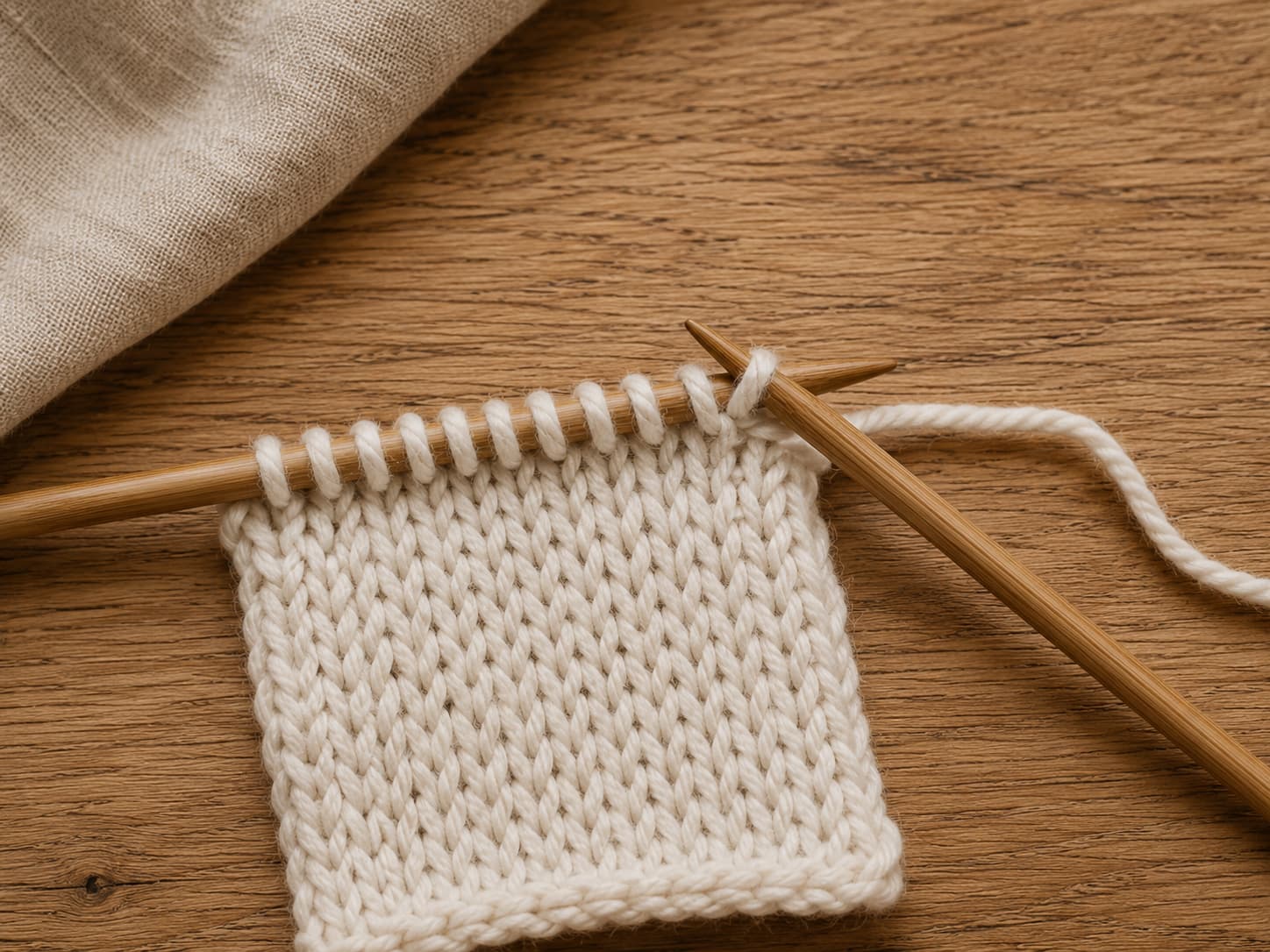
Image 03 · Knitting close-upSuggested file: knitsoul-knitting-live-stitches-on-needles.jpgReplace only the img src value above with the full HTTPS WordPress Media URL.
Knitting keeps a row of live stitches on the needle and builds the next row through them.
Knitting uses two needle tips. The stitches waiting on the needle remain live until they are worked or secured. Knit and purl stitches combine into stockinette, garter, ribbing, cables, lace, colorwork, and shaped fabric.
Knitted fabric is often selected for stretch, smoothness, fine gauge, and garment construction, but knitting can also make dense homeware, toys, blankets, and sculptural pieces. The project pattern—not the craft name alone—determines the final behavior.
Common knitting strengths
Socks, ribbed cuffs, smooth sweaters, fine-gauge accessories, stranded colorwork, cables, and fabrics that need elastic recovery.
Beginner consideration
Multiple live stitches can feel vulnerable until you learn to recognise a dropped stitch and secure it quickly.
Head-to-head
Compare the construction before choosing the first project
Factor
Crochet
Knitting
Main tool
One hook
Two needle tips, often joined by a cable or used as a pair
Live stitches
Usually one active loop
Many live stitches held on the needle
Basic fabric unit
Stitches can vary greatly in height and placement
Loops form rows or rounds of intermeshed stitches
Undoing work
Pull yarn back to the error, then reinsert the hook
Secure live stitches or repair a dropped column before undoing
Shaping
Increase, decrease, vary stitch height, and place stitches selectively
Increase, decrease, short-row, cable, and shape across live stitches
Typical chart logic
Symbols show stitches and placement; rounds may be circular
Grid rows map stitches; flat rows alternate reading direction
Gauge
Stitches and rows/rounds per measurement
Stitches and rows/rounds per measurement
Portability
Small projects may need one hook and yarn
Circular needles can make compact projects highly portable
Fabric and project fit
Compare actual swatches—not stereotypes about the craft
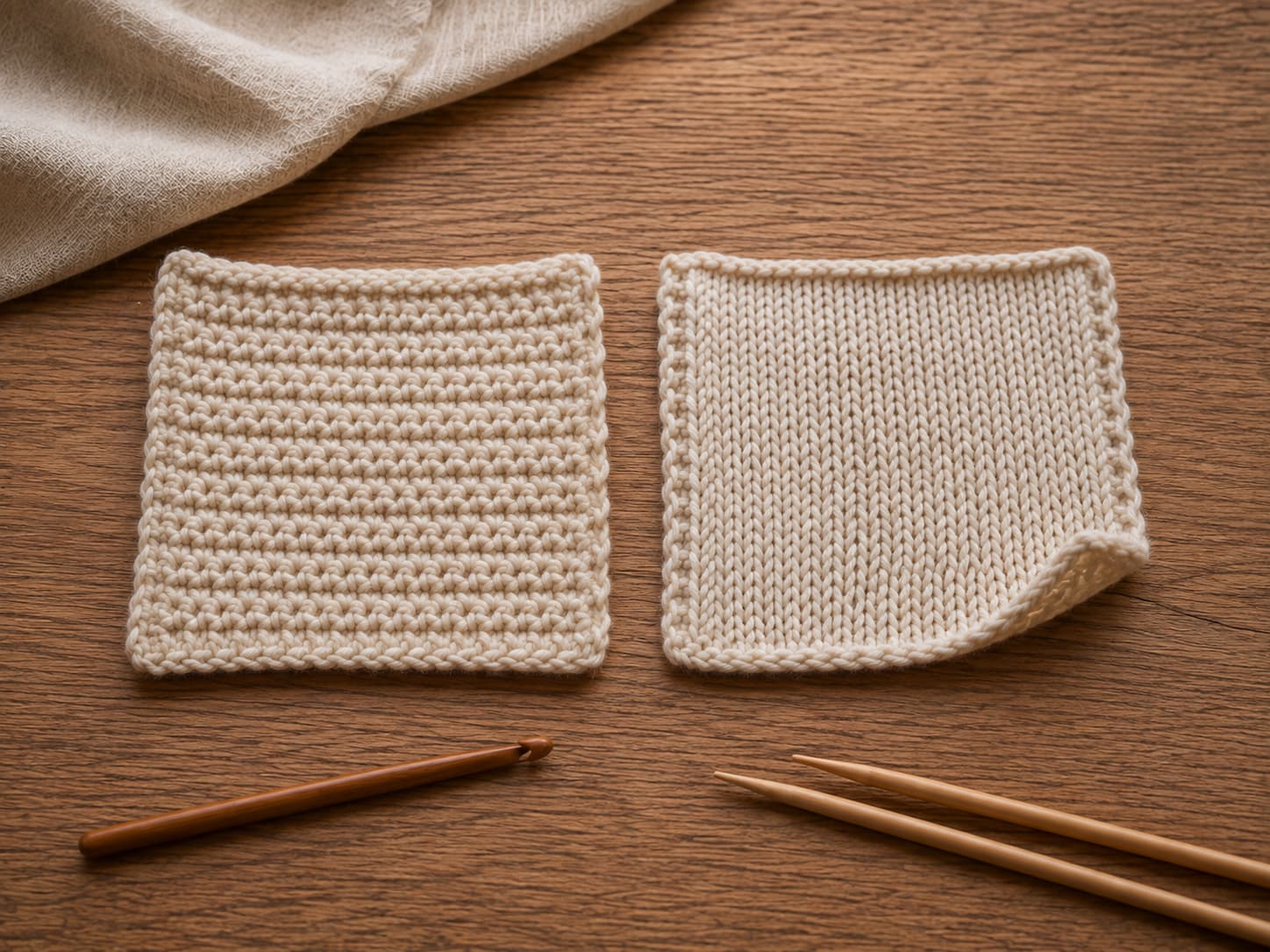
Image 04 · Fabric comparisonSuggested file: knitsoul-crochet-knit-fabric-comparison-swatches.jpgReplace only the img src value above with the full HTTPS WordPress Media URL.
Compare actual swatches rather than relying on broad claims about every crochet or knitted fabric.
When structure matters
A dense crochet stitch often suits baskets, bags, toys, coasters, and motifs. Knitted garter, linen stitch, double knitting, and felted fabrics can also be highly structured.
When drape matters
Stockinette and fine knitted fabrics are common garment choices. Crochet lace, mesh, linked stitches, extended stitches, and fine yarn can also create fluid drape.
When stretch matters
Knitted ribbing is widely used for cuffs and fitted openings. Crochet ribbing and elastic stitch patterns exist, but they behave differently.
When modular work matters
Crochet motifs are easy to make individually and join. Knitting also supports modular squares, strips, entrelac, and joined construction.
Learning curve
The easier craft is the one whose next stitch you can recognise
Image 05 · Correcting mistakesSuggested file: knitsoul-crochet-frogging-knit-dropped-stitch-tools.jpgReplace only the img src value above with the full HTTPS WordPress Media URL.
Both crafts can be corrected; the recovery method differs because knitting holds multiple live stitches.
Crochet may feel reassuring because only one loop is active. The challenge is identifying where to insert the hook and preventing accidental increases or decreases at the edges. Knitting makes stitch columns visually consistent, but managing two needle tips and many live loops can require more early coordination.
Honest comparison
Speed, cost, and yarn use are pattern variables
There is no reliable universal statement that crochet is a fixed percentage faster or that it always uses a fixed percentage more yarn. A project’s yarn use changes with stitch structure, gauge, dimensions, fabric density, yarn construction, and finishing. Speed changes with technique, repeat complexity, tool size, and experience.
1
For yarn use: make equal-size swatches in the candidate stitches, wash them, and weigh them on the same scale.
2
For time: time a complete repeat or measured area after the technique feels familiar.
3
For cost: compare total meterage required by two tested patterns, not the price of one hook versus one needle pair.
Decision guide
Choose the craft that reaches your first finished object
Start with crochet when…
You want classic amigurumi or granny squares.
You prefer one active loop.
You like visible texture or modular motifs.
You want to undo stitches by pulling back to the error.
Your first project is a coaster, dishcloth, basket, or simple toy shape.
Start with knitting when…
You want socks, smooth stockinette, or ribbed garments.
You like orderly rows of visible live stitches.
Your goal depends on stretch or fine-gauge drape.
You want to learn knit and purl as a two-stitch foundation.
Your first project is a washcloth, scarf, or simple hat.
Try both
Run a fair one-hour comparison
Image 06 · First project materialsSuggested file: knitsoul-crochet-knitting-first-project-starter-materials.jpgReplace only the img src value above with the full HTTPS WordPress Media URL.
A one-hour sample of each craft can reveal which hand motion and fabric feels more motivating.
Use two light-colored smooth yarn samples of similar weight.
Use a hook and needles in the metric range recommended on the label.
Spend 30 minutes making crochet chains and single crochet rows.
Spend 30 minutes casting on and knitting garter-stitch rows.
Do not compare appearance alone; note hand comfort, stitch visibility, mistake recovery, and whether you want to continue.
Long-term answer
Learning both gives you more construction choices
The crafts share yarn labels, gauge, fiber knowledge, measurement, finishing, and pattern-reading habits. A crochet hook can repair dropped knit stitches or add an edging. Knitting can produce elastic fabric for a project that also includes crocheted motifs.
Finish one small project in the first craft before adding the second. This separates the two hand motions while allowing the shared knowledge to transfer.
Troubleshooting
Six mistakes that make the decision less useful
Choosing from a short edited video
Watch a full beginner demonstration that includes setup, hand position, and mistakes.
Starting with dark or fuzzy yarn
Use a smooth light color so the loops and stitch anatomy remain visible.
Buying a complete tool set first
Test one comfortable hook and one needle size before investing in ranges.
Using speed as the only criterion
The finished fabric and project purpose matter more than a timed practice row.
Assuming one craft cannot make garments
Both crafts make clothing; the construction and fabric differ.
Treating the choice as permanent
Skills can be added later, and the first craft does not need to become an identity.
1. Is crochet or knitting easier for a complete beginner?
Neither craft is universally easier. Crochet keeps one active loop on the hook and is often easier to undo stitch by stitch. Knitting holds many live stitches and may require more early coordination, but some learners find the repeated knit motion more natural. The best test is a short supervised or video-guided sample of each.
2. Which craft is better for making clothes?
Knitting is frequently chosen for sweaters, socks, ribbed cuffs, and garments that need stretch and smooth drape. Crochet can also make excellent garments, especially lace, structured tops, jackets, and motif-based pieces. Choose from the fabric required by the specific design rather than treating one craft as incapable of clothing.
3. Does crochet always use more yarn than knitting?
No universal percentage applies. Yarn use changes with stitch, gauge, fabric density, hook or needle size, dimensions, and finishing. A dense crochet fabric may use more yarn than a light knit fabric, but a lace crochet pattern may use less than a dense knitted cable. Compare exact patterns or make equal-size swatches and weigh them.
4. Which craft is faster?
Speed depends on stitch height, technique, project construction, yarn, tool size, and the maker’s experience. Crochet can cover area quickly with taller stitches, while knitting can become very efficient in simple repeated fabric. Use the estimated time supplied with a tested pattern rather than a universal crochet-versus-knitting multiplier.
5. Can I learn crochet and knitting at the same time?
Yes, but many beginners make steadier progress by learning one foundation first. Spend enough time to hold the yarn comfortably, recognise stitches, and finish one small project, then add the second craft. The shared knowledge of yarn, gauge, tension, and pattern reading will transfer.
6. Which should I learn for amigurumi, socks, blankets, or sweaters?
Crochet is the usual choice for classic amigurumi and modular granny-square blankets. Knitting is the usual choice for thin socks and smooth, stretchy sweaters. Either craft can make scarves, hats, blankets, lace, and many garments, so begin with the project whose fabric and construction you prefer.
7. What should my first project be?
For crochet, choose a light-colored dishcloth, coaster, or simple granny square using smooth medium yarn. For knitting, choose a garter-stitch washcloth or short scarf. Avoid dark fuzzy yarn, complex shaping, many color changes, and fit-critical sizing until the basic motions feel consistent.
Make the first swatch
Let the project and fabric make the decision practical
Choose crochet for the object that is best served by crochet construction. Choose knitting for the object that is best served by knitted fabric. When both work, choose the hand motion you are willing to practise.
The first choice is not permanent. Finish one small piece, learn what the yarn and tools feel like, and add the second craft when curiosity returns.