Knit Dishcloth Pattern Set: 3 Easy Designs in Cotton
Practise garter stitch, bias shaping, seed stitch, and stockinette while making three washable cloths that can be used separately or presented as a coordinated gift set.
Written by Sophie Lane•Published •About 16 minutes to read
Basic to easy3 patternsCategory 4 cotton4.5 mm needles
Learn three construction ideas through small, washable squares
The set contains a garter-stitch square, a diagonal corner-to-corner cloth, and a seed-stitch border cloth with a stockinette centre. The patterns share one yarn category and needle size, but each teaches a different way to control shape.
The image palette uses dusty aqua, soft butter, warm terracotta, and warm ivory. It is brighter than a fully neutral kitchen set without repeating the coral–sage–ochre combination from the coaster article.
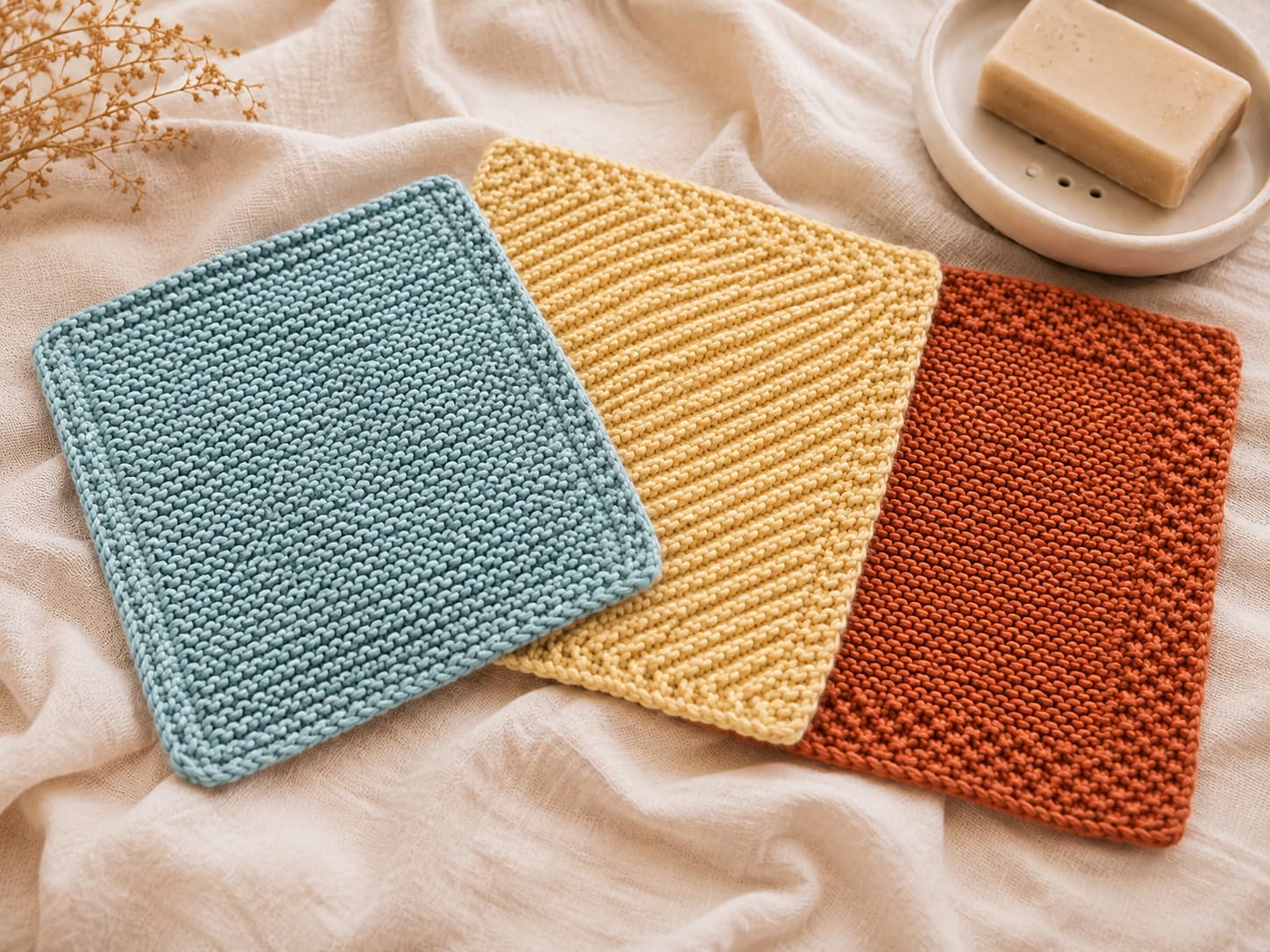
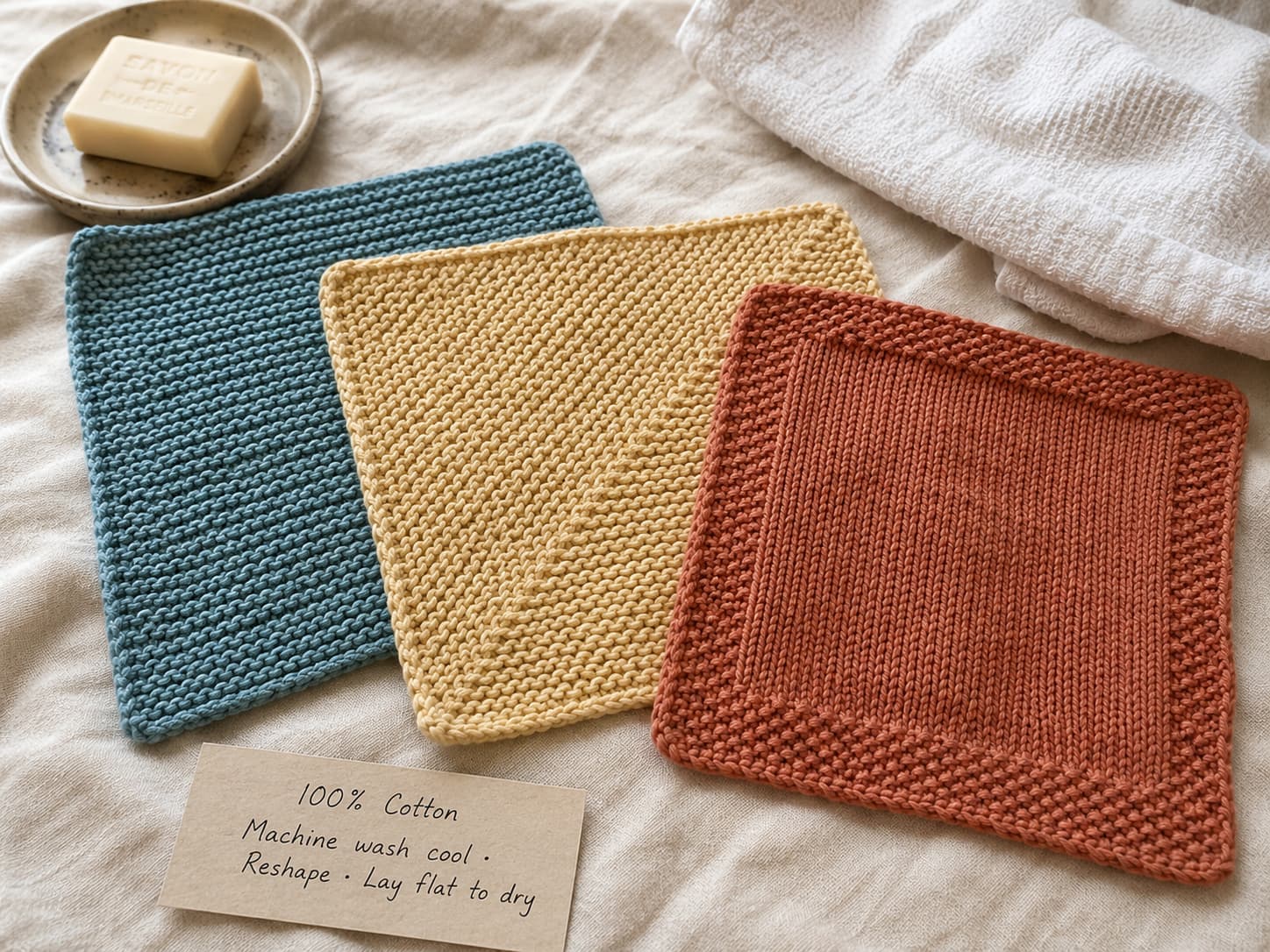
Image 01 · Three knitted dishclothsSuggested file: knitsoul-knit-dishcloth-pattern-set-aqua-butter-terracotta.jpgReplace only this img src value with the full HTTPS WordPress Media URL.
Three different constructions share one soft kitchen palette while each cloth keeps a clearly different stitch texture.
Skill levelBasic → easy
The set adds one new skill at a time.
YarnCategory 4 cotton
Plan roughly 180–240 yd / 165–220 m for all three.
Needles4.5 mm
Use straight or circular needles and adjust only to obtain useful fabric.
Finished sizeAbout 8–8½ in
Final dimensions depend on gauge and washing.
PatternsGarter · diagonal · framed
Three structures, one coordinated set.
PaletteAqua · butter · terracotta · ivory
Soft kitchen colors with distinct textures.
On this page
Skill map
Give every cloth one clear practice goal
Garter square
Practise relaxed cast-on, knit stitch, row counting, edge recognition, and a loose bind-off.
Diagonal cloth
Use one increase and one decrease to shape a square on the bias while knitting every row.
Framed centre
Combine knit and purl stitches, maintain a seed-stitch border, and prevent stockinette curl.
Materials and color
Choose cotton that feels useful after washing, not only in the skein
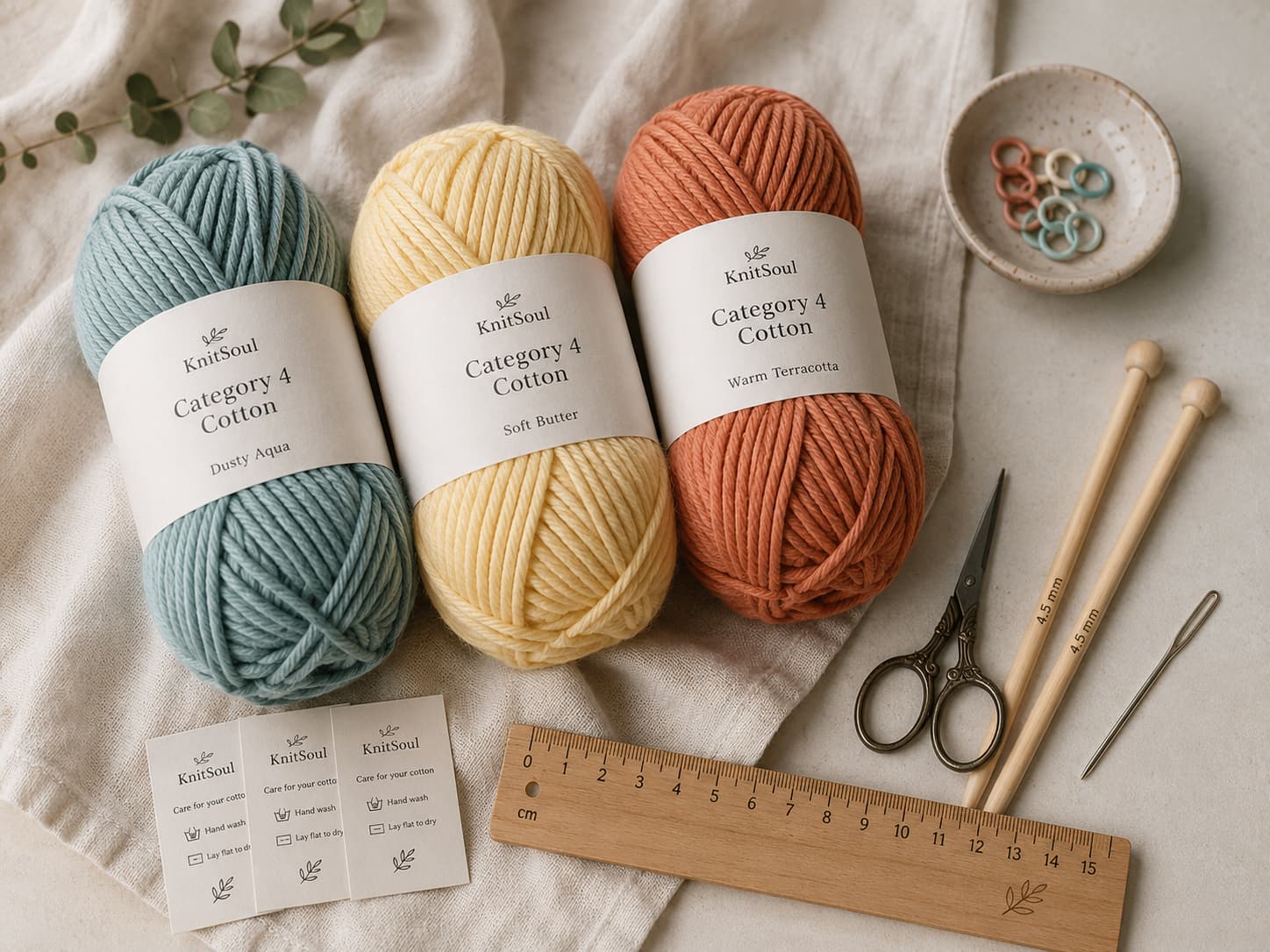
Image 02 · Cotton yarn and knitting toolsSuggested file: knitsoul-knit-dishcloth-materials-aqua-butter-terracotta.jpgReplace only this img src value with the full HTTPS WordPress Media URL.
Smooth, washable cotton and consistent needle size make the three finished cloths easier to compare.
Item
Specification
Purpose
Yarn
180–240 yd / 165–220 m smooth Category 4 cotton
Enough for three samples plus swatching and finishing.
Needles
4.5 mm, or size needed for a firm washed fabric
Dishcloth gauge should be flexible enough to handle but dense enough to wipe.
Supports finishing, measurement, and the framed-centre pattern.
Sample colors
Dusty aqua, soft butter, warm terracotta
One solid shade per structure keeps the stitch pattern easy to read.
Care record
Keep the label or photograph its care symbols
The recipient needs the exact laundering instructions.
Gauge and washing
Use a washed swatch to judge density, shrinkage, and hand feel
Reference gauge: approximately 18 stitches and 26 rows = 4 in / 10 cm in stockinette after washing. Garter row gauge will differ, which is why the square pattern uses a measurement checkpoint instead of one universal final row count.
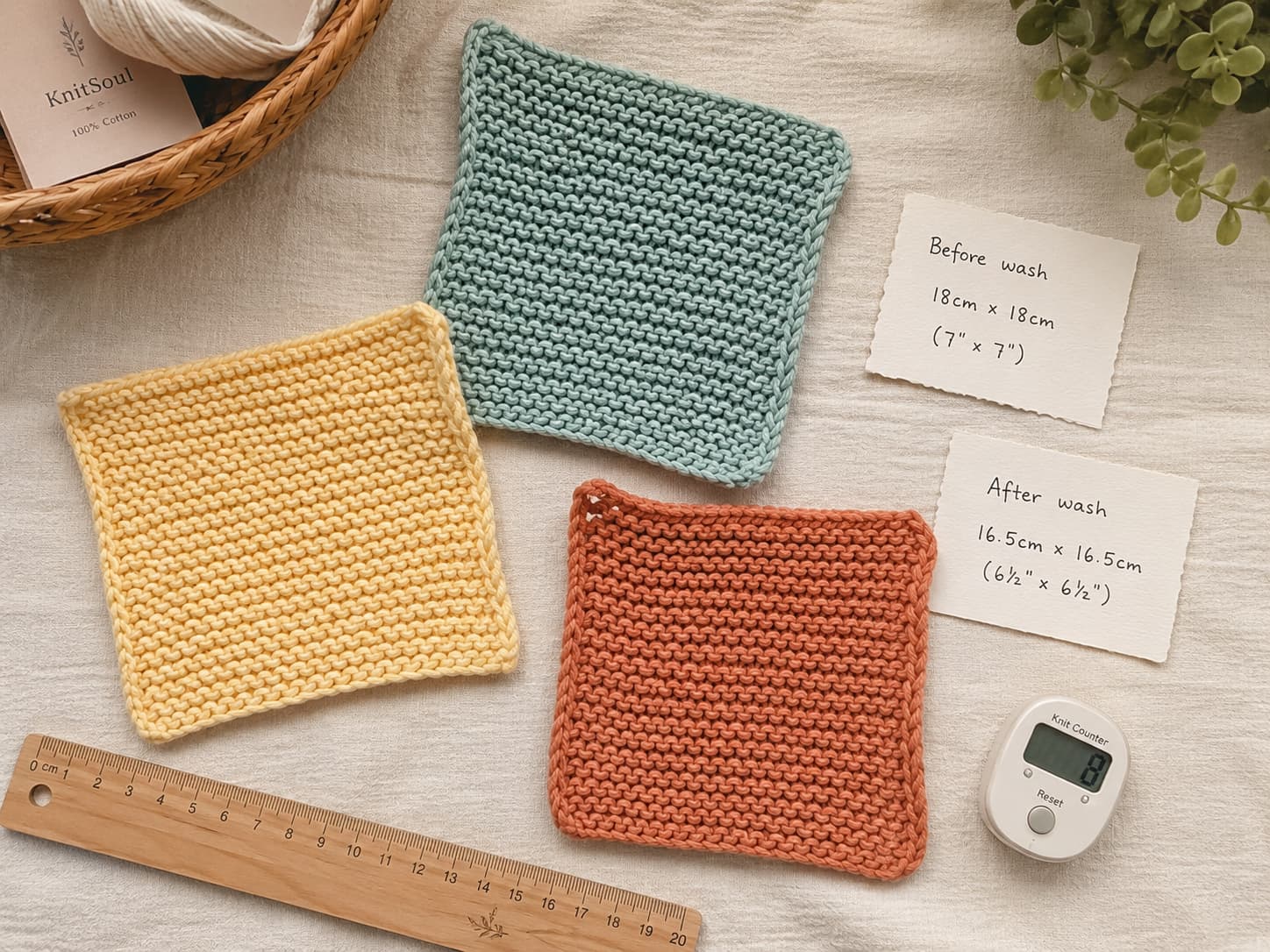
Image 03 · Washed gauge and size checkSuggested file: knitsoul-knit-dishcloth-washed-gauge-swatches.jpgReplace only this img src value with the full HTTPS WordPress Media URL.
Dishcloth gauge is flexible, but a washed swatch shows shrinkage, density, and whether the fabric feels useful.
Design
Working count
Target after washing
Garter square
38 sts; knit to square measurement
About 8–8½ in / 20–21.5 cm
Diagonal cloth
3 → about 55 → 3 sts
About 8–8½ in square
Seed-stitch frame
38 sts; 6 + 26 + 6 layout
About 8–8½ in square
Complete free patterns
Three dishcloths written as standalone projects
Design 1 · Classic Garter Square
Dusty aqua sample
Classic Garter Dishcloth
Cast on38 stitches
StitchKnit every row
Foundation
Cast on 38 stitches with a relaxed, durable method.
All rows
Knit every stitch. Continue until the relaxed length matches the relaxed width. At the reference sample gauge this is usually close to 8½ in / 21.5 cm before the final wash, but your measurement is the deciding checkpoint.
Finish
Bind off knitwise without tightening the edge. Leave 6 in / 15 cm tails and weave them through several garter ridges in changing directions.
Design 2 · Diagonal Corner-to-Corner
Soft butter sample
Diagonal Garter Dishcloth
Cast on
Cast on 3 stitches.
Increase section
Every row: K1, kfb, knit to end. Repeat until 55 stitches are on the needle, or until both straight edges from the cast-on corner measure the desired finished side length. Starting from 3 stitches, reaching 55 requires 52 increase rows.
Decrease section
Every row: K1, k2tog, knit to end. Repeat until 3 stitches remain. Keep the decrease on the same edge as the earlier increase line.
Finish
Bind off the final 3 stitches knitwise and weave in the tails without pulling the points inward.
Design 3 · Seed-Stitch Border and Stockinette Centre
Warm terracotta sample
Framed Stockinette Dishcloth
Total stitches38
Layout6 border + 26 centre + 6 border
Bottom border · Rows 1–8
Cast on 38 stitches. Work *k1, p1; repeat from * across every row. With an even stitch count, repeating the same sequence after turning creates seed stitch rather than ribbing.
Body · Right-side rows
Work (k1, p1) 3 times, knit 26, then work (k1, p1) 3 times.
Body · Wrong-side rows
Work (k1, p1) 3 times, purl 26, then work (k1, p1) 3 times. Repeat the two body rows until the piece measures about 7 in / 18 cm from the cast-on edge, ending after a wrong-side row.
Top border and finish
Work 8 rows of *k1, p1* across every row. Bind off in pattern with a relaxed edge and weave in the tails.
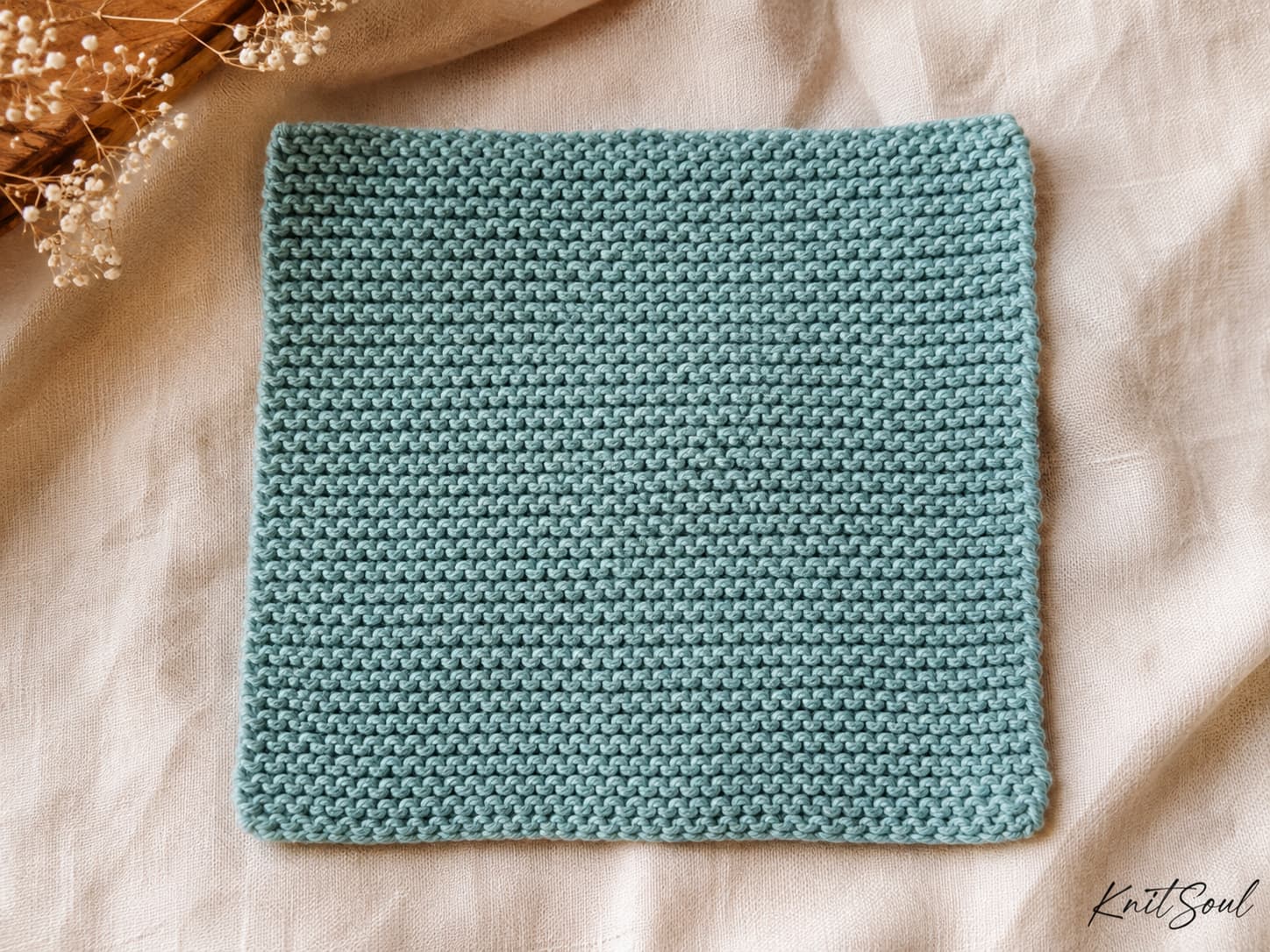
Image 04 · Classic garter dishclothSuggested file: knitsoul-classic-garter-knit-dishcloth-dusty-aqua.jpgReplace only this img src value with the full HTTPS WordPress Media URL.
Knit every row until the length matches the width, then bind off with the same relaxed tension as the cast-on.
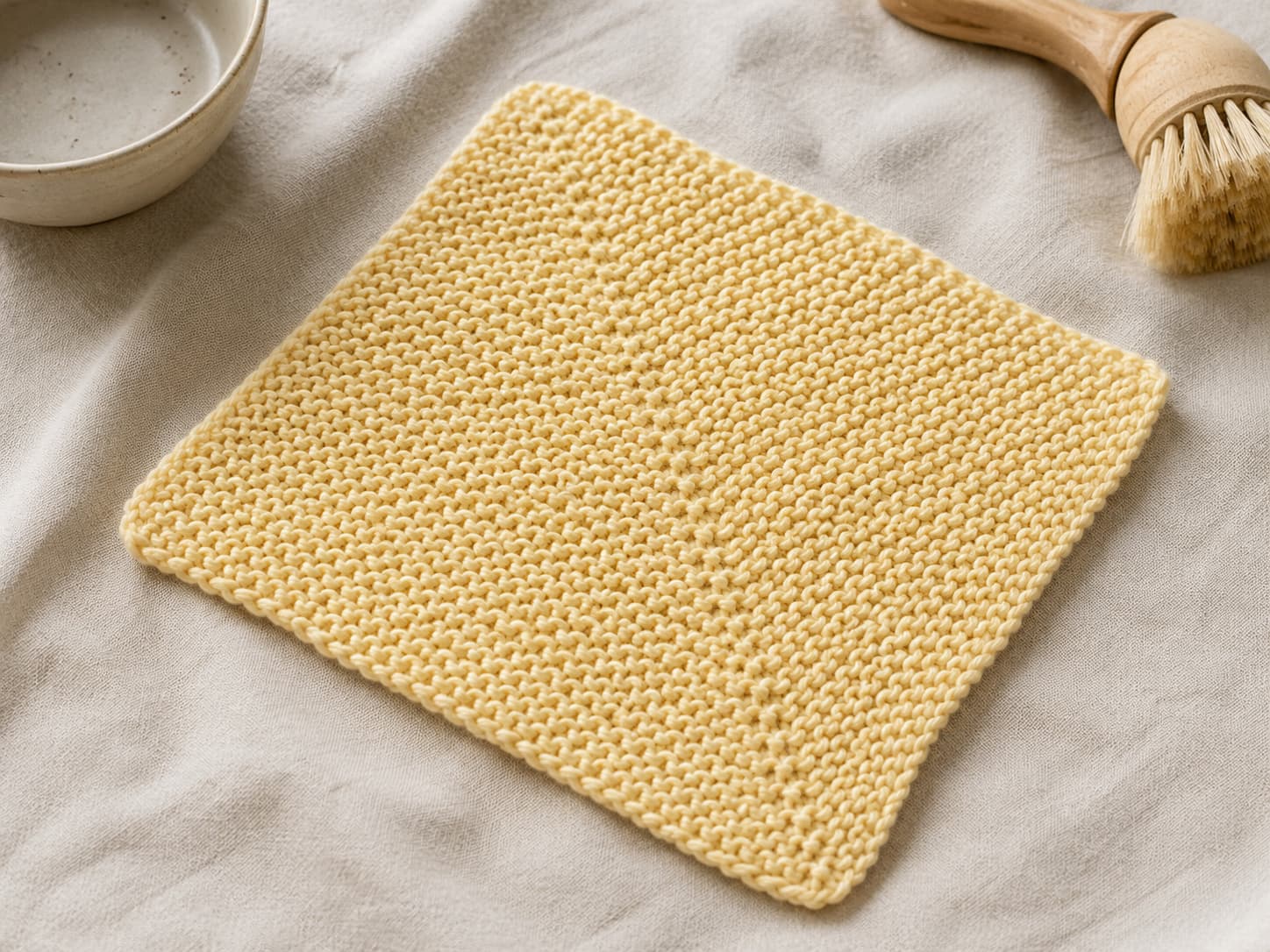
Image 05 · Diagonal corner-to-corner dishclothSuggested file: knitsoul-diagonal-knit-dishcloth-soft-butter.jpgReplace only this img src value with the full HTTPS WordPress Media URL.
The bias construction teaches one increase and one decrease while keeping the fabric in garter stitch.
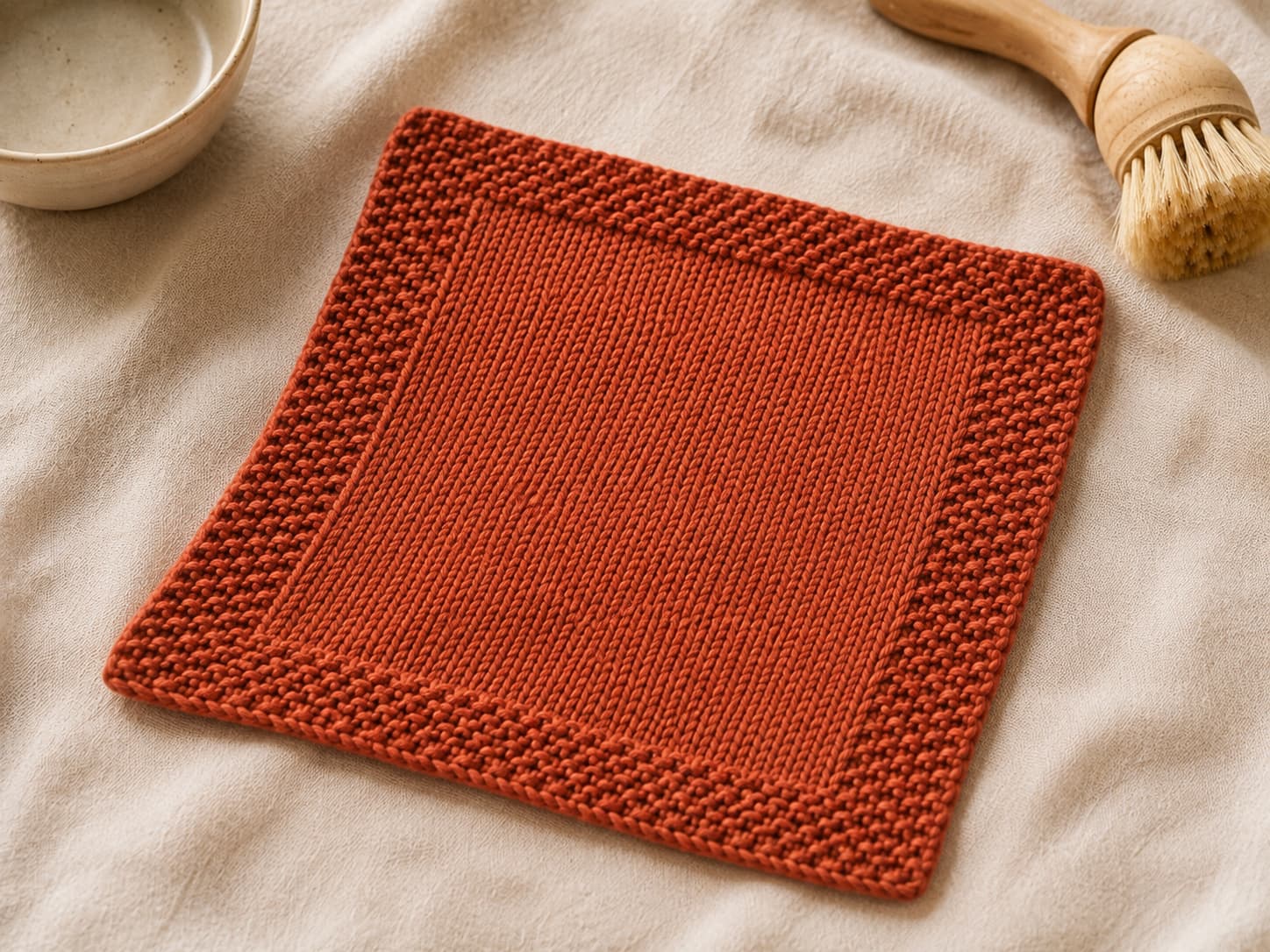
Image 06 · Seed-stitch border dishclothSuggested file: knitsoul-seed-stitch-border-dishcloth-warm-terracotta.jpgReplace only this img src value with the full HTTPS WordPress Media URL.
An even seed-stitch frame balances the stockinette centre and helps the cloth lie flatter.
Finishing and care
Wash the samples before deciding their final size and gift presentation
Weave in every tail securely without creating a tight lump.
Wash according to the specific yarn label.
Avoid fabric softener when absorbency matters.
Reshape the damp cloths to measured squares and dry as directed.
Record the dry dimensions and compare the three fabrics.
Image 07 · Wash, reshape, and careSuggested file: knitsoul-cotton-dishcloth-wash-reshape-care.jpgReplace only this img src value with the full HTTPS WordPress Media URL.
Wash the samples according to the yarn label and record the dry size before publishing final measurements.
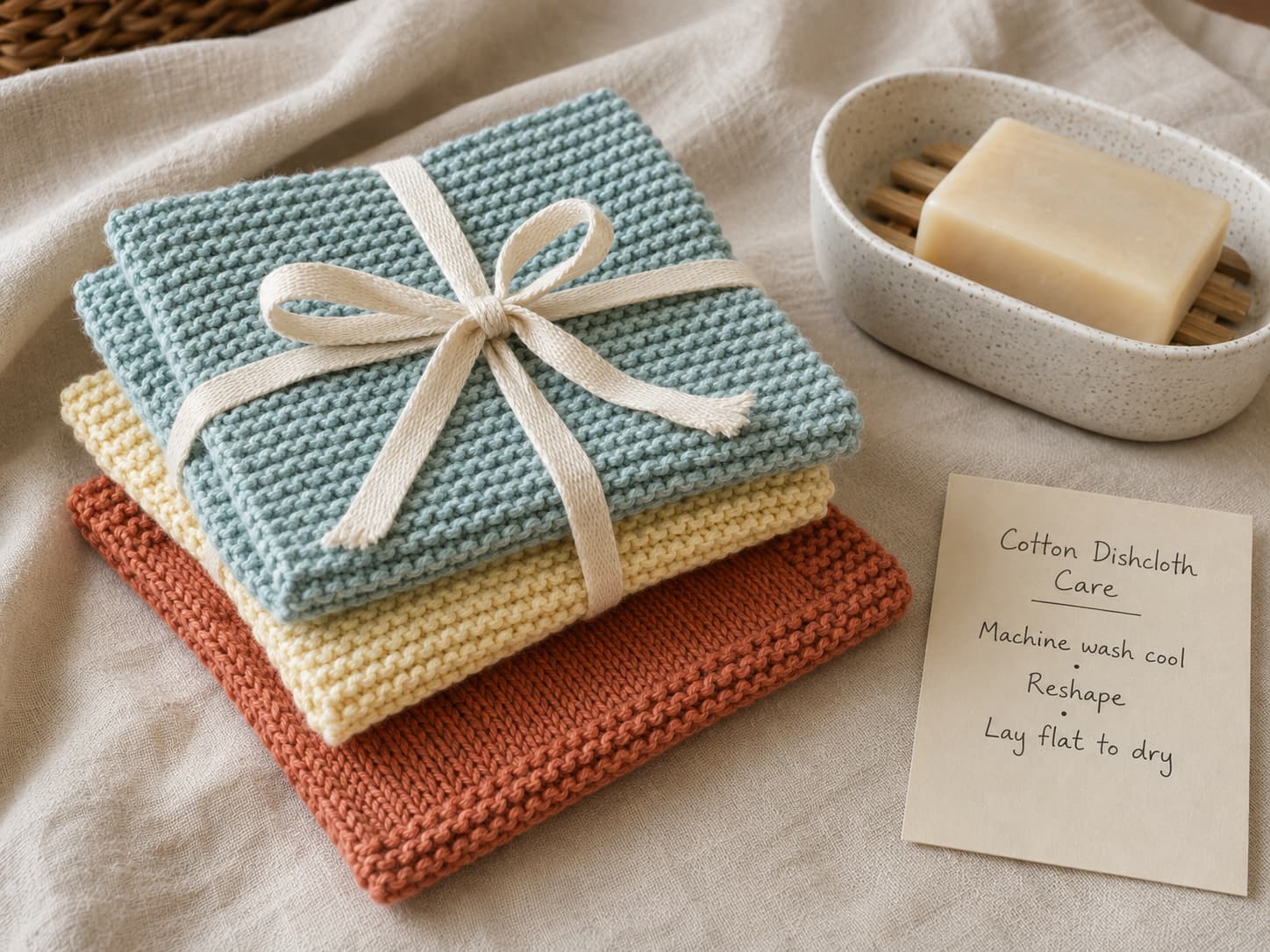
Image 08 · Finished dishcloth gift setSuggested file: knitsoul-knit-dishcloth-gift-set-aqua-butter-terracotta.jpgReplace only this img src value with the full HTTPS WordPress Media URL.
A three-cloth set feels coordinated when the fibre and yarn construction match even though the stitch patterns differ.
Troubleshooting
Six errors that change shape, texture, or usefulness
Copying one row count
Garter row gauge varies; knit until the measured length matches the width.
Uneven diagonal shaping
Increase and decrease at the same edge on every row and count at frequent checkpoints.
Seed stitch becomes ribbing
With 38 stitches, repeat k1, p1 on every seed-stitch row instead of reversing the sequence.
Missing edge stitches
Mark the final stitch until straight edges and full row counts become easy to recognise.
Tight bind-off
Use relaxed loops or a slightly larger needle so the top edge matches the cast-on width.
Publishing prewash dimensions
Cotton may change after laundering, so measure the fully dry sample.
Continue learning
Turn the three cloths into a broader beginner skill set
1. What yarn is most practical for knitted dishcloths?
Smooth, washable cotton is the standard starting point because it absorbs water, tolerates repeated laundering, and gives useful body. Cotton–linen blends can also work when the care label suits kitchen use. Avoid treating any dishcloth as a potholder or placing it against cookware taken directly from high heat.
2. How much yarn does each dishcloth use?
Plan on roughly 55–80 yards / 50–73 metres of Category 4 cotton per cloth. The diagonal design and a loose gauge may use more. Weigh the yarn before and after each washed sample if you want a reliable figure for the exact yarn and needle combination.
3. Why does the pattern tell me to measure instead of relying only on row counts?
Garter stitch row gauge varies widely, and cotton can change after washing. Measuring the actual width and length produces a squarer cloth than copying a universal row count that may not match your hands or yarn.
4. How do I keep the diagonal dishcloth square?
Increase one stitch on every row until the two side edges from the cast-on point reach the target size or the sample reaches 55 stitches. Then decrease one stitch on every row at the same edge until three stitches remain. Count frequently and keep the increase and decrease rhythm consistent.
5. Why is my seed-stitch border turning into ribbing?
With an even stitch count, repeat k1, p1 on every seed-stitch row. Because the work is turned, each knit is worked over a purl from the previous row. Changing to p1, k1 on alternate rows would stack the columns and create ribbing instead.
6. Can I machine-wash and dry the finished cloths?
Use the specific yarn label. Many kitchen cottons permit machine washing, but water temperature and dryer instructions differ. Avoid fabric softener when absorbency matters, reshape after washing, and test the chosen routine on one sample first.
7. May I sell dishcloths made from these patterns?
You may sell finished physical dishcloths made from the patterns. Do not copy, redistribute, or sell the written instructions or photography. Credit and a link to Knitsoul are appreciated when the finished items are listed online.
Three useful lessons
Let the first cloth build rhythm, the second shape fabric, and the third combine textures
Measure instead of forcing universal row counts, keep the shaping sequence visible, and judge cotton only after washing. The finished set becomes both a kitchen tool and a record of three core knitting skills.