Knitting Abbreviations & Chart Symbols: A Complete Beginner Reference
Look up common pattern terms, increases, decreases, yarn positions, cables, colorwork, finishing directions, chart-reading rules, and the symbol concepts that appear most often.
Written by Sophie Lane•Published •About 13 minutes to read
Use the general dictionary, then follow the pattern’s own key
Knitting abbreviations compress repeated instructions, while chart symbols map stitches visually across rows or rounds. Many terms are standardized across the yarn industry, but designers can define special abbreviations and cable symbols that do not appear in a general list.
This page is the quick-reference companion to How to Read Knitting Patterns. Use that guide for pattern structure, sizing, gauge, and repeat logic. Use this page when you need to translate a specific term or chart concept.
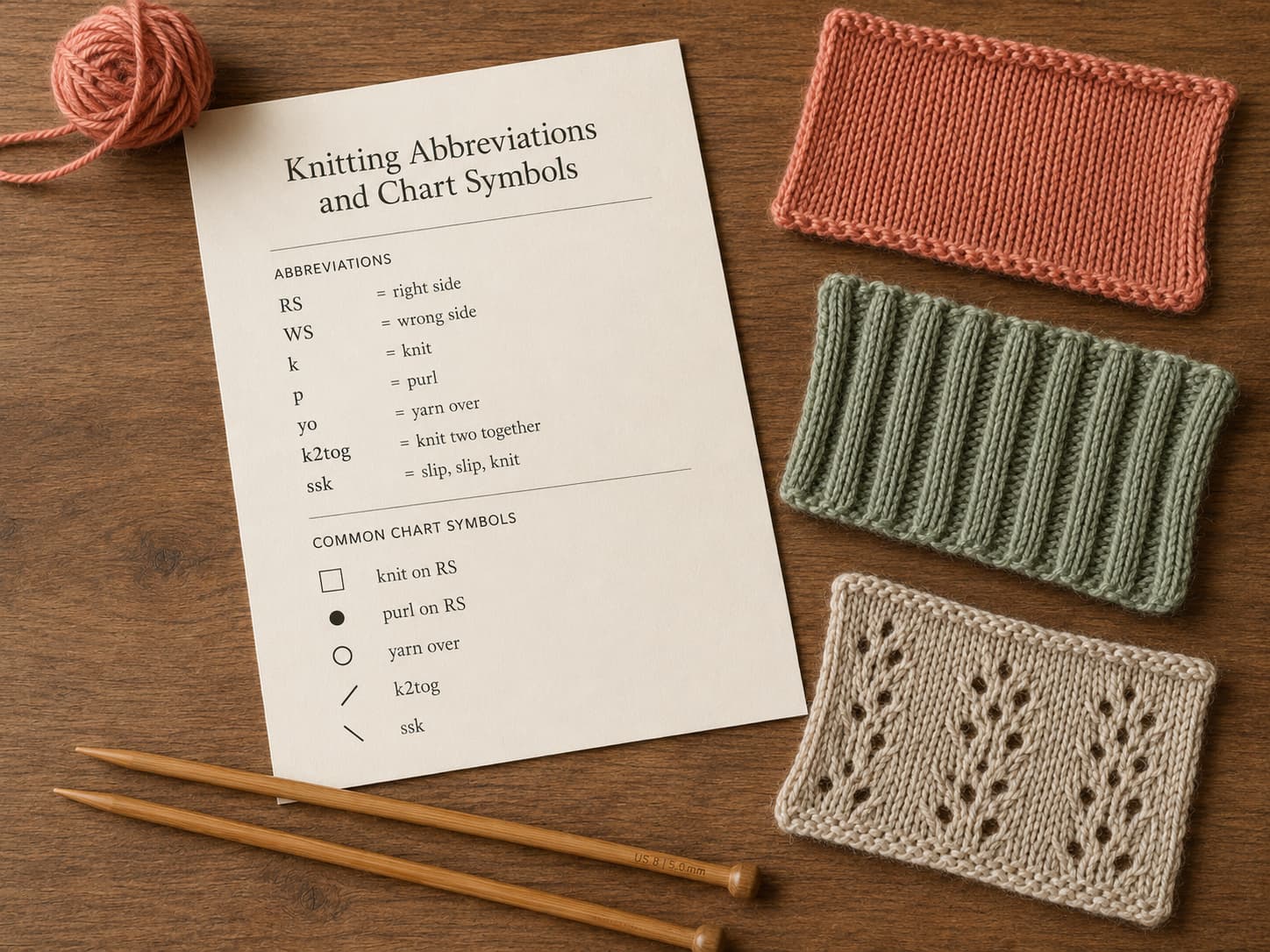
Image 01 · Abbreviation key and knitting chartSuggested file: knitsoul-knitting-abbreviations-chart-symbols-warm-coral-sage-hero.jpgReplace only the img src value above with the full HTTPS WordPress Media URL.
Use a small palette of warm coral, muted sage, and oatmeal so abbreviations, chart references, and swatches feel clearer and more visually inviting.
Boxes represent stitches, actions, or layout placeholders.
Flat directionAlternating
RS right-to-left; WS left-to-right in most charts.
Round directionRight-to-left
Every round normally begins from the chart’s right edge.
No-stitch cellSkip it
It aligns shaping but does not consume a live stitch.
Final authorityPattern key
Project-specific definitions override this reference.
On this page
Reference method
Decode the term in four passes
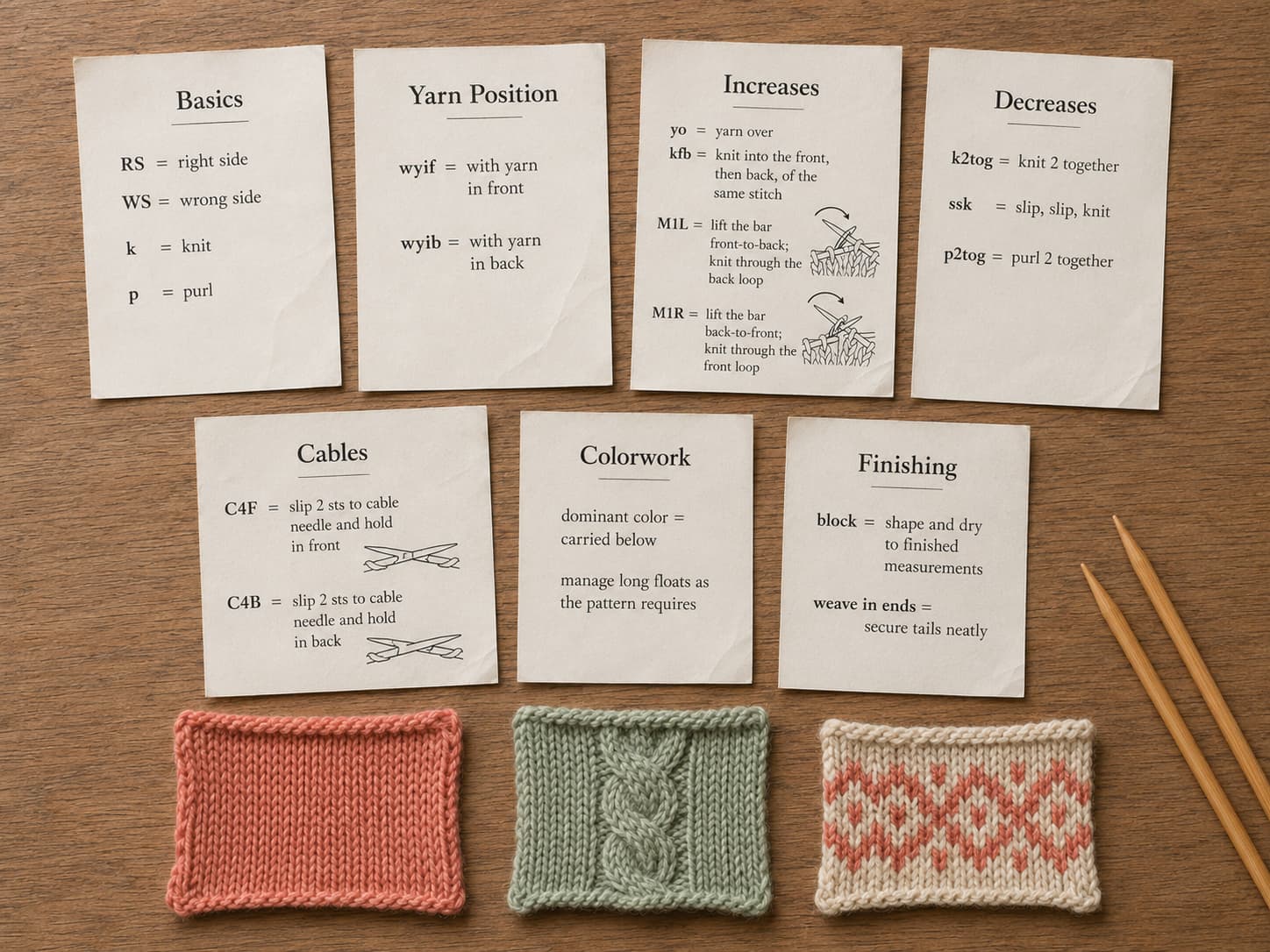
Image 02 · Abbreviations grouped by functionSuggested file: knitsoul-knitting-abbreviations-categories-warm-coral-sage-reference.jpgReplace only the img src value above with the full HTTPS WordPress Media URL.
A grouped reference works best when the color accents stay coordinated and the categories remain easy to scan.
1
Find the category. Is it a basic action, yarn position, increase, decrease, cable, color instruction, or finishing direction?
2
Read the full phrase. Break compounds into parts: k2tog tbl means knit two together through the back loops.
3
Check side and direction. RS/WS, knitwise/purlwise, front/back, left/right, and yarn position can change the result.
4
Confirm the pattern key. Follow the designer’s special-stitch definition when it differs from a general convention.
Double decrease; visible centering depends on method.
S2KP2
Slip two together knitwise, knit one, pass two over
Centered double decrease in many standards.
Dictionary 4
Cable notation is the category most likely to change by publisher
Example
Common interpretation
What the key must confirm
cn
Cable needle
Whether a cable needle is required or optional.
1/1 RC
One stitch crosses right over one stitch
Front/back hold and whether stitches are knit or purled.
1/1 LC
One stitch crosses left over one stitch
Exact hold position and stitch actions.
2/2 RC
Two stitches cross right over two stitches
Total stitches, hold position, and stitch type.
2/2 LC
Two stitches cross left over two stitches
Total stitches, hold position, and stitch type.
C4F
Four-stitch cable with held stitches in front in many patterns
Often a 2-over-2 cable, but verify the split.
C4B
Four-stitch cable with held stitches in back in many patterns
Often a 2-over-2 cable, but verify the split.
RPC / LPC
Right or left purl cross
Which group is knit and which group is purled.
RT / LT
Right twist / left twist
Can be a compact cable method without a cable needle.
Dictionary 5
Color, construction, and finishing terms complete the pattern language
Abbreviation or term
Meaning
Use
MC
Main color
Primary yarn color.
CC / C1 / C2
Contrast or numbered color
Secondary yarns defined by the pattern.
BOR
Beginning of round
Often marked with a distinctive marker.
pu
Pick up
Lift loops or stitches along an edge as directed.
pick up and knit
Create new live stitches from an edge
Method and rate affect the finished edge.
work even
Continue without increasing or decreasing
Maintain current count and established pattern.
at the same time
Work two instruction tracks simultaneously
Use separate counters or notes.
reverse shaping
Mirror a previously worked section
Move shaping to the opposite edge and direction.
place on holder
Keep stitches live for later
Use waste yarn, holder, or spare cable.
fasten off
Cut and secure yarn
Follow project-specific finishing instructions.
Chart reading
Read direction, key, repeat border, and row count together
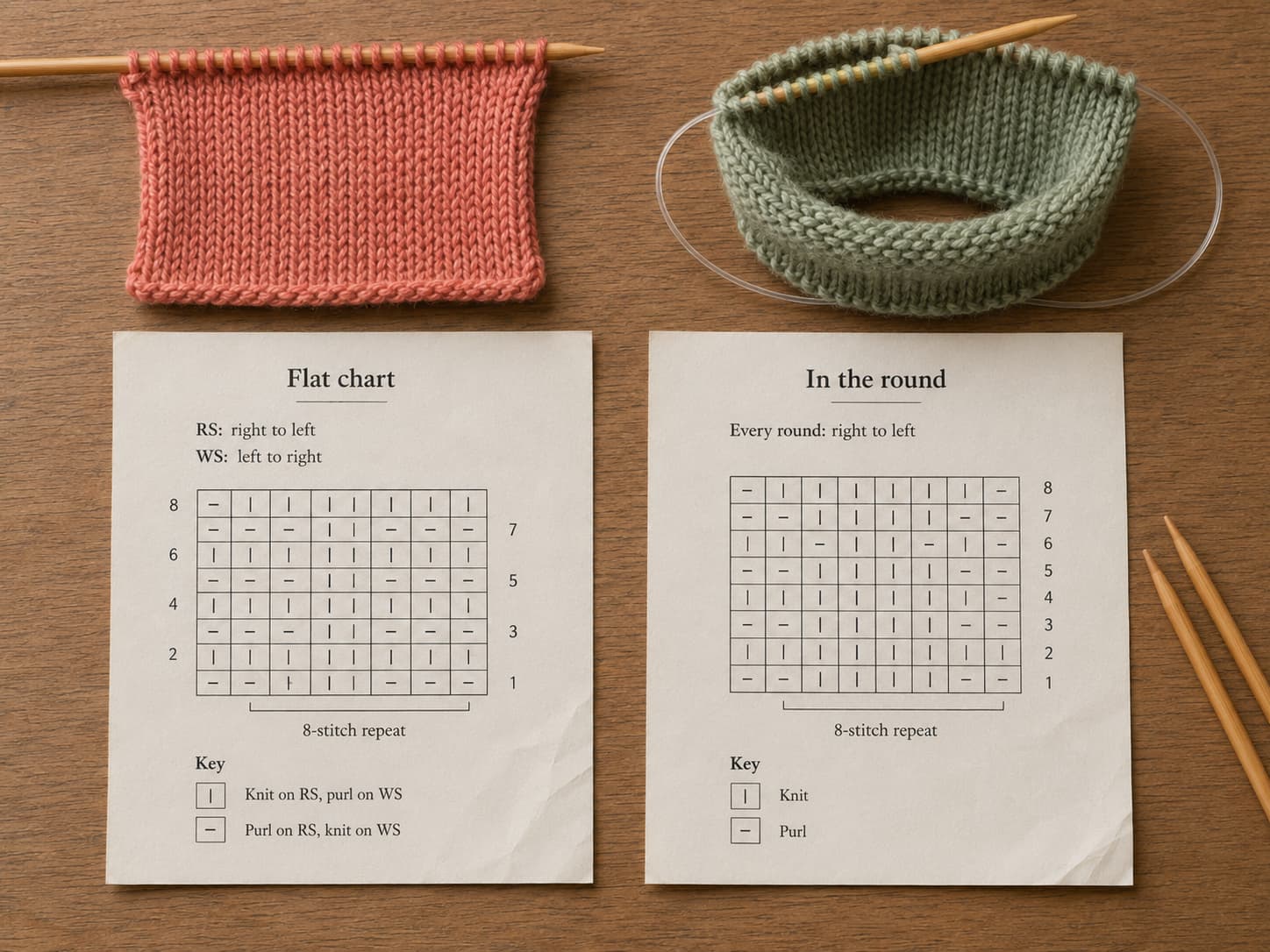
Image 03 · Flat and circular chart directionSuggested file: knitsoul-knitting-chart-reading-direction-coral-sage.jpgReplace only the img src value above with the full HTTPS WordPress Media URL.
Use color sparingly to distinguish flat and in-the-round chart reading without distracting from the directional logic.
Begin at the lowest numbered row. Charts usually build upward like the fabric.
Flat RS rows normally read right to left. Flat WS rows normally read left to right.
Circular rounds normally read right to left. The public side remains facing the knitter.
Use the row numbers as direction clues. A number is often printed on the side where the row begins.
Check whether WS rows are charted. Some charts show only RS rows and state a separate WS instruction.
Follow the key on both sides. A symbol may tell you how the stitch appears from the RS, requiring a different action on a WS row.
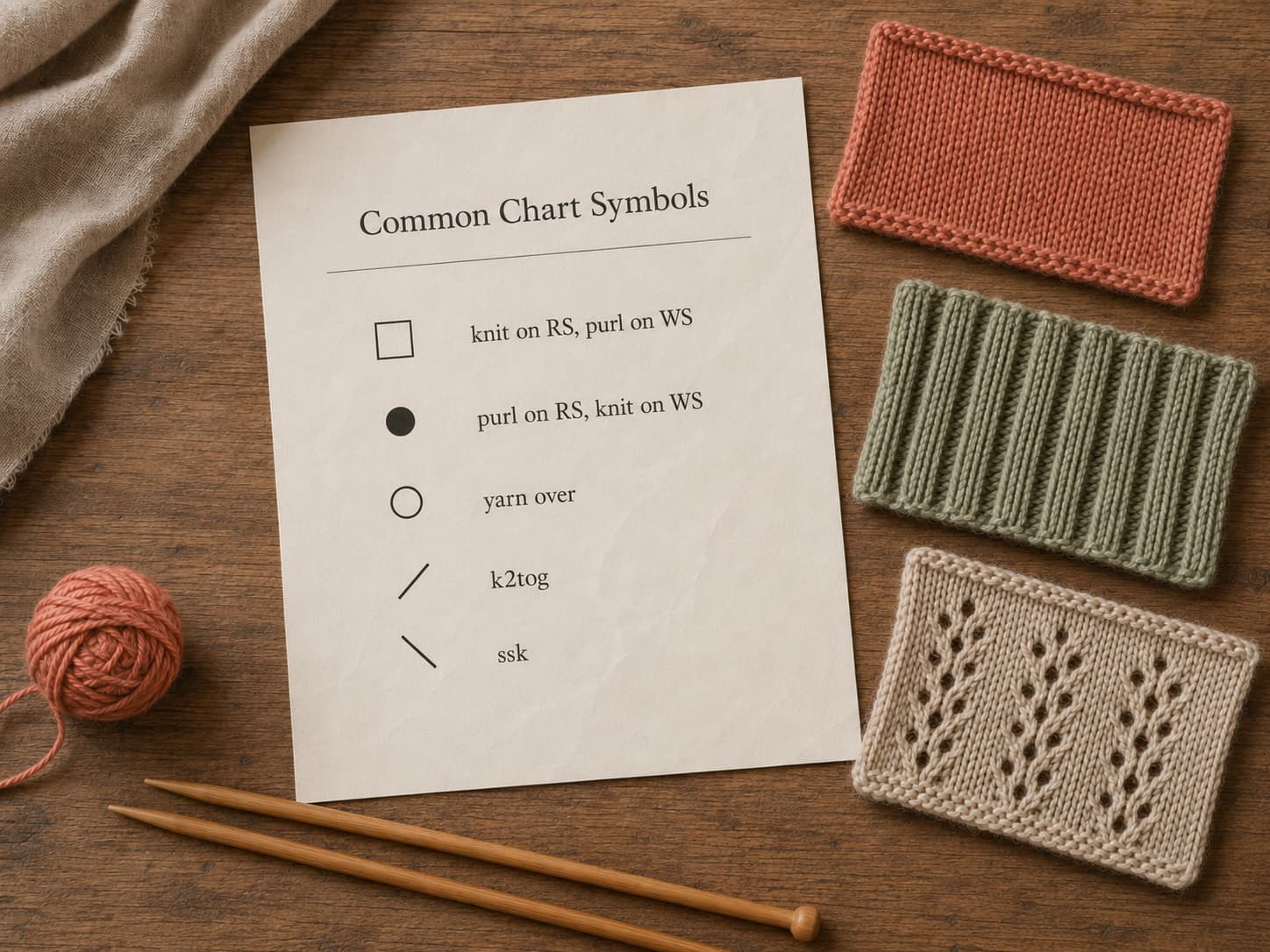
Image 04 · Chart key beside fabricSuggested file: knitsoul-knitting-chart-key-oatmeal-coral-sage.jpgReplace only the img src value above with the full HTTPS WordPress Media URL.
The chart key should stay visually calm, with just enough color to separate stitch concepts and matching fabric details.
Symbol concepts
Learn the common meaning without assuming one exact drawing
blank cell
Knit-face stitch
Often k on RS and p on WS, but the key controls the action.
dot / dash
Purl-face stitch
Often p on RS and k on WS.
○
Yarn over
Adds a loop and usually creates an eyelet.
right slash
Right-slant decrease
Often k2tog on RS with a corresponding WS action.
left slash
Left-slant decrease
Often ssk on RS with a corresponding WS action.
center line
Centered decrease
Can represent a centered double decrease; verify exact method.
twisted mark
Through back loop
Often k1 tbl on RS and p1 tbl on WS.
shaded cell
No stitch
Skip the cell; it is a chart-layout placeholder.
diagonal band
Cable crossing
Width, direction, and stitch types come from the key.
special icon
Bobble or cluster
Work the project’s special-stitch instructions.
outlined box
Pattern repeat
Repeat the enclosed stitches as the written directions state.
edge marker
Size or chart boundary
Work only the chart area assigned to the selected size.
Chart families
Cable and lace charts ask you to track different relationships
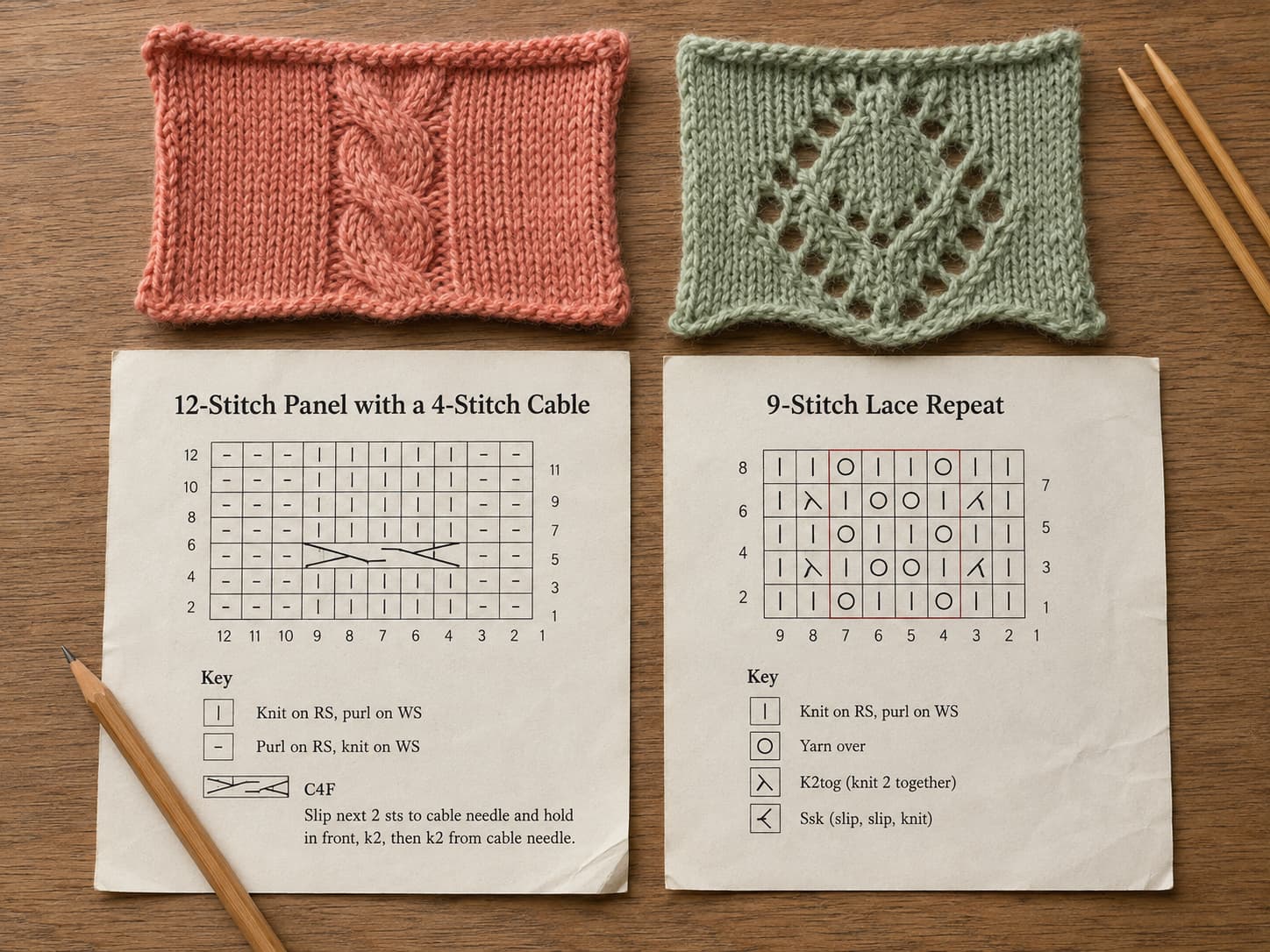
Image 05 · Cable and lace chart comparisonSuggested file: knitsoul-knitting-cable-lace-chart-coral-sage-comparison.jpgReplace only the img src value above with the full HTTPS WordPress Media URL.
Cable charts emphasize crossing rows and held stitches, while lace charts emphasize yarn overs, directional decreases, and repeat boundaries.
Cable charts
Track crossing rows, the number of stitches involved, front/back hold, knit/purl groups, and the rows worked even between crossings.
Lace charts
Track yarn overs, single and double decreases, repeat borders, changing counts, and no-stitch placeholders.
Chart layout
Skip no-stitch cells and repeat only the defined area
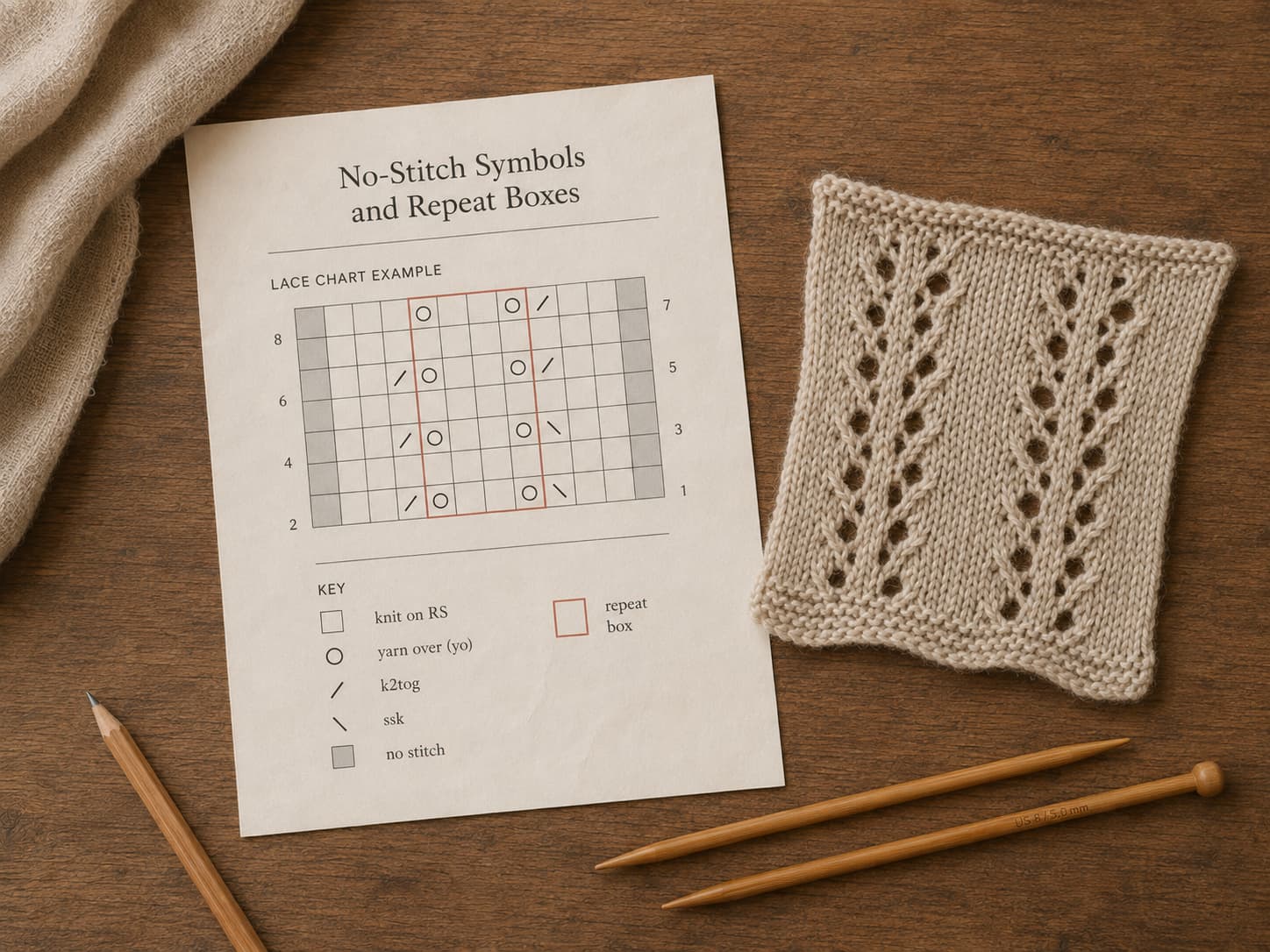
Image 06 · No-stitch and repeat boxesSuggested file: knitsoul-knitting-chart-no-stitch-repeat-box-oatmeal-coral.jpgReplace only the img src value above with the full HTTPS WordPress Media URL.
Keep the no-stitch and repeat-box image neutral overall, then use a small warm-coral accent to guide the eye to the chart structure.
A no-stitch square occupies visual space but does not represent a loop on the needle. Move to the next actual symbol. Repeat borders may show only the center section; work edge stitches once, repeat the boxed area as directed, then work the ending stitches once.
Troubleshooting
Six mistakes that turn shorthand into the wrong fabric
Skipping the project key
General references cannot define every special stitch or cable split.
Reading every flat row right to left
Most WS rows reverse direction unless the chart omits them.
Working a no-stitch cell
Skip it completely; it is not a slip stitch or blank knit cell.
Confusing visible slant
Pair the intended right- and left-leaning decreases instead of substituting freely.
Assuming cable letters define the split
Read how many stitches are held and how both groups are worked.
Losing the active chart row
Use a removable strip, row counter, and written note before stopping.
1. Do knitting abbreviations mean the same thing in every pattern?
Many common abbreviations are widely standardized, but designers and publishers can define special terms or use different cable notation. Read the pattern’s abbreviation list and special-stitch section before relying on a general reference. The project-specific definition controls the project.
2. What is the difference between written instructions and a chart?
Written instructions describe stitches in sequence. A chart maps stitches in a grid and often shows how the fabric appears from the right side. Either format can be complete. Use the chart key, repeat borders, row numbers, and written notes together when the pattern supplies both.
3. Which direction do I read a flat knitting chart?
Most flat charts begin at the bottom. Right-side rows are normally read right to left and wrong-side rows left to right. The row number is often printed on the side where that row begins. Always check the chart notes because a pattern may omit wrong-side rows or use a different convention.
4. Which direction do I read a chart worked in the round?
Charts worked in the round are usually read from the bottom upward and right to left on every round because the right side remains facing you. Confirm whether the chart shows every round and whether any blank or omitted rounds have separate written instructions.
5. What does a no-stitch square mean?
It is a layout placeholder used where a stitch does not exist on that chart row. Skip the square without knitting, purling, or slipping anything. It keeps shaping aligned visually while the actual stitch count changes.
6. Why does one cable abbreviation look different in another pattern?
Cable notation is especially variable. A pattern may use C4F, 2/2 LC, 4-st LC, or a custom symbol for a similar crossing. The notation must tell you how many stitches are held, where they are held, and how both groups are worked. Use the project key rather than inferring from the letters alone.
7. Should FAQ and article tables replace the pattern’s own key?
No. This page is a general reference. The pattern key defines special stitches, cable splits, right-side and wrong-side chart actions, slip direction, yarn position, and publisher-specific notation. Keep both references available, but follow the pattern when they differ.
Keep the key beside the work
Translate the action, confirm the side, and let the pattern define exceptions
Abbreviations become easier when you recognise their components: stitch, number, direction, side, yarn position, and result. Charts become easier when you track row direction, repeat borders, and the project key.
You do not need to memorize every entry. Use this page as a reference, mark the terms used in the current pattern, and allow repetition to build familiarity.