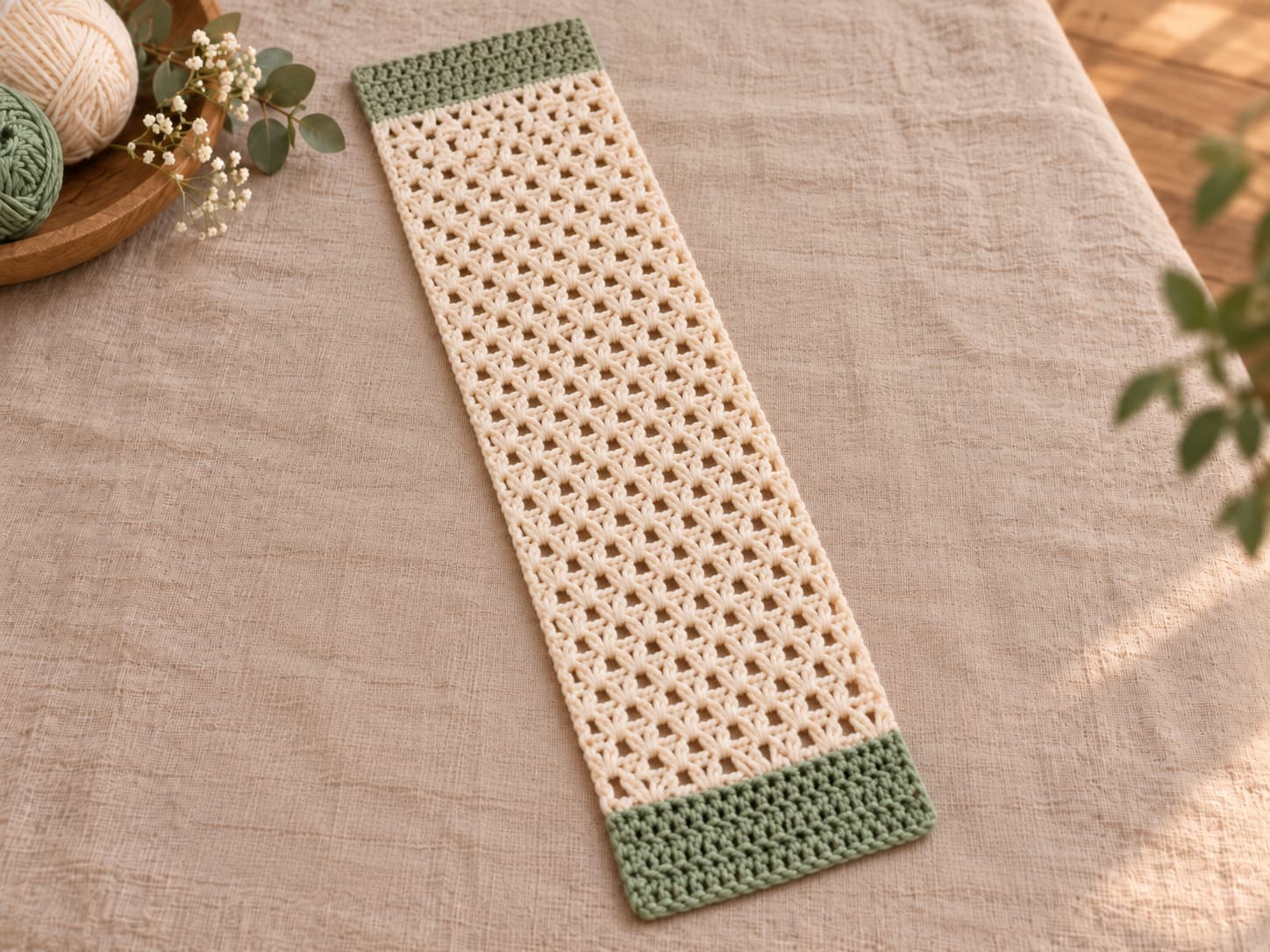
Make a light, wearable scarf with chains, double crochet, and one memorable V-stitch repeat. The pattern includes adjustable width, optional color bands, straight-edge checks, and a simple border.
Written by Sophie Lane•Published •About 16 minutes to read
This easy crochet scarf pattern turns chains and double crochet into an open V-stitch fabric. First, you establish eight V-stitches between two straight edge stitches. Then, you repeat one row until the scarf reaches your preferred length. As a result, the pattern feels rhythmic after the setup row.
The Lakeside scarf is a practical next project after a square swatch or dishcloth. Its chain spaces are easy to see, while the open fabric grows quickly without becoming bulky. However, the foundation count and final edge stitch still matter. Both details are explained before the full instructions.
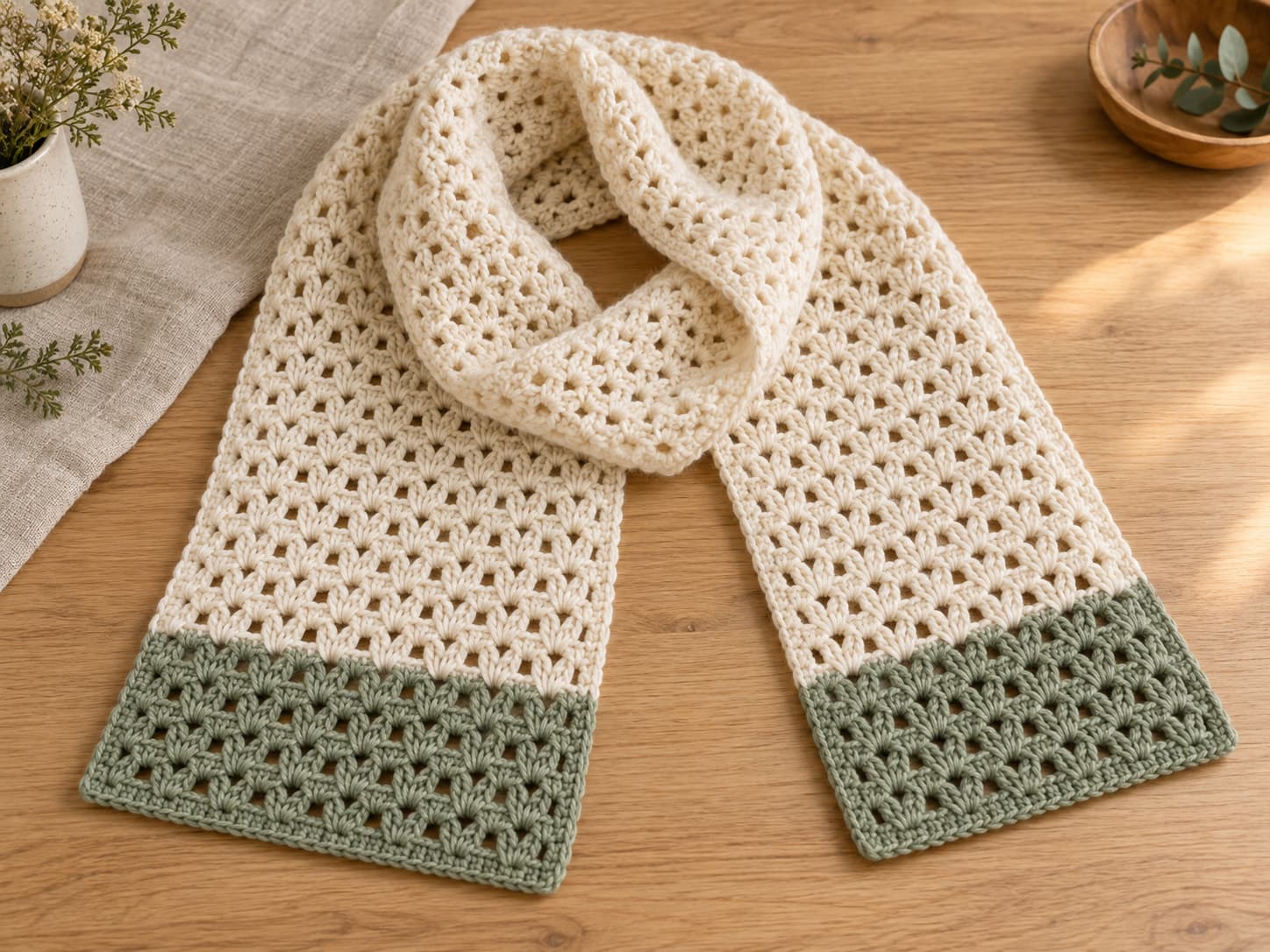
Image 01 · Finished Lakeside scarfSuggested file: knitsoul-easy-crochet-scarf-lakeside-v-stitch.jpgReplace only the img src value above with the full HTTPS WordPress Media URL.
The finished fabric should feel light and flexible, with open V-stitches and two straight long edges.
LevelConfident beginner
Comfort with chains and double crochet helps.
YarnWorsted weight #4
Choose a smooth yarn that feels comfortable at the neck.
Hook6 mm · US J/10
Adjust if needed to create a relaxed fabric.
ConstructionFlat rows
The V-stitches stack into visible chain spaces.
Target sizeAbout 8 × 60 in
Measure the blocked sample and adjust freely.
RepeatOne row
After Row 1, work every V into the space below.
On this page
Materials and preparation
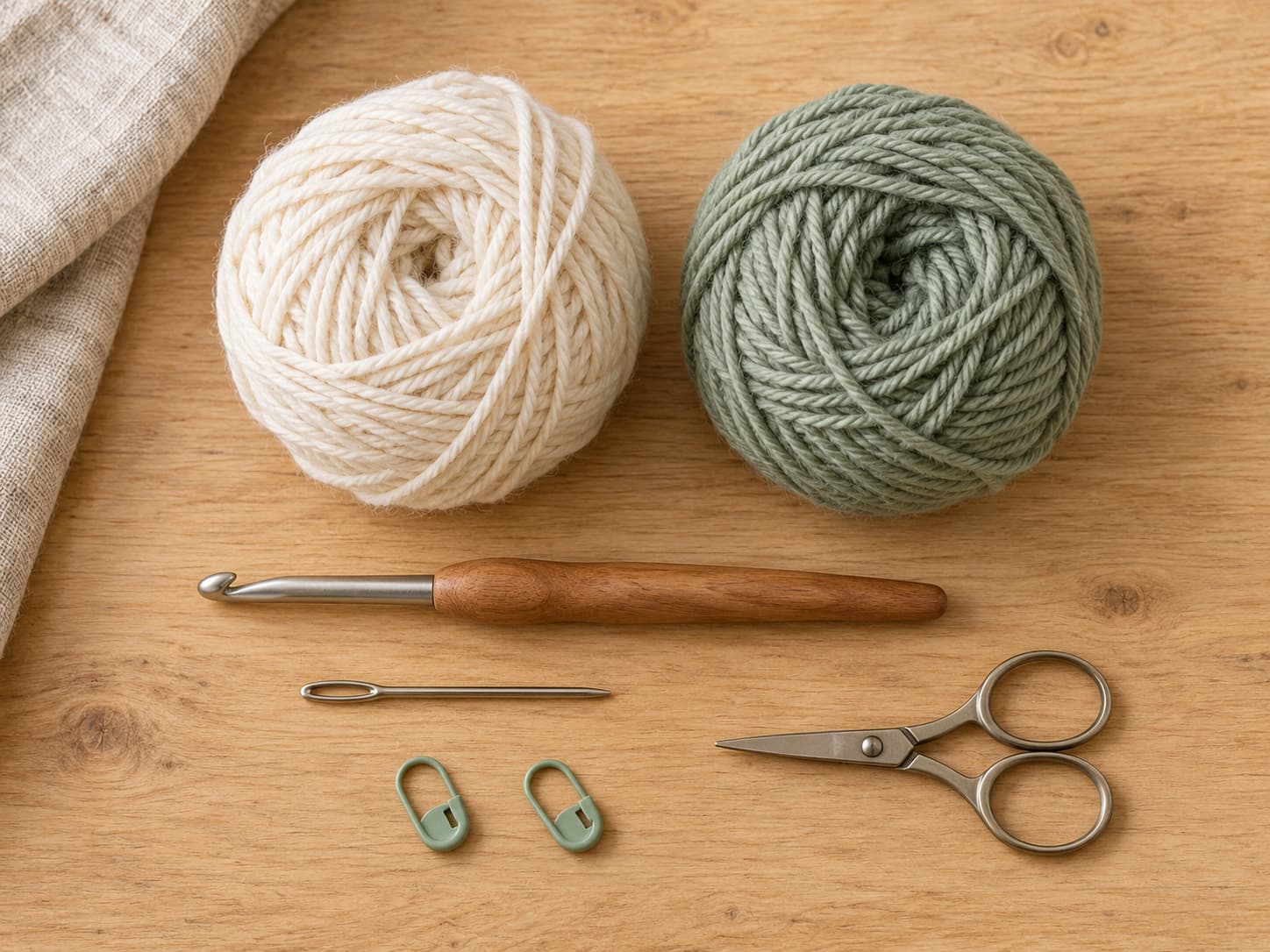
Choose soft yarn and simple tools
A scarf sits directly against the skin, so softness matters more than fiber prestige. Next, choose a smooth worsted-weight yarn with clear stitch definition. In contrast, a very fuzzy or dark yarn can hide the chain-1 spaces while you learn the repeat.
Item
Recommended choice
Why it helps
Yarn
Plan for 450–550 yd (412–503 m) of worsted #4 yarn
This is a planning range for swatching, length changes, and an optional border. Confirm actual use from the physical sample.
Hook
6 mm · US J/10
A larger hook can help the V-stitch drape, but fabric quality is more important than the label size.
Needle
Blunt tapestry needle
Use it to weave tails through the wrong side.
Markers
Two locking stitch markers
Mark the first and last V-stitches or identify the right side.
Scissors
Small sharp scissors
Trim tails only after they are securely woven in.
Image 02 · Scarf materialsSuggested file: knitsoul-crochet-scarf-materials-flat-lay.jpgReplace only the img src value above with the full HTTPS WordPress Media URL.
A smooth worsted yarn makes the open spaces easier to recognize and keeps the fabric comfortable to wear.
A calm KnitSoul color plan
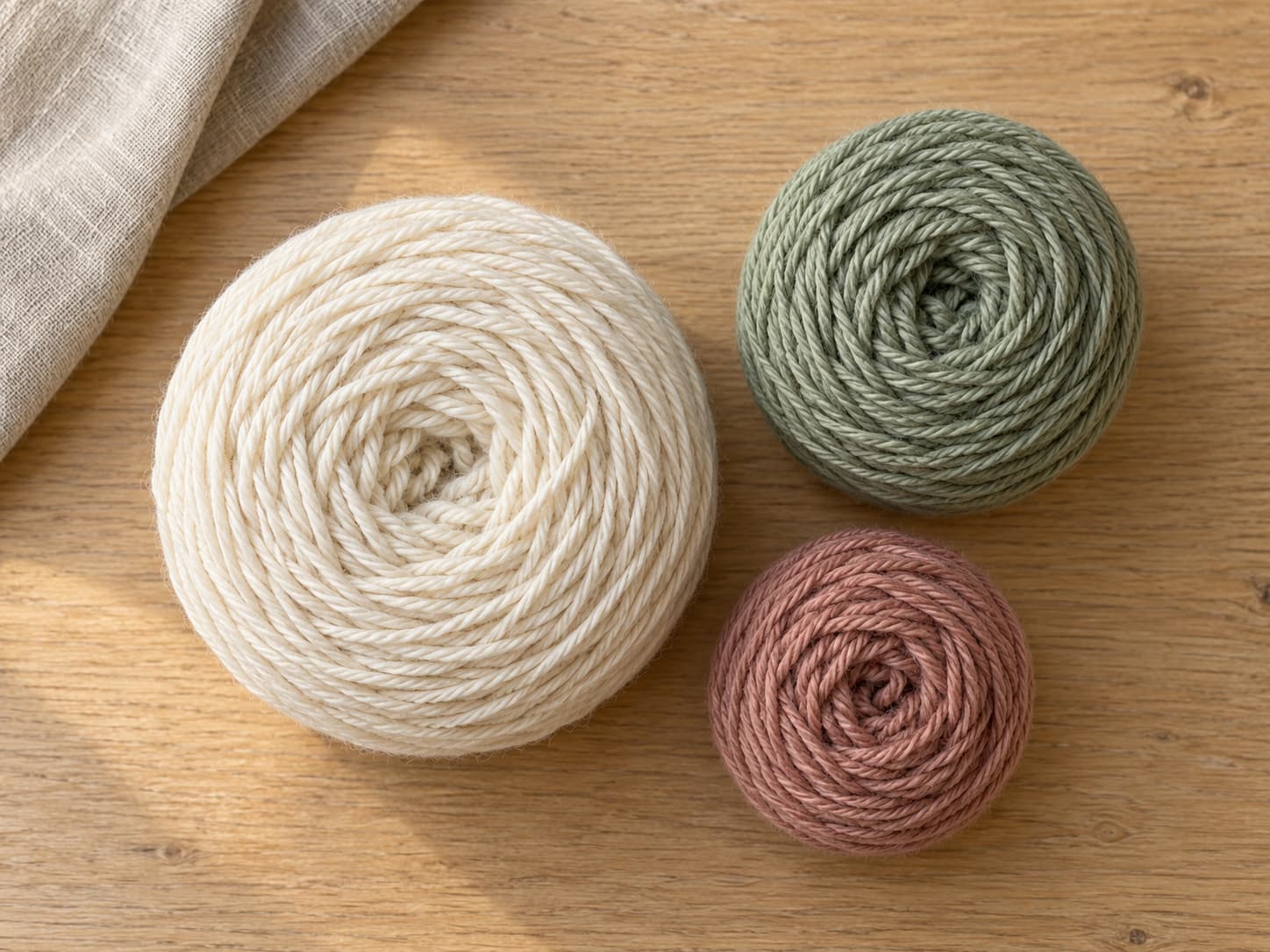
For a modern natural palette, use warm ivory for roughly two-thirds of the scarf and muted sage for the end bands. Meanwhile, a small clay-rose accent can replace sage if you prefer a warmer finish. Alternatively, make the entire scarf in one color and let the V-stitch texture lead.
Before buying yarn, compare dye lots and read the care label. Also, avoid assuming that every yarn within one fiber family has the same washing instructions. Therefore, the manufacturer’s label should guide both washing and blocking.
Image 03 · Lakeside yarn paletteSuggested file: knitsoul-lakeside-scarf-yarn-color-palette.jpgReplace only the img src value above with the full HTTPS WordPress Media URL.
Warm ivory keeps the stitches visible, while muted sage or clay rose adds a restrained end-band accent.
Size and gauge
Measure the fabric after it relaxes
The planning size is about 8 inches wide by 60 inches long (20 × 152 cm). Because scarves do not need to fit a shoulder or waist, small gauge differences are manageable. Nevertheless, a swatch tells you whether the fabric feels soft enough and whether eight V-stitches produce the width you want.
Make a useful V-stitch swatch
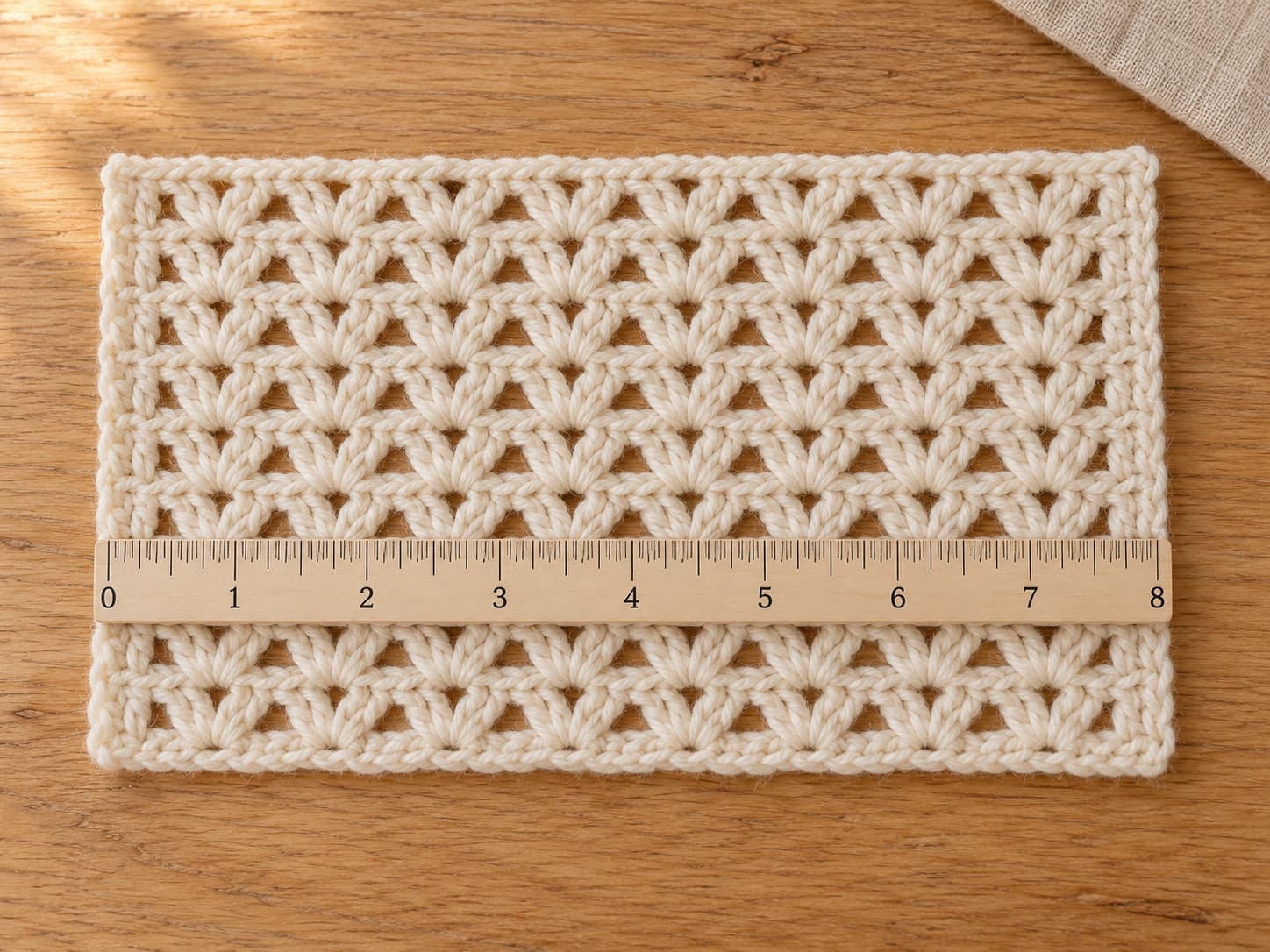
First, work the foundation and at least eight rows with your chosen hook. Next, block the swatch only in a way the yarn label allows. Afterward, measure across all eight V-stitches without stretching them. The supplied planning target is approximately 8 inches (20 cm) across.
If the swatch is too narrow or stiff, try a larger hook. However, use a smaller hook if the openings feel loose or the edges lack control. Also, row gauge is less important because you will crochet to a measured length.
Image 04 · V-stitch gauge swatchSuggested file: knitsoul-v-stitch-crochet-gauge-swatch.jpgReplace only the img src value above with the full HTTPS WordPress Media URL.
Measure the blocked width without pulling the openwork wider than it naturally rests.
Resize with the 3n + 4 formula
Let n equal the number of V-stitches you want. Then, calculate the foundation as 3n + 4 chains. For example, eight V-stitches require 28 chains. The extra four chains create the turning chain and the final edge stitch.
V-stitches
Foundation chain
Possible use
5
19 chains
Narrow accessory scarf; confirm width from your swatch
8
28 chains
Lakeside pattern width
10
34 chains
Wider scarf
12
40 chains
Small wrap width; expect greater yarn use
Core technique
Build each V-stitch inside one space
In this pattern, one V-stitch is (dc, ch 1, dc) worked into the same location. After Row 1, that location is always the chain-1 space of the V below. Therefore, you do not need to insert the hook into individual stitch tops across the center fabric.
Double crochet refresher
Yarn over and insert the hook into the correct chain or space. Then, yarn over and pull up a loop. Yarn over again, pull through two loops, and repeat once more to finish the double crochet.
Find the chain-1 space
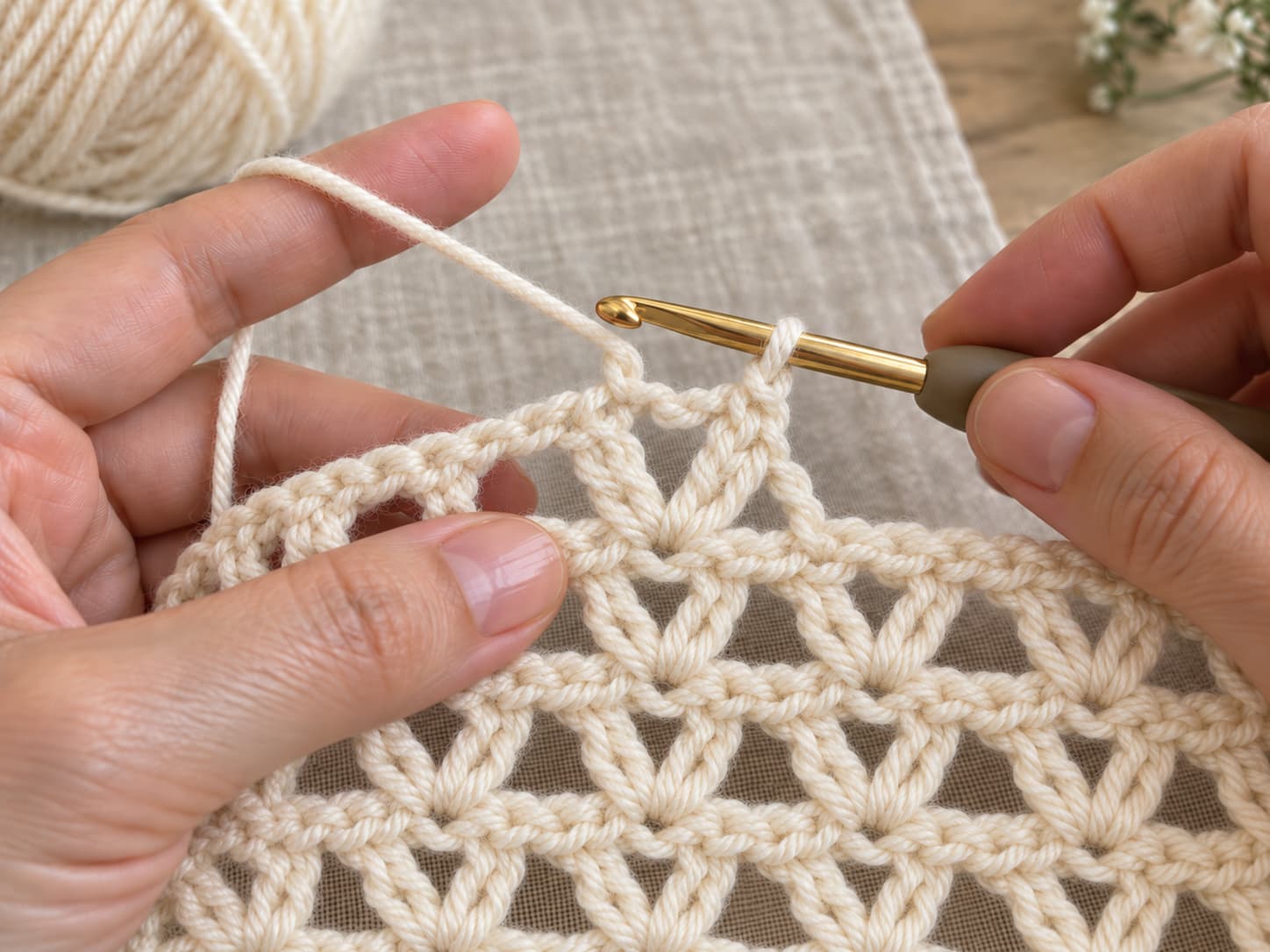
First, look between the two double-crochet posts that form a V. The small opening at the center is the chain-1 space. Next, insert the hook through that opening, not beneath one strand of the chain. As a result, both new double crochets sit securely around the space.
Image 05 · V-stitch chain spaceSuggested file: knitsoul-crochet-v-stitch-chain-space.jpgReplace only the img src value above with the full HTTPS WordPress Media URL.
Both double crochets and the center chain belong in the same space, which keeps the Vs stacked.
Free pattern
Easy crochet scarf pattern instructions
This pattern uses U.S. crochet terms. Read the notes once before starting, then check the stitch count after each of the first few rows.
Lakeside V-Stitch Scarf
Target size: about 8 × 60 in (20 × 152 cm) after blocking · Hook: 6 mm · US J/10 · Yarn: worsted #4 · Foundation: 28 chains
Foundation chain: Chain 28 loosely. If your chain is noticeably tighter than your double crochet, make the chain with a hook one size larger and then return to the working hook.
Row 1 · right side: Work (dc, ch 1, dc) in the fourth chain from the hook. *Skip two chains, then work (dc, ch 1, dc) in the next chain.* Repeat between the asterisks seven more times. Next, skip two chains and work one dc in the final chain. Turn.
Count: eight V-stitches with one edge dc at each side.
Row 2: Chain 3; this counts as the first dc. Turn. Work (dc, ch 1, dc) in the chain-1 space of each V across. Finally, work one dc into the top of the turning chain. Turn.
Count: eight V-stitches with one edge dc at each side.
Repeat: Repeat Row 2 until the scarf reaches your preferred length. If you plan to add a final contrast band, stop the main color early enough to work the same number of band rows used at the beginning.
Finish: Fasten off with a tail long enough to weave securely. Weave every tail through the wrong side, changing direction at least once. Then, trim only after the fabric has settled.
Color and edging
Add quiet bands and a clean border
Change color at the edge
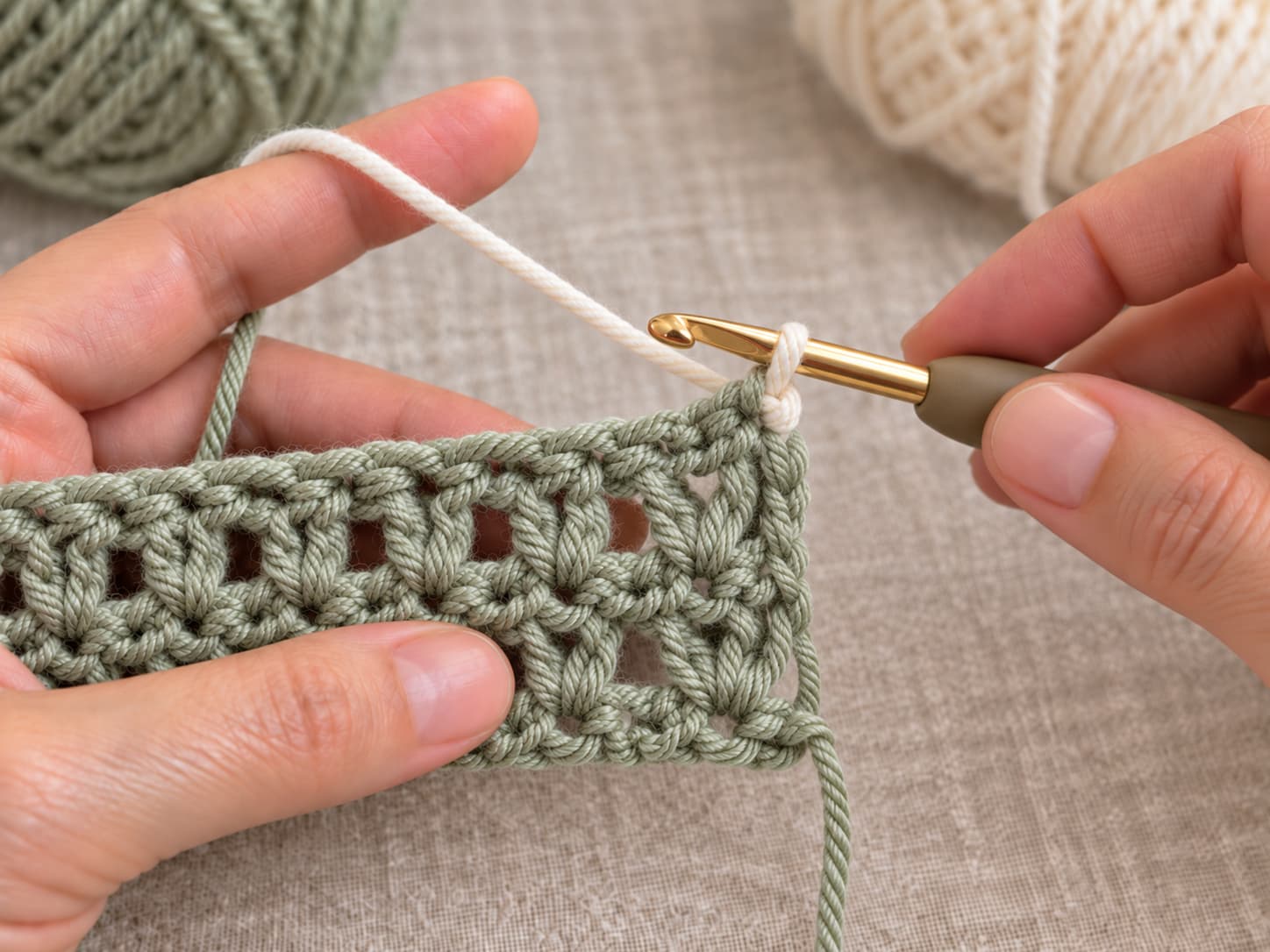
For matching end bands, work the first four rows in the contrast color. Next, change to the main color on the final yarn-over of the last edge double crochet. Meanwhile, leave tails long enough to weave in; do not knot the yarns together.
Near the final length, repeat the same number of contrast rows. Because row height varies by maker, use a tape measure rather than guessing when to begin the second band.
Image 06 · Clean edge color changeSuggested file: knitsoul-crochet-scarf-clean-color-change.jpgReplace only the img src value above with the full HTTPS WordPress Media URL.
Complete the final yarn-over with the new color so the next row begins cleanly.
Keep both sides straight
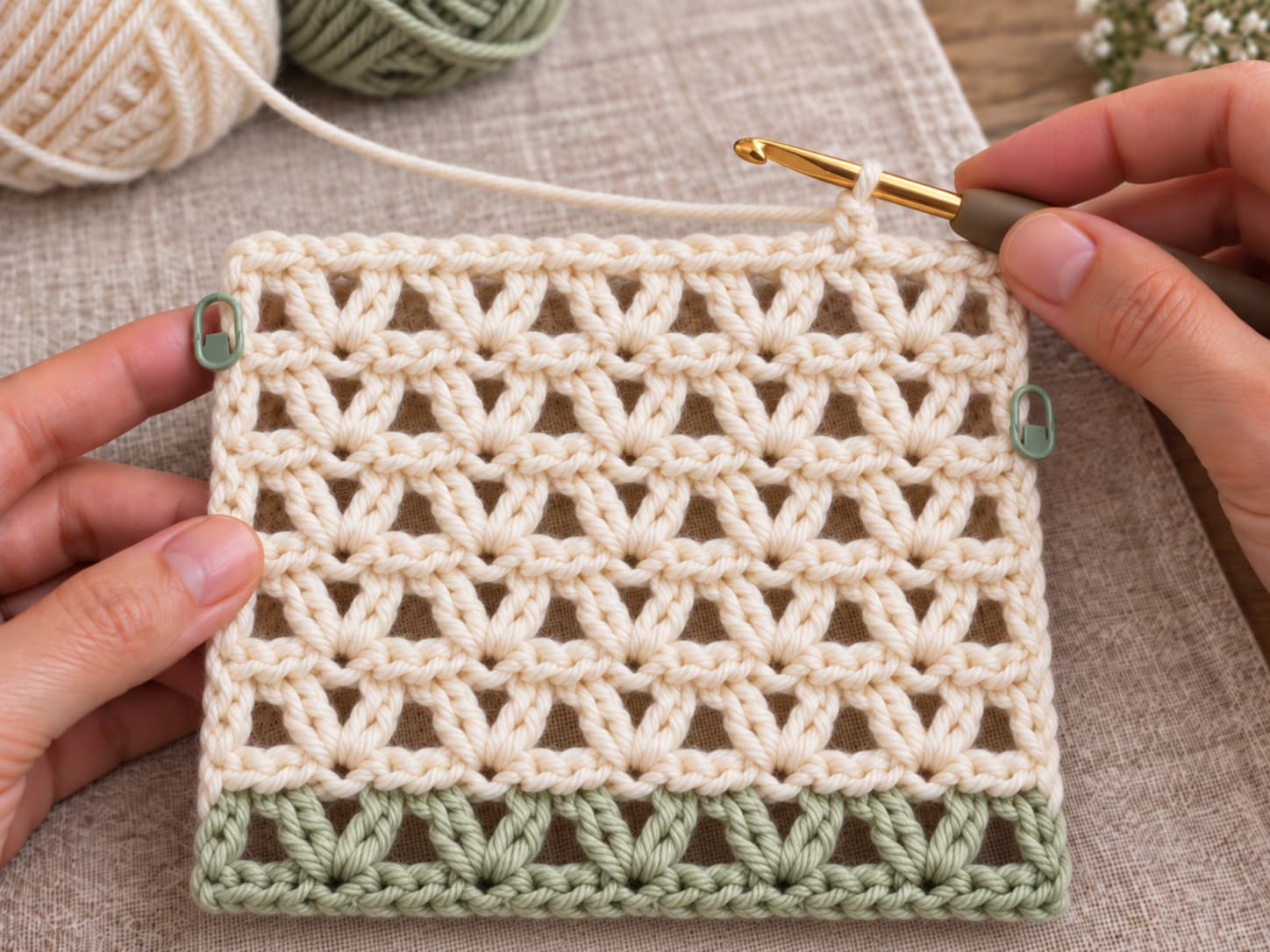
Then, count the eight V-stitches before turning. In addition, confirm the edge dc at both sides. If the scarf narrows, the missing stitch is often the final dc in the turning chain. If it widens, an extra V may have been placed in the edge gap.
Image 07 · Scarf in progressSuggested file: knitsoul-lakeside-v-stitch-scarf-in-progress.jpgReplace only the img src value above with the full HTTPS WordPress Media URL.
Markers at the outer V-stitches make accidental increases and decreases easier to spot.
Optional single-crochet border
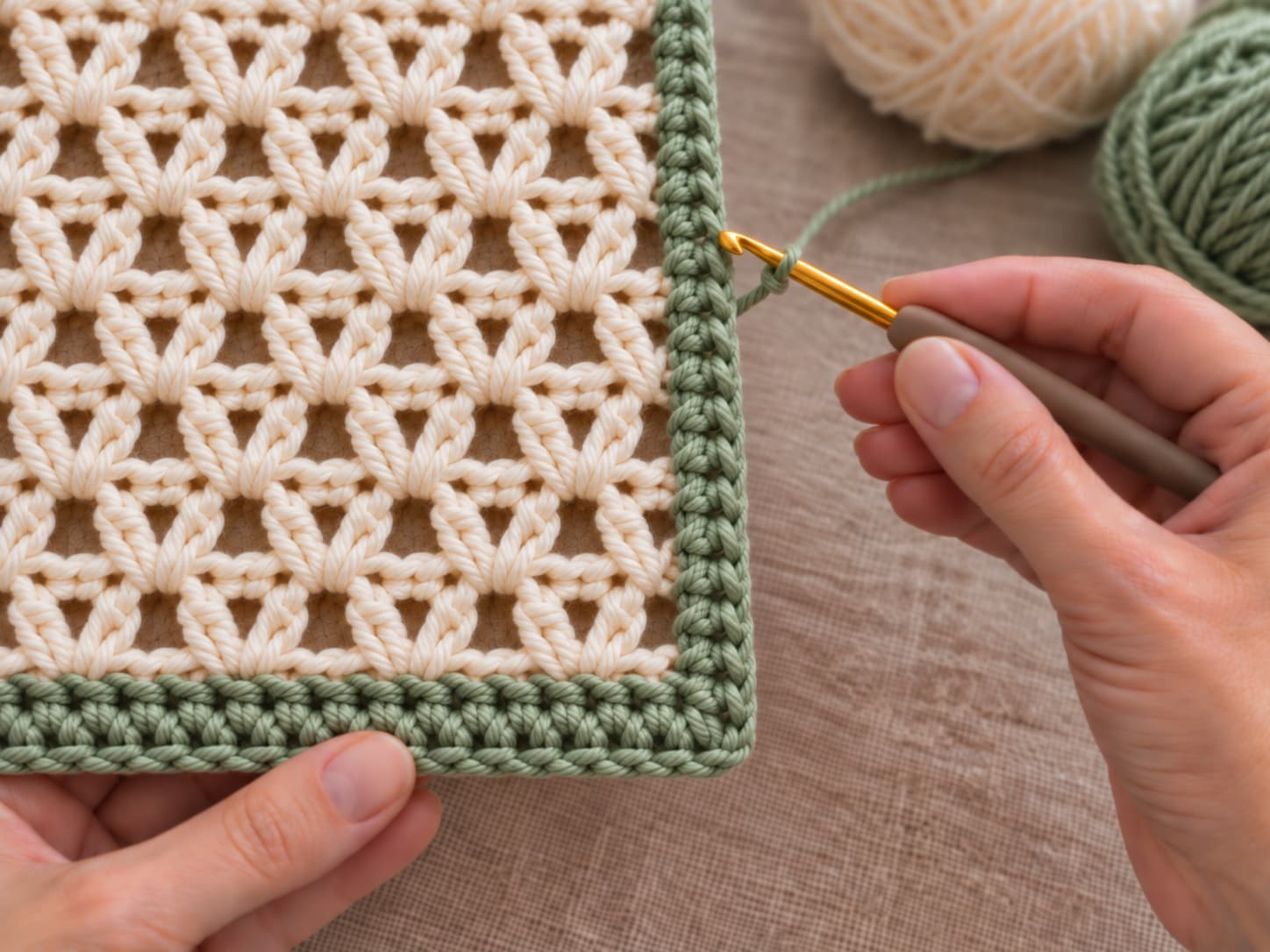
Join yarn at one corner and work single crochet evenly around the scarf. Across the short ends, place one sc in each stitch or chain space. Along the long sides, begin with roughly two sc for each double-crochet row end, then adjust the spacing if the edge ripples or pulls.
Next, work three sc in each corner. Finally, join to the first sc and fasten off. A flat border matters more than following a rigid side count because yarn, hook, and row height can change the required spacing.
Image 08 · Optional scarf borderSuggested file: knitsoul-single-crochet-scarf-border.jpgReplace only the img src value above with the full HTTPS WordPress Media URL.
Even spacing prevents a border from ruffling outward or drawing the scarf inward.
Troubleshooting
Fix common V-stitch scarf problems early
The scarf narrows
The final edge dc was probably skipped. Count eight Vs, then locate the top of the turning chain before you turn.
The scarf widens
An extra V may be sitting in the edge gap. Work only in the eight chain-1 spaces across the center.
The lower edge curves
The foundation chain may be too tight. Restart with looser chains or use a larger hook for the foundation only.
The fabric feels stiff
First, relax the chain-1 inside every V. If that is not enough, test a larger hook in a fresh swatch.
The spaces drift sideways
A V was worked into the wrong opening. Compare each new V with the chain-1 space directly below it.
The border ripples
Too many side stitches create excess fabric. Remove a few stitches and redistribute them evenly.
When to undo a row
If the stitch count changes, undo the row to the last correct edge. Blocking cannot replace a missing V or remove an extra repeat. However, a small tension difference may relax after washing and drying according to the yarn label.
Finishing and care
Let the openwork settle without overstretching
First, follow the yarn label’s washing and drying instructions. For a fiber that tolerates wet blocking, soak or wash the scarf gently, support its weight, and remove excess water without wringing. Then, arrange it flat at the intended dimensions and allow it to dry completely.
Do not pull the V-stitches into oversized openings merely to reach a number. Instead, smooth the fabric until the rows look even and both long edges rest straight. Also, keep direct heat away unless the yarn manufacturer specifically permits it.
Image 09 · Scarf after blockingSuggested file: knitsoul-crochet-scarf-after-gentle-blocking.jpgReplace only the img src value above with the full HTTPS WordPress Media URL.
Gentle blocking evens the openwork while preserving a soft, natural drape.
Store and wash by fiber type
Fold the scarf instead of hanging it for long periods, especially if the yarn is heavy. Before washing again, check the yarn label rather than relying on general rules for wool, cotton, or acrylic. Consequently, the finished scarf is less likely to felt, stretch, or lose its shape.
Keep building your skills
What to make after this scarf
The Lakeside scarf teaches chain spaces, edge counting, color changes, and simple blocking. Next, use those skills in a motif or a larger rectangular project. For example, the projects below keep the learning path gradual.
Compare fiber, texture, color, and label information.
Common questions
Easy crochet scarf pattern FAQ
1. Is this easy crochet scarf pattern suitable for a complete beginner?
It is best for a beginner who can already make chains and double crochet. The visible chain spaces simplify placement; however, you still need to identify the turning chain and count eight V-stitches per row. Review the beginner crochet guide first if either stitch is new.
2. Why does the corrected pattern begin with 28 chains?
The formula is 3n + 4, where n is the number of V-stitches. Eight Vs therefore require 28 chains. This count leaves room for the turning chain, eight complete V-stitches, and the final edge double crochet.
3. Can I make the scarf wider or narrower?
Yes. Choose the number of V-stitches, multiply it by three, and add four chains. Then, work one V in each designated space and retain an edge dc at both sides. Always confirm the actual width with a blocked swatch.
4. Which yarn works best for a V-stitch scarf?
A smooth worsted-weight yarn is an accessible starting point because it shows the chain spaces clearly. More importantly, choose a yarn that feels comfortable against the neck and follow its care label. The yarn weights guide explains category changes.
5. Do I have to add the single-crochet border?
No. Straight, even edges can remain unbordered. Add the border only if you want a firmer outline or need to tidy minor edge variation. If it ripples, reduce the number of stitches along the long sides.
6. How long should a beginner crochet scarf be?
This pattern uses about 60 inches (152 cm) as a planning target, but the final length is personal. Consider how you want to wrap it and how much yarn remains. Measure the scarf flat instead of counting rows.
7. How do I stop the V-stitch edges from slanting?
Keep eight V-stitches and one edge dc at both sides. Place each new V in the chain-1 space directly below it, then finish in the turning chain. In addition, use locking markers until the edge locations feel automatic.
Ready to crochet
Make the Lakeside scarf one clear row at a time
This easy crochet scarf pattern becomes simple once the edge stitches and eight chain spaces are familiar. Start with a relaxed chain, check the count often, and let your swatch decide the hook size. Finally, finish the scarf according to the yarn label so the open V-stitches settle without losing their natural shape.
Choose the warm ivory and muted sage palette, or use a color combination you already enjoy wearing. Either way, the repeat stays the same.